
Modernise EV rules, preserve physical guardrails
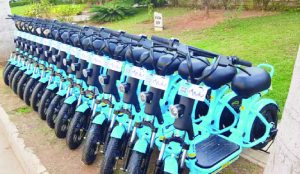
Years ago, India’s decision to carve out a special, exempted category for low-speed electric two-wheelers (E2Ws) in the Central Motor Vehicles Rules (CMVR) gave rise to a quiet miracle. It unlocked an affordable way to commute and enabled lakhs of first-time earners and gig workers, including women, to use light E2Ws to deliver goods and build livelihoods without needing a driver’s licence. It is a policy success story worth protecting.
This is why a small but consequential change in the proposed amendment to Rule 2(u) of the CMVR needs to be reexamined.
The draft notification retains key conditions for exemption, including motor power, maximum speed, braking, reflective fittings and motor cut-off behaviour. However, it drops another significant condition: unladen weight, previously capped at 60 kg for exempt vehicles. On the surface, this looks like a simplification. In practice, it removes a safeguard that matters.
The problem with power and speed alone
Defining low-speed EVs through motor power and top speed may seem logical. However, both of these are governed by software. An unscrupulous company or operator can tamper with a controller, bypass a speed limiter and unlock a motor’s power output without changing the vehicle’s physical components.
Until now, India’s policy framework has anchored the exemption to a physical, difficult-to-manipulate specification: weight. Removing the weight ceiling eliminates a reliable enforcement proxy that regulators and traffic officials can use to distinguish compliant vehicles from illegal or tampered ones.
Heavier E2Ws with more powerful motors increasingly resemble motorbikes rather than bicycles. Allowing unlicensed, unregistered riders to operate such vehicles could create safety challenges rather than solve them. In a country already facing a significant road-safety burden, removing a physical weight limit - whether 60 kg or another appropriate threshold - deserves careful consideration.
A weight limit cannot substitute for testing, certification and enforcement. But it can provide an additional, tamper-resistant layer of regulatory clarity.
Protecting inclusive mobility
The original intent of the low-speed EV exemption was to widen mobility access and enable people to pursue livelihood opportunities, particularly those who may not be able to afford conventional EVs or easily obtain a driver’s licence. This includes women and younger people entering mobility work for the first time.
Without a weight ceiling, heavier vehicles with larger frames and dual-seat capacity could qualify for the same licence-free, registration-free exemption. That risks moving the category away from the specific use case it was designed to support. Feedback from women riders, in particular, highlights a practical advantage of lightweight vehicles: they are easier to manoeuvre, park and control in Indian traffic conditions.
Heavier vehicles have an important role in the mobility ecosystem, but they serve a different purpose and user base. Regulation should, therefore, define exemptions around the vehicle type and the specific need they are intended to address.
The 60 kg limit is not a design constraint
Would retaining a 60 kg ceiling constrain innovation? Our experience suggests otherwise. Yulu’s fleet, designed in-house and manufactured with Bajaj Auto, is built within this exact limit and operates at scale across Indian cities today. It demonstrates that a well-engineered, world-class electric two-wheeler is possible within a 60 kg unladen weight ceiling. The 60 kg limit has not been an obstacle. Instead, it has encouraged manufacturers to engineer vehicles more intelligently while providing a clear physical boundary for the category.
A workable way forward
The real question is not whether 60 kg is sacred. It is: What physical safeguard should define the boundary of licence- and registration-exempt E2Ws?
Regulators are considering other guardrails, including single-seat or no-pillion restrictions and physical verification at the point of sale. These are good ideas. But if the objective is to establish clear, objective and enforceable boundaries, they should complement a weight limit rather than replace it.
As India’s EV sector grows, regulation must evolve with technology and new use cases. But modernising the rules should not mean discarding the guardrails that make them practical to implement. The goal should be a framework that gives innovation room to grow while keeping the boundaries of licence-exempt mobility clear, objective and enforceable.