
Many New Years, one civilisational palate
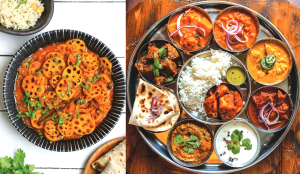
There are moments in Bharat’s civilisational journey when diversity reveals itself as a deeper expression of continuity. Last week, we reflected on Baisakhi in Punjab, where the harvest of wheat and the spirit of gratitude, labour, and collective celebration find one of their most vivid expressions. Yet this seasonal turning is not confined to Punjab alone. Across Bharat, mid-April carries a wider significance, marking a shared moment of renewal through regional New Year observances, agrarian transitions, and the gradual movement from spring towards summer. Their names differ from region to region, their rituals are shaped by local customs and languages, and their festive cuisines reflect distinct climates, crops, and histories. Yet beneath this rich variation lies something far older and more enduring than geography. These observances embody India’s timeless ethos of unity in diversity. It is in the kitchen, and around the shared table, that this civilisational continuity moves beyond abstraction and becomes a lived inheritance.
Bohag or Rongali Bihu in Assam, Poila Boishakh in Bengal, Navreh in Kashmir, Vishu in Kerala, Pana Sankranti in Odisha, Baisakhi in Punjab, and Puthandu in Tamil Nadu are not merely parallel festivals coincidentally appearing on the calendar. They arise from a civilisation that has long looked at time through the movement of seasons, harvest, light, and community living. In one region, the wheat stands ready for harvest, in another, the new agricultural cycle begins with spring. Elsewhere, the New Year is welcomed through an auspicious beginning of the lunar calendar or a refreshing preparation suited to the onset of summer. The culinary expressions differ, but the governing instinct remains recognisable. Food must mark renewal, reflect the season, honour labour, and gather the community into a shared experience of gratitude and hope. That is why these observances are best understood not as disconnected celebrations, but as many expressions of one civilisational palate.
In Assam, Bohag or Rongali Bihu expresses renewal through freshness, grain, and springtime warmth. Celebrated as the Assamese New Year and the beginning of a new agricultural cycle, Bohag Bihu carries an atmosphere of renewal and hope. At its heart are offerings drawn directly from the freshly harvested produce and includes combinations of chira (flattened rice), xandoh (roasted and ground rice), akhoi (parched rice grains), and doi (fresh fermented milk), consumed in their simplest form to evoke purity and sufficiency. Alongside these are the many varieties of pitha, rice flour cakes filled with sesame, coconut, or jaggery and laru, small confections of coconut or sesame bound with jaggery, whose rounded form and sweetness signify completeness and auspicious beginnings. Together, these foods represent freshness over embellishment, and continuity over spectacle.
Yet, this simplicity does not preclude depth. The Assamese table during Bihu is equally defined by distinctive preparations such as khar whose defining feature is an alkaline extract traditionally derived from the ash of sun-dried banana peels. This extract is then combined with ingredients such as raw papaya, pulses, colocasia (arbi), or even certain leafy greens, creating a dish that is mild, cleansing, and subtly earthy in character. Greens and vegetables, reflective of the spring harvest, appear as xaak, a dish made of 101 different varieties of herbs and green leafy vegetables. Alongside this, dishes of fish like masor tenga, a light and tangy fish curry prepared with souring agents like tomatoes, lemon, or dried fruits and meat like duck meat curry, haahor mangxo, often cooked with ash gourd (Kumura) or sesame seeds, provide the highlight of the meal. Bohag Bihu’s food thus reflects and honours the field, welcoming the new cycle, with a freshness that belongs especially to spring.
In Bengal, Poila Boishakh brings a more formal sense of beginning, shaped by ceremonial order, hospitality, and the cultural confidence of a society long accustomed to making refinement part of festivity. The Bengali New Year table often unfolds with discernible complexity. It may begin with shukto, whose composed bitterness and soft vegetable textures prepare the palate rather than overwhelm it. From there the meal broadens into a richer procession. Fish, central to Bengali identity, assumes a place of prominence, particularly preparations like ilish maach, prized for its richness and cultural significance. Luchi paired with potato preparations such as alur dom or aloo posto retains its place as a beloved festive combination. Rice-based dishes such as basanti pulao express prosperity and regional identity with equal force. Bengal’s New Year cuisine is celebratory, but never careless. Even its indulgence carries a refined structure with its deserts deepening that impression. Payesh, slowly thickened from rice and milk, carries affection and auspiciousness in equal measure. Mishti doi offers coolness and gentle richness. Sandesh brings restraint and delicacy through chhana. The table thus becomes not only a celebration of the new year, but also a statement of cultured balance, where appetite is welcomed but shaped by order and aesthetic care.
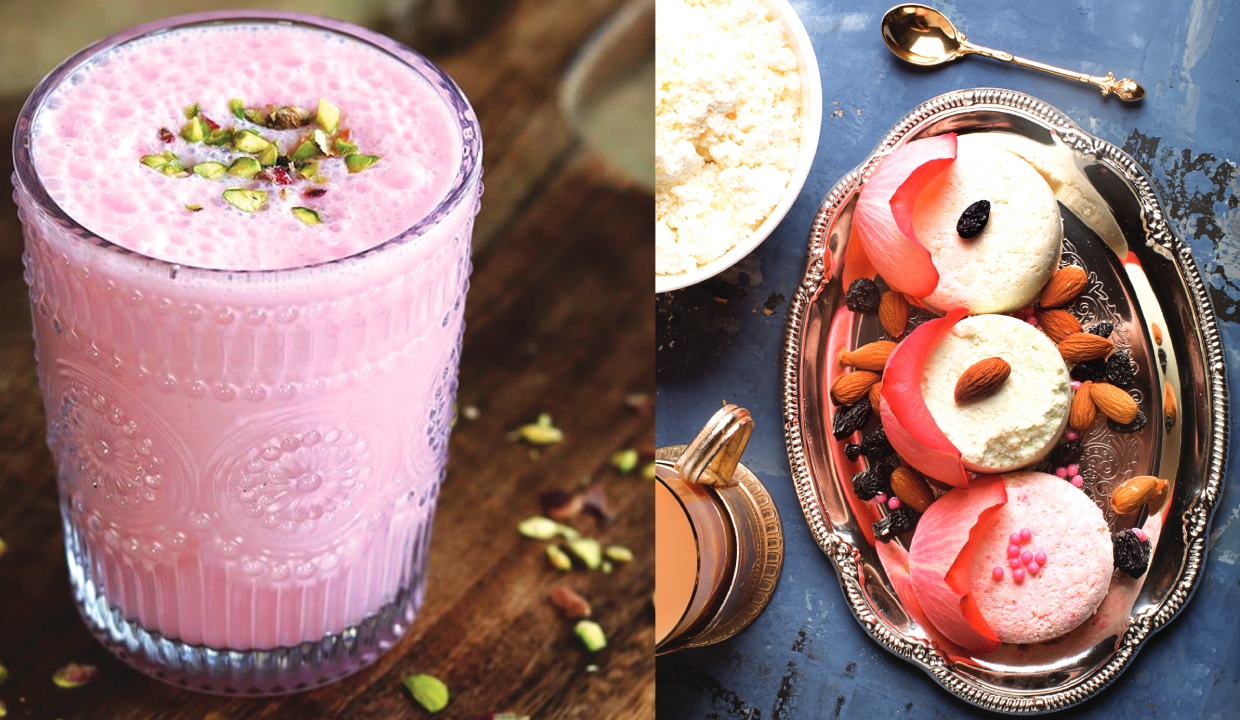
Navreh marks the arrival of the New Year in Kashmir, a moment rooted in the ancient lunar tradition. It marks not merely the passage of time but a conscious reorientation towards order and clarity. At its centre is the ritual of the thaal, an arrangement of symbolic and edible items such as rice, curd, bread or wheat cakes, cooked rice, and walnuts, placed alongside the almanac, coins, flowers, and mirror, and viewed at dawn as the first sight of the year. Each element signifies prosperity, nourishment, continuity, and self-reflection. Alongside the ritual thaal, many households also prepare festive dishes such as kheer and tahar, while some tables may further be enriched with preparations like modur pulao, dum aloo, or nadru yakhni. Kashmiri cuisine is never complete without its legendary meat and fish preparations that may be common through the year but assume significance during the festive season. Dishes such as Rogan Josh, comprising lamb in a rich, aromatic gravy, and Yakhni, where meat is simmered in a yoghurt-based sauce, bring depth and warmth to the table. Riverine influences appear in preparations like Fish Curry, typically featuring local freshwater fish in lightly spiced gravies. Navreh thus expresses renewal not through an elaborate feast alone, but through a ritual grammar of auspicious foods that brings together local produce with nourishment.
Kerala’s Vishu offers perhaps one of the most explicit examples of how food, symbolism, and philosophy remain inseparable in Indian festive life. Vishukkani, the central ritual of the Kerala New Year festival, is an auspicious arrangement of symbolic items prepared the night before and viewed at dawn as the first sight (kani) of the New Year. It typically includes rice (paddy), fruits, vegetables, a metal mirror (valkannadi), coins, flowers, especially golden konna blooms and sacred texts or images of Lord Krishna. Each element represents abundance, prosperity, and continuity. Grains, fruits, vegetables, flowers, and vessels are brought together on the occasion so that prosperity is first encountered visually as balance and auspiciousness.
This sensibility continues at the meal through the vishu sadya, the grand vegetarian feast served on a banana leaf. This comprises rice, parippu, sambar, rasam, and side dishes such as avial, a medley of seasonal vegetables bound with coconut and yogurt and thoran, finely chopped vegetables paired with grated coconut. Olan, a gentle preparation of ash gourd and cowpeas in a light coconut milk base, and kalaan, a thicker dish of yam and raw banana in a yoghurt and coconut base, create a complete meal that satiates different tastes without losing composure. A defining element of the Vishu table is the deliberate inclusion of contrasting tastes, most notably vishu kanji in some households, and the symbolic vishu sadya itself, where sweet, sour, bitter, and savoury coexist. Preparations such as pachadi and kichadi introduce nuanced flavours, while the meal concludes with desserts like payasam, made from rice, lentils or vermicelli with milk and jaggery. Kerala’s festive logic reveals a culinary philosophy in which order itself becomes celebratory. Prosperity is not only what is possessed but how it is arranged and presented, shared, and received with awareness.
Odisha’s Pana Sankranti adds yet another dimension to this civilisational palate by showing how festive food also responds directly to climate. With summer intensifying, the day centres on pana, especially bela pana, the cooling drink prepared from bael fruit pulp with jaggery and other seasonal ingredients suited to the heat. Alongside it, chhatua, prepared from roasted gram or grain flour and often mixed with jaggery, banana, or water, offers nourishment in a form at once simple, sustaining, and culturally resonant. The festive meal may also include kanika, a fragrant sweet rice preparation that lends the table a note of auspiciousness and quiet celebration. Complementing these are dishes such as dalma, a wholesome combination of lentils and seasonal vegetables, and lightly spiced preparations that is renowned for its simplicity and nutrition. Odisha’s seasonal wisdom is unmistakable here. The festival does not oppose the climate. It listens to it.
Baisakhi in Punjab carries both agrarian fulfillment and profound spiritual memory. Falling with the wheat harvest, it marks abundance, a reward for efforts and labour, and, for the Sikh community, the historic formation of the Khalsa by Guru Gobind Singh in 1699. The food of Baisakhi therefore does not begin in indulgence, but in sanctity and shared service. Kada prasad, prepared at homes and Gurudwaras alike, is made from wheat flour, ghee, and sugar or freshly made jaggery, and remains central to the day’s spiritual atmosphere. At the Gurdwara, langar extends the same ethic into the social sphere, where simple yet nutritious fare such as dal, sabzi, roti and kheer is shared in a spirit of equality and humility. Nourishment is offered not as display, but as an act of seva.
In the home, however, the meal expands into a warmer, festive feast that is in tune with the season. Meethe chawal, fragrant with ghee and often coloured with saffron or turmeric, expresses joy through sweetness and carries the glow of harvest in its golden appearance. Kadhi chawal, with its yogurt-based tang and comforting texture, brings balance to the table and is especially fitting in a season when heavier winter fare begins to recede. Amritsari chole, slow-cooked until richly spiced and deeply coloured, are often paired with breads like puris and kulchas that lend the meal a sense of celebratory generosity. Lassi and chaach offer both hospitality and relief as the weather begins to warm. The sweet lassi is flavoured and carries aromatic notes of cardamom, rose or kewra water or saffron strands (kesar). Chaach, on the other hand, is enriched with roasted cumin powder, along with crushed black pepper or fresh green chillies and fresh coriander (cilantro) leaves or mint leaves (pudina). Ginger, finely grated or pasted, is commonly added for extra zest. The Baisakhi table is unmistakably Punjabi, abundant and welcoming, and aligned faithfully with the climate and mood of April rather than with the depth of winter.
Tamil Nadu’s Puthandu carries a similarly profound insight, though expressed through a different culinary language. The most symbolic dish of the festival is mango pachadi, whose ingredients bring together sweet, sour, bitter, and spicy elements through raw mango, jaggery, neem flowers, and chilli. Interestingly, these represent the different moods and emotions of life itself and serve as a reminder that food is a means of reflecting and sustaining life itself. Around this central preparation gather other festive dishes such as avial, rasam, rice, vegetable accompaniments, vadai, and festive sweets prepared in different households. The festive spread is further enriched by elements that lend texture and contrast. Poriyal, comprising vegetables tempered with spices and coconut, and payasam, brings the meal to a gentle close. Here too the meal is vegetarian, seasonal, and structured by inherited taste logic rather than random assortment. Puthandu demonstrates that cuisine can serve not only as sensory pleasure, but as ethical instruction. It welcomes the new year by reminding the household that resilience begins in acceptance, and that balance is not an abstract virtue but something that can be placed on the plate and shared at the family table.
Across Bharat, as the New Year arrives under many names, it reveals a pattern that is both varied and continuous. Each region, shaped by its own ecology and culture, gives form to new beginnings through distinct rituals and seasonal foods, yet the underlying impulse remains shared. As the season shifts and gives rise to new cycles, it marks the turning of time with balance, gratitude, and hope for the future. I believe that the differences are not incidental but are the very means through which a deeper coherence of our country is sustained. In an age of constant motion, when pause and reflection are becoming increasingly rare, it is all the more important that we not only preserve these civilisational traditions, customs, and cuisines, but also consciously pass them on to future generations, so that the rich and beautiful journey of our cultural inheritance may continue with the same vitality and meaning. It is our collective responsibility, therefore, to recognize, honour and preserve this rich heritage, its customs and cuisines and the affirmation of a civilisational order that has long understood how to hold diversity with harmony.
The writer is Secretary, Cuisine India Society; Views presented are personal.