
LG Saxena approves reorganisation of tehsils, revenue villages in Ladakh
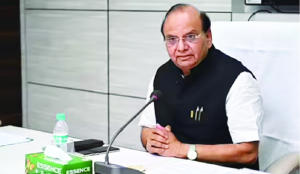
In a landmark administrative reform, Ladakh Lieutenant Governor Vinai Kumar Saxena approved a comprehensive reorganisation and rationalisation of tehsils and revenue villages, following the creation of five new districts in the Union Territory, an official spokesman said on Sunday.
Under this reorganisation, 17 new tehsils have been created in Ladakh, taking the total number of tehsils to 32, from the existing 15, the spokesman said. He added that the move aims to operationalise the new districts while bringing public services to the people’s doorsteps, thereby strengthening governance at the grassroots.
He said the new tehsils have been created on the recommendations of a UT-Level Committee constituted by Saxena, following the notification of the new districts on April 27 this year.
The committee observed serious lacunae in the existing administrative units, including tehsils and revenue Villages, as they were not clearly demarcated. It found that boundaries of several tehsils extended across more than one district, resulting in administrative overlap and operational challenges.
Saxena also directed the chief secretary to immediately appoint tehsildars, with one officer assigned to the independent charge of a tehsil.
To address these issues, the spokesman said every revenue village has been mapped to a single tehsil and every tehsil to a single district, thereby creating a transparent, logical and efficient administrative structure while ensuring that no changes are made to the territorial boundaries of any district.
The decision, therefore, establishes a clear and streamlined revenue administrative framework for the newly created districts and would significantly improve administrative efficiency, public service delivery and local governance, he said.
Ladakh, one of India’s largest Union Territories in geographical area, has long faced administrative challenges due to its difficult terrain, sparse population, and remote habitations.
The creation of 17 new tehsils will significantly reduce travel distances for citizens (often exceeding 300 km) for availing government services and ensure faster and more effective delivery of public services.
Following the reorganisation, Leh district will comprise five tehsils, Kargil seven, Changthang four, Nubra six, Zanskar four, Sham five and Drass one tehsil.
“The creation of new districts was done to bring governance closer to the people and make the administration more accessible, responsive and citizen-centric. With the operationalisation of these districts through a comprehensive reorganisation of Tehsils and Revenue Villages, we are establishing a robust administrative framework that will significantly improve revenue administration, strengthen grassroots governance and ensure faster implementation of developmental programmes.
“Our objective is to ensure that every citizen, particularly those living in remote and border areas, has easier access to government services while enabling balanced, inclusive and sustainable development across Ladakh,” Saxena said.
The spokesman said this reorganisation would establish a clear, well-defined and unambiguous revenue administrative hierarchy.
“Each tehsil will be headed by a tehsildar or naib tehsildar, with naib tehsildars entrusted with the powers of assistant collector class-I wherever they are in charge of tehsils,” he said.
The restructuring has been undertaken under Section 5 of the Jammu & Kashmir Land Revenue Act, 1996, as applicable to the Union Territory of Ladakh, through the Jammu & Kashmir Reorganisation Act, 2019, which empowers the Administration to alter the limits and number of Tehsils through notification, the spokesman said.