
Kosovo begins digging at newly found war-era mass graves
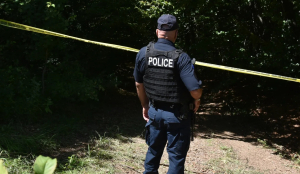
Nearly 30 years after his father went missing, Erblin Ademi watched from a distance as workers excavated recently discovered mass graves from Kosovo's 1998-99 war, both fearing and hoping that his father's remains would finally be found.
Ademi was nine when he last saw his father, Adem Ademi, a prominent surgeon who disappeared along with 22 other intellectuals in April 1999, months before the war ended.
Some 1,600 people remain missing from the conflict, believed to be scattered in unmarked mass graves, and Ademi's family has endured years of anguish and failed efforts to locate his father's remains.
The family is now cautiously optimistic, as the newly found graves are close to where Ademi was last seen. Excavations near the village of Kalluder e Vogel, in the northern municipality of Zubin Potok, began in late July after human remains were discovered there.
Kosovo Prime Minister Albin Kurti has said authorities believe the victims could be the missing intellectuals, who were allegedly caught while trying to flee Kosovo to avoid being rounded up by Serb troops.
"Always, when we hear about the beginning of the excavations, there is a mixed feeling, a feeling of hope and a feeling of pain," Ademi said. "No matter how many years pass, the feeling of pain will always exist... but at the same time there has always been hope, a feeling that finally the truth will be revealed."
According to the Humanitarian Law Center rights group, Kosovo's missing include roughly 1,200 ethnic Albanians, around 400 ethnic Serbs and dozens of Roma.
About 13,000 people died in Kosovo's war, in which ethnic Albanians launched a rebellion to gain independence from Serbia. Kosovo declared independence in 2008, which Belgrade still does not recognise.
Tensions between the two persist. In May 2023, Serbia and Kosovo reached an agreement that included commitments by both sides to clarify the fate of the missing, but each has since accused the other of stalling cooperation.
"It is obvious that authorities are not willing to cooperate," said Bekim Blakaj of the Humanitarian Law Center. The European Union wants Kosovo and Serbia to normalise ties as a condition for advancing their bids to join the bloc.
Police in Kosovo said last month they had arrested two ethnic Serbs on suspicion of war crimes linked to the mass graves, days before the latest excavations began. Both men remain in custody. Several senior Serbian political and military officials have previously been tried and convicted of war crimes in Kosovo at a UN tribunal in The Hague, Netherlands.
Clutching a photo of his father holding him as a boy, Ademi said: "Every human being has the right to have a grave where they can be visited, where they can be honoured, where they can be remembered. We are very hopeful that this will be the end, no matter how long the whole process will take, we will wait until we can honour them as they deserve."
(Sourced through PTI)