
Iran-Israel-US war that didn’t have to happen
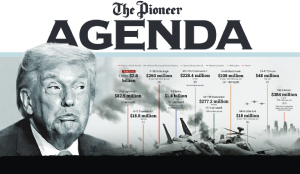
History will record this as one of the most avoidable catastrophes in modern geopolitics. When American and Israeli forces launched strikes on Iranian territory on February 28, they did so with a conviction that Tehran would fold quickly — that a regime under maximum economic pressure, facing internal discontent, and outgunned militarily, would either capitulate or collapse within weeks following a swift leadership decapitation. That calculation was wrong in almost every conceivable way.
The Oman back-channel prior to the war had been quietly effective. Oman's foreign minister has said talks had made progress and Iran agreed to “zero stockpiling” of enriched uranium. A deal was not merely possible - it was close. What torpedoed it was not Iranian intransigence but a decision made in Washington and Tel Aviv that diplomacy was moving too slowly, and that military pressure would deliver faster, cleaner results. It delivered neither.
The Resilience Nobody Prepared For
Iran's ability to absorb punishment and keep fighting has genuinely shocked Western intelligence establishments. The Islamic Revolutionary Guard Corps had spent years dispersing critical infrastructure, hardening command-and-control systems, and developing asymmetric capabilities precisely for this scenario. Missiles launched from underground silos, mobile launchers shifted between concealed sites, and layered drone swarms designed to saturate air defences have all complicated attempts to suppress Iran's retaliatory capacity.
Washington had war-gamed a short, sharp campaign. What it has got instead is a grinding confrontation with no clean exit, mounting costs, and no credible path to decisive victory. Trump is now having to defend a deeply unpopular war while Americans face rising gasoline prices, market anxiety, and yet another open-ended Middle Eastern entanglement, a political burden likely to weigh heavily on the midterms.
For Netanyahu it is even worse. He appears to have gambled that sustained military pressure would fracture the Iranian state, trigger regime change, and open the way for a compliant pro-Western government in Tehran. Instead, the Iranian system has held together, nationalist sentiment has hardened, and external attack has rallied many who might otherwise oppose the regime. Rather than delivering strategic transformation, the war risks leaving Israel trapped in a costly conflict while strengthening the very forces it sought to break.
The Gulf States: Paradise Lost
The Gulf monarchies, UAE, Qatar, Bahrain, Kuwait, and Saudi Arabia, built their success on a promise of stability, neutrality, and insulation from regional chaos. Iranian strikes on facilities hosting US forces shattered that image overnight. The message to investors, multinationals, and expatriates was blunt: the Gulf is not immune. Property demand has cooled, insurance costs are rising, and firms are reassessing regional exposure.
Politically, leaders are trapped, dependent on Washington's protection, yet facing questions about why US bases made them targets instead of keeping them safe.
The Strait and the Global Fallout
The closure of the Strait of Hormuz was always the nightmare scenario that previous US administrations had been careful to avoid triggering. Roughly a fifth of global oil and gas passes through those 33 kilometres. Markets absorbed the initial shock with volatility, but sustained closure has done something far more serious - it has structurally reordered energy supply chains that took decades to build.
Asian economies dependent on Gulf energy imports have been hit hardest. Supply disruptions have fuelled inflation across regions already struggling with post-pandemic fiscal exhaustion. The global economy, which was showing tentative signs of stabilisation, has been knocked sideways. Fuel price spikes have cascading effects on food production, transport, and electricity across developing economies in South Asia, Southeast Asia, and Africa. Countries that had nothing to do with this conflict are paying for it in ways their populations will remember.
The Allies Are Not Hiding Their Frustration
Perhaps the most politically significant development has been the open discomfort among America's closest partners. European capitals were not consulted before the strikes began. The NATO alliance, already under strain, has found itself exposed by the refusal of key members to join the US war effort, with several allies distancing themselves politically and militarily from the campaign. What was once framed as Western unity now looks increasingly hollow, revealing an alliance unwilling to follow Washington into another open-ended Middle Eastern war.
Rival Powers, Watching and Winning
Russia and China stand to be the clearest geopolitical beneficiaries of a United States bogged down in Iran.
Every carrier group, missile interceptor, and diplomatic hour diverted to the Gulf is attention not spent on Ukraine or the Indo-Pacific. For Moscow, higher oil prices offer fiscal relief while reduced Western focus eases pressure on the Ukraine front. For Beijing, an overstretched America reinforces its narrative of US decline and strategic distraction, while giving China more room to consolidate influence in Asia and present itself as the steadier global power. Just as importantly, the conflict will shape Beijing's calculus on Taiwan, offering a real-time test of how quickly Washington can respond to simultaneous crises, how much domestic appetite it has for prolonged conflict, and how thinly American military power can be stretched across multiple theatres.
The Nuclear Deal, Now Inevitable, Now More Expensive
The deep irony is where negotiations now stand. The finer points of a nuclear agreement - essentially the same agreement that Oman was facilitating before the first strike - are back on the table. Enrichment caps, centrifuge numbers, inspection protocols: these are being discussed again, in more difficult circumstances, with Iran holding more leverage than it had before the war, and the US holding considerably less.
Tehran has not been broken. It has been hardened. Its negotiating position is stronger for having demonstrated that it cannot be bombed into submission. Whatever deal eventually emerges is now likely to cost the West more, in sanctions relief, security guarantees, and political concessions, than the agreement that was within reach before a single bomb was dropped.
The lesson is not complicated: when diplomacy is working, you let it work. The war on Iran was not a calculated risk that went wrong. It was an unnecessary war launched against the advice of substantial expert opinion, in defiance of a functioning diplomatic process, and in pursuit of a military outcome that was never realistic. The world is paying for that choice, and will be for years.
Vikas Swarup is a former High Commissioner of India in Canada and has served as spokesperson of the Ministry of External Affairs; Views presented are personal.