
India’s steel sector and decarbonisation
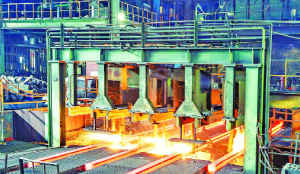
India’s new greenhouse gas emission intensity targets for the iron and steel sector mark a significant step towards industrial decarbonisation. The facility-specific approach recognises technological diversity, while robust monitoring, financial support and stronger compliance will be crucial for success
There are compelling reasons why the iron and steel sector has become a critical experimental ground for India’s compliance carbon market. The steel sector constitutes a critical sector of importance to the economy and positions India as the second-largest crude steel producer globally. Importantly, the steel sector is under policy scrutiny due to its heavy dependence on coal-based production routes and the energy-intensive nature of ironmaking. High carbon intensity has put the sector under stress in the emerging context of global environmental trade measures such as the Carbon Border Adjustment Mechanism (CBAM). Given the strategic importance of India’s steel exports, decarbonisation of the steel industry is no longer a policy choice but an implementation necessity for its business viability. The challenge, therefore, is not whether India should produce more steel, but how it can produce more steel with progressively lower emissions.
GEI targets for the iron and steel industry under CCTS
In this context, the recent notification of the emission intensity targets for the iron and steel industry under India’s Carbon Credit Trading Scheme (CCTS) merits a deeper examination of its emissions implications for such a critical sector. Greenhouse gas emission intensity (GEI) targets, built on the mechanism of emissions per tonne of equivalent product, are very much in alignment with the developmental aspirations of the country. This strategic approach is designed considering the economic reality of India’s developmental trajectory, where absolute emissions reduction could jeopardise the much-needed industrial expansion of the country. An intensity-based approach instead seeks to improve the carbon efficiency of every additional tonne of steel produced, allowing economic development and climate action to advance simultaneously. The framework, therefore, attempts to reconcile two objectives that are often portrayed as competing priorities: sustaining industrial growth while steadily reducing the carbon footprint of production.
The inherent design principles of GEI for the iron and steel sector, based on the facility-specific emission intensity targets, appear to be fitting to the sectoral context, characterised by a large degree of heterogeneity in many operational aspects. India’s steel industry is far from homogeneous in its use of technology, fuel and other critical aspects of functioning. Integrated blast furnace-basic oxygen furnace plants, coal and gas-based direct reduced iron (DRI) units, electric arc furnaces (EAFs), induction furnaces, ferro-alloy producers, and rolling mills differ substantially in their production routes, energy sources, raw materials and emissions profiles. Hence, applying a uniform emissions benchmark across such diverse technologies would impose a disproportionate compliance burden on facilities. Facility-specific targets instead recognise technological diversity and firm-specific heterogeneities while ensuring that every facility contributes to the sector’s decarbonisation journey according to its operational realities. By bringing 255 obligated entities under the CCTS, the government is extending the compliance framework across a substantial share of India’s steel sector rather than limiting it to a pilot initiative. Collectively, these facilities account for approximately 149 million tonnes of equivalent product output and 359 million tonnes of CO2-equivalent baseline GHG emissions based on FY 2023-24 data. According to the proposed targets, the framework could deliver an estimated 20 million tonnes of CO2-equivalent emissions reductions by FY 2026-27, representing roughly a 5.6 per cent production-weighted improvement in emission intensity. More importantly, the notification marks the gradual evolution of India’s industrial climate policy in tune with the overarching goal of ‘Viksit Bharat’ by 2047.
MRV becomes the key
The real innovation, however, lies not in the numbers themselves but in the institutional architecture governing the GEI. Effective carbon markets are built on trust in reliable and credible emissions data. Facility-specific baselines, transparent methodologies, and robust measurement, reporting and verification (MRV) systems form the foundation of any credible emissions trading mechanism. Without them, carbon credits risk becoming accounting exercises rather than drivers of genuine emissions reductions. Establishing consistent MRV systems across hundreds of facilities with diverse technologies and operational practices will require institutional capacity-building, integration of digital reporting systems, development of technical expertise, independent third-party verification, and strong regulatory oversight.
Beyond domestic policy, the notified GEI targets carry important international implications. Export-oriented industries are facing growing pressure from investors, multinational buyers, and regulators to demonstrate transparent carbon accounting and measurable emissions reductions. Besides, mechanisms such as the European Union’s CBAM indicate that carbon intensity will increasingly shape access to global markets. Improving emissions performance is therefore becoming an economic necessity rather than merely an environmental responsibility. The facility-specific GEI targets, while offering considerable flexibility and reflecting the operational realities of sectoral emissions, could create distinctive impacts for the MSME sector. Many small and medium-sized facilities may face higher compliance costs associated with emissions monitoring, reporting systems, process improvements, and technology upgrades. Without complementary measures such as technical assistance, capacity-building programmes, and targeted financial support, the transition risks widening the competitiveness gap within the sector. Ensuring that decarbonisation remains inclusive will therefore be essential to the long-term success of the framework.
The GEI targets should also be viewed as the beginning rather than the culmination of India’s carbon market journey. As industries adapt to emissions reporting and intensity targets, future compliance cycles are likely to introduce more ambitious benchmarks, broader sectoral coverage, and a more active market for Carbon Credit Certificates. The credibility established during this initial phase will therefore determine the effectiveness of future market expansion and India’s ability to position carbon markets as a central pillar of industrial climate policy.
As industries adapt to emissions reporting and intensity targets, future compliance cycles are likely to introduce more ambitious benchmarks, broader sectoral coverage, and a more active market for Carbon Credit Certificates
Gopal Krishna Sarangi is Associate Professor, Department of Policy and Management Studies, TERI School of Advanced Studies. Suhani Yadav is a researcher, Parijata Earth Foundation, New Delhi, and Shubhi Goel is the Founder and CEO, Parijata Earth Foundation, New Delhi; Views presented are personal.