
India’s mental health challenge needs more than awareness
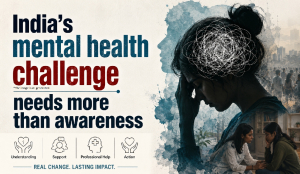
Mental health is no longer a silent issue. It is now one of the largest public health challenges facing the world, India included. According to an analysis from the “Global Burden of Disease Study” published in The Lancet, anxiety disorder patients in India increased by 123.5% from 1990 to 2023. It also pointed out that there has been a steep rise in the cases of depressive disorder and anxiety after Covid-19. However, they are more than just numbers. Behind every number is a person struggling with stress, fear, loneliness, burnout, sleep problems or emotional pain. Many are students, young professionals, working parents and elderly people trying to cope quietly every day.
The study also points out an important reality -- mental disorders are now one of the leading causes of disability across the world, even more than many major physical illnesses. This should make all of us pause and rethink how we look at mental health in India. To its credit, the government of India has recognised this growing crisis. The Union Budget 2026-27 has placed a stronger focus on expanding mental health and trauma care infrastructure. This is an important and welcome step. However, infrastructure alone will not solve the problem. India certainly needs more hospitals, more counselling centres and more trained mental health professionals. We also need to focus on prevention, early support and community-based care.
Mental health can no longer remain limited to big cities or specialised hospitals. One of the biggest concerns is that mental health problems are increasing most rapidly among teenagers and young adults. This is a very sensitive stage of life where emotional health shapes education, relationships, confidence and future careers. Unfortunately, many young people today are growing up under constant pressure. Academic competition, social media comparison, financial insecurity, loneliness and lack of emotional communication inside families are affecting mental well-being deeply. Many children are connected online all day but emotionally disconnected in real life. Anxiety and depression have also increased among women in the post-pandemic years due to emotional stress, responsibilities at home, work-related pressure, and societal demands.
Chronic anxiety and depression can disturb sleep, concentration, memory and overall quality of life. Long-term stress may also increase the risk of headaches, hypertension, stroke risk factors, and other neurological problems indirectly through lifestyle changes. India, therefore, needs a much broader mental health movement. Mental health education should begin in schools. Every school and college should have access to trained counsellors.
Even at the workplace, conversations around burnout, anxiety and emotional fatigue need to be normalised. Primary healthcare doctors should receive basic mental health training so that early symptoms are recognised before conditions become severe. At the community level, we must reduce stigma. Even today, many families hesitate to seek psychiatric help because of fear, shame or social judgement. Mental illness should be treated like any other health condition -- without embarrassment. Technology can also play a major role. Tele-consultations, digital counselling platforms, and regional-language mental health services can improve access in smaller towns and rural India, where specialists remain limited. More importantly, we need to realise that mental well-being is also connected with issues such as education, job prospects, social welfare, family matters, and the economy.
A country cannot progress without ensuring the mental well-being of its people. India is on the right track by taking the first step in terms of policy and funding. The next step would be implementation on the ground. Mental well-being needs to become affordable, available, and acceptable for all Indians. This way, India will emerge as a better nation.
The writer is Chairman, Marengo Asia International Institute of Neuro and Spine (MAIINS); Views presented are personal.