
India’s leap toward sustainable mobility
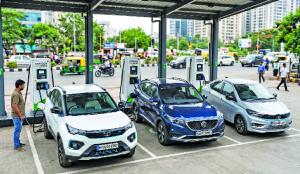
Last week, as the world marked EV Day, India’s electric mobility journey of speed, scale and sustainability stood out as a useful case study. Being the third-largest automotive market globally, India seeks to leverage its position to strengthen industrial competitiveness and boost economic growth while reducing oil dependence and advancing the sustainability transition. At the heart of this transition is its rapid shift to electric vehicles. The year 2025 saw a transformational surge, with 2.3 million units sold, from a modest 50,000 EVs sold in 2016, representing 46 times growth, outpacing global trends, and exports of USD 84 million in 2024 from just USD 1.2 million in 2020. This trajectory marks not just a technological change but a structural transformation of the mobility sector, while positioning India to emerge as a global hub of the EV ecosystem.
This transformation was driven primarily by motorised two-wheelers (12.8 lakh units) and three-wheelers (8 lakh units) sold in 2025, with the state of Uttar Pradesh leading the sales of EVs, with strong consumer demand.
Rightly hailed as the future of mobility, EVs present clear advantages over petrol- or diesel-run vehicles, such as zero tailpipe emissions, curbing air pollution; high efficiency; lower upkeep and maintenance costs; home-charging convenience; and smoother rides with no complicated controls. Government incentives such as tax deductions, reduced or waived road tax, vehicle registration fees and lower GST rates aim to integrate EVs into India’s broader sustainability and industrial competitiveness agenda.
Govt pushes for EVs, states leading the transition
In the last decade, India’s EV policy architecture has matured into a diversified set of schemes, incentives and mandates. The PLI-ACC Scheme promotes domestic battery manufacturing, while the National Manufacturing Mission (2025) identifies EVs as a “seed” sector for innovation-led growth, integrating production into global value chains. The PM E-DRIVE Scheme prioritises public transport for EV adoption through targeted demand incentives, expansion of charging infrastructure and domestic manufacturing of specified EV components, reinforced by the Phased Manufacturing Programme (PMP). Additionally, the PM e-Bus Sewa-PSM Scheme (2024) provides payment security coverage for electric buses, while the Scheme for Promotion of Manufacturing of Electric Passenger Cars in India (SPMEPCI) facilitates the manufacturing of electric cars in India. India aims for 30 per cent of all vehicle sales to be electric by 2030, aligning with the global EV30@30 initiative, and targets 1.32 million charging stations across India by 2030. These measures add structural depth to India’s electric vehicle ecosystem through the development, expansion and strengthening of the entire EV ecosystem.
With the central framework in place, states are leading the transition, tailoring their strategies to comparative advantages, local needs and development priorities. By the end of 2025, 29 states and UTs had notified EV policies, implying greater awareness of the urgency for EVs. Therefore, while Delhi’s EV policy is centred more on regulatory phase-out timelines regarding ICE (Internal Combustion Engine) vehicles in light of pressing air pollution challenges, states such as Gujarat, Assam, Meghalaya, Haryana, etc. offer attractive demand-side subsidies. However, subsidies alone cannot steer the big shift to EVs. A local manufacturing system is critical. States like Tamil Nadu, Maharashtra, Karnataka, etc. are leading the effort with heavy capital subsidies, easing processes for land allotment, registration fees, etc. Uttar Pradesh offers a mix of incentives for buyers, charging infrastructure developers, battery companies, fleet operators, manufacturers and businesses. Collectively, these approaches are fuelling India’s shift from an assembly-led market to an EV manufacturing hub, aligned with Make in India, Viksit Bharat 2047, climate and net-zero goals. This evolution represents a convergence of climate goals, industrial competitiveness and energy security.
Looking Ahead
Persistent deficits in infrastructure and the high cost of adoption continue to challenge India’s electric mobility trajectory. Yet, with the government’s focus on the next phases of Corporate Average Fuel Efficiency (CAFE) norms and global players such as VinFast and Tesla joining domestic leaders in investments in manufacturing and innovation, the sector is entering a crucial phase of expansion. Further, emerging technologies, including LMFP and sodium-ion batteries, etc, are reshaping the innovation frontier, promising efficiency gains, cost reductions and consumer confidence. Such developments would diversify consumer choices, boost growth and create new livelihoods while embedding sustainability into production systems.
Rising global demand for electric vehicles and India’s expanding network of free trade agreements are creating newer avenues for exports of EV equipment, batteries and components, projecting India as a competitive supplier in global value chains.
India’s EV transition is not a policy experiment. It is reconfiguring India’s transport sector’s sustainability shift while aligning industrial growth with global competitiveness.
Shehzad Poonawalla, public policy analyst & commentator, former spokesperson BJP. Vijeta Rattani, sustainability and development professional; Views presented are personal.