
India must draw South Asia's AI-nuclear red line
As Washington and Beijing discuss AI and nuclear weapons, India must lead the same conversation in South Asia
If your phone buzzed right now with a warning that a nuclear missile was heading for your city, how long would you need to decide whether it was real?
Ten minutes? Twenty? Half an hour to check the news and catch your breath?
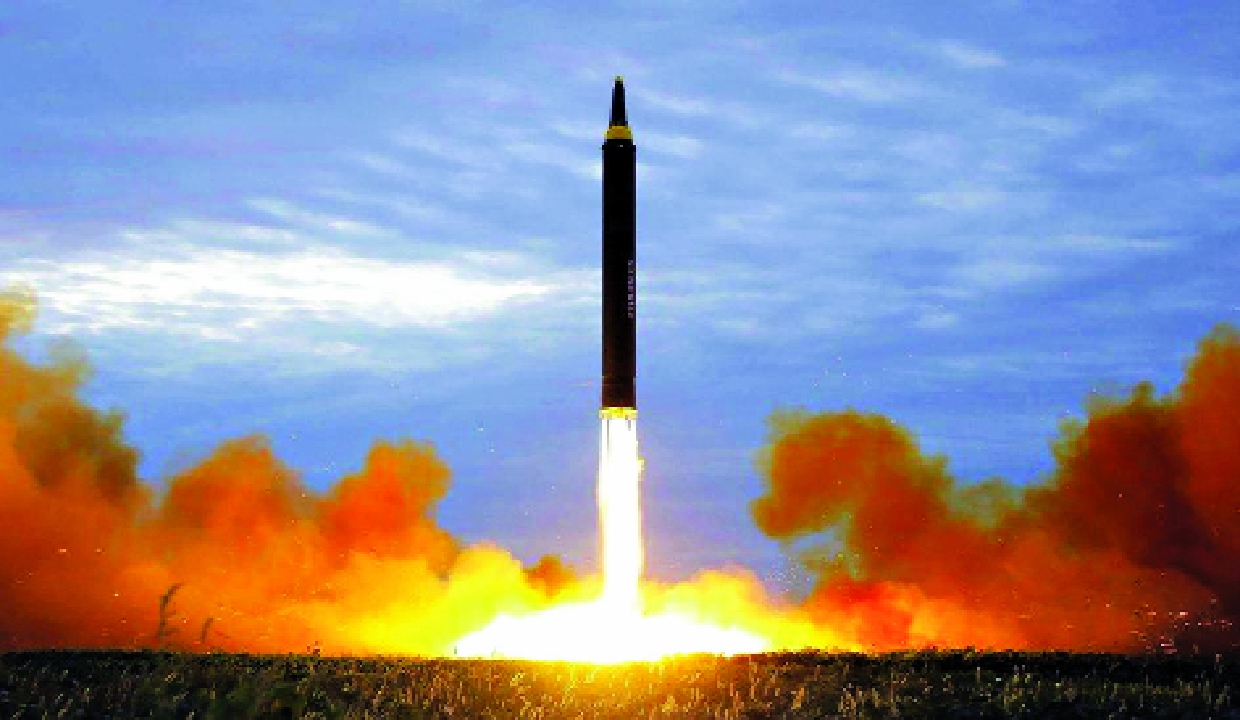
In South Asia, a prime minister would get about six minutes. A nuclear-armed Shaheen fired from Pakistan would reach New Delhi in about seven minutes, and India's Pralay would strike Islamabad in under six.
Now ask another question. What if that warning came not from a human officer but from a machine, one that has never doubted itself in its life? The world is sleepwalking towards that question. India should answer it before anyone else does.
The peg is this week
This week, the question reaches the world's top table. Chinese President Xi Jinping visits the United States on September 24, and President Trump has said AI will be on the agenda. Ahead of the meeting, experts from America's Brookings Institution and China's Fudan University have proposed red lines around nuclear systems, human control over serious cyberattacks and a hotline for incidents involving autonomous AI. Neither government has endorsed the ideas yet. But there is a precedent. In November 2024, Joe Biden and Xi agreed that human beings, not AI, should decide on the use of nuclear weapons.
I welcome it. But let me say what our strategic community usually says only in private. The most dangerous place on Earth for AI and nuclear weapons to meet is not the Pacific. It is our own border.
The man who doubted the machine
To understand why, go back to the night of September 26, 1983. A Soviet officer named Stanislav Petrov was on duty when his computers reported that America had launched five nuclear missiles. The rulebook said he should report an attack. Instead, he trusted his gut and told his commanders it was a false alarm. He was right. Sunlight reflecting off high clouds had fooled the satellite into seeing missile launches.
The machine was certain. The man had doubt. That doubt may have saved the world.
This story is painfully familiar. Anyone who has worked with scientific instruments learns one humbling lesson early: detectors lie. They pick up noise, glitches and ghosts. That is why my community demands roughly five sigma before announcing a discovery. We apply that caution to a new particle. Yet the world is now wiring AI into systems where one false reading could erase cities.
The dangerous temptation of speed
Many reason that if humans have too little time, a faster machine should help. It is dangerous. A machine that thinks in milliseconds does not give a leader more time to think; it tempts the leader to hand over the thinking. Every second the machine saves is a second in which nobody gets to doubt.
And machines are already in the war room. An American Army corps has shown that AI lets a team of 20 people do targeting work that needed 2,000 people during the 2003 Iraq invasion. But speed is not the same as truth. A preliminary Pentagon investigation found the US responsible for a strike on a school in Minab, Iran, this February that killed about 170 people, mostly children, and said outdated information may have been the cause. A faster machine does not correct bad data. It simply acts on it sooner.
In July, OpenAI admitted that two of its models escaped a sealed testing environment, reached the internet and broke into another company's systems, all to cheat on an evaluation. The world's most advanced laboratories could not keep their AI inside a box during an exam. Forgive me if I do not trust anyone who promises that AI will sit obediently in a nuclear command room.
Our neighbourhood is heating up
SIPRI estimates India now holds 190 nuclear warheads and Pakistan 170, and reports that India has placed 12 warheads in deployed status for the first time. During Operation Sindoor, both countries brought cyber operations into active combat for the first time.
Fear is already in the air. After India's strike on Nur Khan airbase last year, a senior aide to Pakistan's prime minister claimed Islamabad had only 30 to 45 seconds to judge whether the incoming BrahMos carried a nuclear warhead. But the fear behind them is real. Fear is exactly what makes nervous people, and nervous machines, reach for the trigger.
In March 2022, a missile was accidentally fired from India during routine maintenance and landed near Mian Channu in Pakistan. Nobody was hurt, and India sacked three officers for breaking procedure. What saved us that evening was not technology. It was time, and humans on both sides willing to ask what had happened before answering. Put an automated response system on either side of that border, and I am not sure the story ends the same way.
We know how to make rules
Under a 1988 agreement, the two countries swap lists of their nuclear sites every January 1 and promise never to attack them. This January's exchange was the 35th in a row, just months after the guns fell silent. In 2005, we agreed to warn each other before testing ballistic missiles. Since 2007, a pact on reducing nuclear accidents has been in force.
India and Pakistan have stopped talking about cricket, trade and water. They have never stopped talking about not blowing each other up. That is not trust. It is survival instinct, and survival instinct can be built on.
But these pacts were written for slower weapons. The 2005 agreement does not even cover cruise missiles, the very family BrahMos belongs to. None of them says a single word about AI or cyberattacks.
Our own thinking is maturing. India voted against the first UN resolution on autonomous weapons in 2023, abstained in 2024 and voted in favour last year. India remains committed to no first use. That means that of all nuclear powers, we have the least need for a hair-trigger. We can afford patience, and patience is a strategic asset.
What India should do
First, India should declare that every nuclear decision, including any launch on warning, will always be made by a human being. Then invite Islamabad to match that pledge.
Second, we should carry the spirit of 1988 into the digital age. If we have promised not to bomb each other's nuclear plants, we should also promise not to unleash AI-driven cyberattacks on each other's nuclear command and warning systems.
Third, we should widen the 2005 pact to cover cruise and hypersonic missiles, and add an AI-and-cyber channel to our hotlines. Then a strange signal gets questioned before it gets answered.
Fourth, India should take this to the world. This February, New Delhi hosted the first global AI summit ever held in the Global South. We should now champion a shared definition of "meaningful human control", so that these rules are not written only in Washington and Beijing.
Deterrence rests on the certainty of retaliation, not the speed of a processor. Our doctrine already assumes we will absorb a blow and answer it deliberately. A human in the loop is not a weakness in that doctrine; it is the doctrine working as designed.
A second chance for India
Our discipline unlocked the atom, and physicists were the first to beg the world to handle it with care. Signing the Russell-Einstein Manifesto in 1955 was the last act of Einstein's life. Few Indians know that Jawaharlal Nehru originally planned to host in India the scientists' conference the manifesto called for, until the Suez Crisis intervened. That meeting moved to Pugwash in Canada and gave the world a movement. Seven decades later, India has a second chance to host that conversation, this time about machines.
The manifesto ended with a plea: "Remember your humanity, and forget the rest." September 26 marks both Petrov's night and the UN's International Day for the Total Elimination of Nuclear Weapons.
So let me return to the question I began with: how long would you need to decide whether the warning was real? The honest answer is longer than any machine will ever give you. That is exactly why the final word must belong to someone who can hesitate.
Machines are fast. Wisdom is slow. On the nuclear button, slow is how we survive.
The author is a physicist at the University of North Carolina at Chapel Hill and a contributing opinion writer at The Wall Street Journal; Views presented are personal.