
India gets 6.94 lakh tonnes of steel quota annually under India-EU FTA
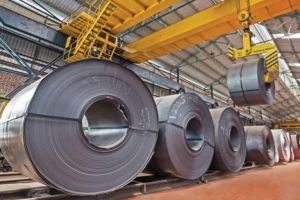
India will get country-specific tariff-rate quotas (TRQs) totalling 16.41 lakh tonnes annually for exporting steel products to the European Union, including 6,94,853 tonnes under the India-EU free trade agreement, according to the draft text of the pact released by the EU.
The total quota of 16,41,470 tonnes comprises 9,46,616 tonnes under the most favoured nation (MFN) component and 6,94,853 tonnes under the FTA component.
The quotas cover several steel products, including non-alloy and alloy hot-rolled sheets and strips, cold-rolled sheets, metallic-coated and organic-coated sheets, tin mill products, stainless steel products, merchant bars and light sections, rebars, wire rods, pipes and tubes.
India currently exports around four million tonnes of steel annually to the EU.
The TRQs come against the backdrop of the European Union's Steel Overcapacity Regulation, which came into force on July 1 this year to protect the bloc's steel industry from the impact of global overcapacity.
The regulation provides for duty-free quotas of 18.3 million tonnes, a 50 per cent duty on imports beyond the quota and a melt-and-pour regime aimed at improving transparency.
According to the draft pact, the largest country-specific quota for India is for non-alloy and other alloy hot-rolled sheets and strips at 5,09,605 tonnes. This includes 2,99,197 tonnes under the MFN component and 2,10,408 tonnes under the FTA component.
The quota for cold-rolled sheets stands at 2,18,658 tonnes, while that for metallic-coated sheets is 1,97,860 tonnes.
Other significant quotas include 1,86,038 tonnes for organic-coated sheets, 1,81,835 tonnes for non-alloy and other alloy quarto plates, 85,157 tonnes for another category of metallic-coated sheets and 79,278 tonnes for stainless steel bars and light sections.
The text said the TRQs for steel products originating in India would take effect from the date on which the EU Steel Regulation starts applying.
Steel imports from India beyond these quotas will attract the applicable base-rate duties under the EU's tariff commitments.
The EU has also committed to consult India immediately if it proposes changes to the Product Specific Rules (PSRs) for products covered by the Steel Regulation.
The bloc would administer the TRQs in a transparent, objective and non-discriminatory manner, with the aim of facilitating trade and, as far as feasible, ensuring effective utilisation of the quotas.
The agreement also provides for timely and continuous public disclosure of relevant information relating to the administration of the quotas.
India will have access to additional quota volumes in product categories where it already has a country-specific quota. These additional volumes will be allocated through competition among EU FTA partners that have country-specific quotas in those categories.
For categories where India has no country-specific quota, it will be eligible for residual quotas, including general residual quotas open to eligible trading partners and preferential quotas reserved for EU FTA partners.
The agreement provides for periodic reviews of the quotas, with the first review to be initiated one year after the FTA comes into force and subsequent reviews every five years.
India and the EU announced the conclusion of negotiations for the trade pact on January 27. The agreement is expected to be signed by the end of this year and is likely to be implemented next year.