
India emerging as global solution hub for future challenges, says Om Birla
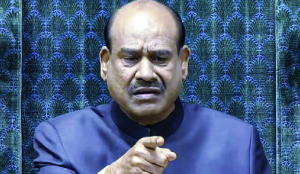
Lok Sabha Speaker Om Birla on Saturday said India was emerging as a centre for solutions to “all the challenges of humanity - present and future”, and asserted that the world was looking towards the country and its IITs for answers to future global challenges.
Addressing an event at IIT Delhi, Birla said the institutions had evolved from being engineering centres into key hubs of innovation, research and problem-solving across sectors ranging from agriculture and water to AI, robotics, clean energy and public welfare.
The event, held to celebrate 75 years of IIT excellence, also saw the launch of the PanIIT Book Club and inaugural book release - IIT: The Story of India’s Most Prestigious Educational Ecosystem, authored by Prabhat Kumar, IRS, Chairman, Pan IIT Alumni India, at the Lecture Hall Complex, IIT Delhi.
Pan IIT Alumni India, the apex body representing over 500,000 alumni from all 23 Indian Institutes of Technology across the globe.
“We are not working only for the country; India is becoming a centre for solutions to all the challenges of humanity — present and future. That is why the world is looking toward us, believing that the solutions to future global challenges will emerge from IIT institutions,” he said.
Birla said PM Narendra Modi wants reforms in every sector with the aim of improving the lives of all citizens. He said the confidence in India’s technological and intellectual capacity was reflected in the global expectations placed on the country and its youth.
Referring to PM Modi’s recent participation in the G7 Summit, Birla said world leaders had conveyed that “all expectations and aspirations are now pinned on India, and on India’s youth”, whether it is technology, the AI sector, or any other field. Birla said the IIT system was built in difficult circumstances after Independence, when the country had limited resources but a strong educational foundation and human capital.
“If you look at the budget of 1947, we had begun our development journey with a budget of only Rs 175 crore,” he said, adding that even with limited resources, India’s education system was geared towards innovation. “Our education system, with whatever resources were available, was geared toward innovation, and IIT as an institution proved to be a very strong foundation stone,” he said.
Recalling the early years of IIT Kharagpur, Birla said the institution’s rise was shaped not by infrastructure but by the strength of its people.
“We did not have buildings or resources, but our human resource strength was immense. Their thinking, their capability, and their capacity for innovation were extraordinary,” he said. “That is why, despite having limited means, we have today achieved global excellence for the IIT institution,” he added. Birla said IITs had come to be recognised globally as symbols of excellence in higher research, innovation, science and technology, with many countries trying to build similar institutions with India’s help.
“Whenever I travel to different countries in the world, they always mention IIT. Presidents and prime ministers of those countries often express that they too would like institutions in their own countries like IIT,” he said.
He also said no institution in the world matched IITs in terms of “quality, innovation, research, and creativity”, and asserted that institutions are built by the thinking, capability, and innovative capacity of the youth, not by buildings alone.
“Buildings and infrastructure alone do not make an institution. It is our youth — their thinking, their capability, their capacity to innovate, and their vision for creation — that truly builds institutions,” Birla said.
He said IIT graduates had also made their mark globally and called for a systematic effort to document their work across countries and sectors. “We should make an effort to compile everyone’s biographies, and document the sectors in which they have worked, the sectors in which they are still working, and the sectors in which there is scope for future work,” he said.
He said such an exercise would not only highlight the contribution of Indian youth to the world but also “inspire future students, give them new direction, new perspectives, and new ideas”. Birla said IITs were no longer confined to engineering and were now working on issues directly linked to people’s lives.