
India and China continue diplomatic reset as Jaishankar meets Wang Yi in Manila
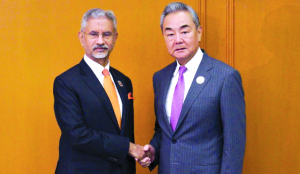
External Affairs Minister S Jaishankar met Chinese Foreign Minister and Politburo member Wang Yi on the sidelines of the ASEAN Foreign Ministers’ Meeting in Manila, signalling continued efforts by India and China to stabilise bilateral relations more than six years after the deadly Galwan Valley clashes.
The meeting comes amid a gradual improvement in ties following sustained diplomatic engagement between the two Asian neighbours. Referring to the progress made since the leaders’ meeting in Kazan in October 2024, Jaishankar said relations had been steadily moving towards normalisation. “Since the meeting of our leaders in Kazan in October 2024, relations between India and China have been gradually normalising,” Jaishankar said. “This direction was further affirmed when they met in Tianjin last August.”
The External Affairs Minister underlined that a stable India-China relationship was essential not only for the two countries but also for the broader regional and global order. “Such a relationship can make a valuable contribution to a multipolar Asia and a multipolar world,” he said, adding that bilateral ties should be guided by the principles of “mutual respect, mutual interest and mutual sensitivity.”
Reiterating India’s long-standing position on border issues, Jaishankar stressed that peace along the Line of Actual Control (LAC) remained the foundation for normal bilateral relations. “Peace and tranquillity in the border areas is obviously the prerequisite for normal ties. Since October 2024, both sides have engaged to ensure that important objective. This will continue to need our constant attention,” he said.
He also recalled the understanding reached by the two leaderships that “differences should not become disputes,” emphasising the need for sustained diplomatic engagement to manage differences responsibly. Highlighting recent confidence-building measures, Jaishankar welcomed the resumption of direct flights, updated visa arrangements, the restart of the Kailash Manasarovar Yatra, and the reopening of border trade. At the same time, he flagged unresolved economic concerns, including the need for fair market access, addressing the trade imbalance, and ensuring more predictable supply chains.
The meeting took place against the backdrop of a gradual reset in India-China relations. Following the violent Galwan Valley clash in June 2020, which claimed the lives of 20 Indian soldiers and an undisclosed number of Chinese troops, the two sides have carried out disengagement at several friction points along the LAC while maintaining military and diplomatic dialogue.
The two ministers also discussed multilateral cooperation. India, which holds the BRICS chairmanship this year, will host the BRICS Summit in September.
China has extended its support for India’s BRICS Presidency, reflecting a shared interest in maintaining engagement through multilateral platforms even as both countries continue to address bilateral challenges.