
Hyundai races to add capacity as demand booms but won’t bet on hybrids without price fix: Official
Hyundai India has brought forward a third production shift at its Talegaon plant by a full 18 months, a sign of just how far demand has outrun the company’s own planning. Speaking to this reporter, Hyundai India’s Chief Executive Officer (CEO) Tarun Garg said the surge left the company with little choice but to accelerate a shift addition that wasn’t originally due for another year and a half.
The company’s current annual capacity stands at 894,000 units, and Garg said Hyundai expects to cross the 1 million mark by FY30, with planned improvements at both its Chennai and Talegaon facilities. It’s a capacity build-out that puts Hyundai squarely in expansion mode as India car sales rocket at a pace to cross the five million mark this fiscal.
Diesel holds on, EVs pick up pace
Diesel, often written off as a fading technology in the passenger vehicle market, still accounts for roughly 40 percent of Creta sales, Garg said. At the other end of the powertrain spectrum, Hyundai sold almost 1,000 units of the Creta Electric last month, and Garg pointed to a broader uptick in EV penetration that he linked to the period following the Iran war, a fact corroborated by other manufacturers including EV sales leader Tata Motors.
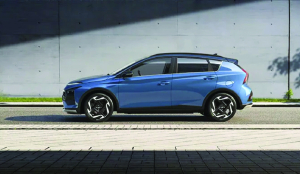
Garg also said Hyundai is preparing to launch a “born electric” B-segment SUV - a vehicle built on a dedicated EV platform rather than an adapted ICE one - before the end of the current fiscal year. And will be “very competitively priced.”
The hybrid math doesn’t add up yet - and Hyundai isn’t waiting on Delhi to fix it
The most pointed part of the conversation concerned hybrids. Garg confirmed Hyundai has both plug-in hybrid (PHEV) and range-extender EV (REEV) technology in its portfolio, and he was unambiguous about where he thinks the sweet spot lies: PHEV, he said, is “the best of both worlds.”
But that technical enthusiasm comes with a commercial caveat. Garg said Indian buyers are simply not willing to absorb the price gap between a conventional ICE vehicle and a hybrid - whether a standard HEV or a plug-in — and, notably, he said he isn’t counting on New Delhi to close that gap. He does not expect government support in the form of lower GST or state-level incentives to make hybrids more price-competitive any time soon.
That’s a meaningfully different bet than the one being made by rivals such as Toyota, Maruti Suzuki, Honda and even their sister-firm Kia, all of which have leaned into hybrids or plan to launch several hybrid and PHEV models in the coming months, partly on the expectation of favorable tax treatment.