
How Rising E-Challans in India Are Making Cars24's Challan Service a Must-Have
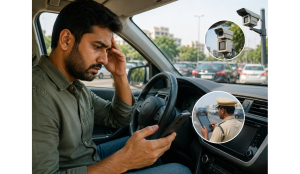
India's traffic enforcement landscape has changed dramatically over the last five years. The shift from manual challan issuance to automated, camera-based e-challans has been fast and wide-reaching. More vehicles are getting flagged. More fines are being recorded. And most vehicle owners do not even know a challan exists until it causes a problem.
This change has made challan management a real concern for anyone buying or selling a used car. Cars24 has responded to this shift by building a challan verification and payment service into its platform. This article looks at why e-challans are rising, what that means for vehicle owners, and how a service like Cars24's becomes increasingly relevant in this environment.
The E-Challan Revolution in India
For most of India's road history, traffic challans were issued manually. A traffic officer would stop a vehicle, identify a violation, fill out a physical form, and hand it to the driver. The system was slow, inconsistent, and easy to avoid.
That model began changing around 2017 and accelerated significantly after 2019. The government introduced a centralized e-challan system under the Ministry of Road Transport and Highways. This system connects traffic enforcement cameras, automated number plate recognition (ANPR) systems, and state transport databases into a single network.
Today, a vehicle can receive a challan without the driver ever knowing it happened. A speed camera captures the number plate. The system matches it to the vehicle's RC in the Vahan database. A fine is generated and sent to the registered address or made available on the Parivahan portal. The driver may be kilometres away and completely unaware.
As of 2023 and into 2024, the e-challan system has been adopted across more than 200 cities in India. States like Rajasthan, Uttar Pradesh, Karnataka, Tamil Nadu, Delhi, and Maharashtra have aggressive camera-based enforcement programs. The numbers are significant. Rajasthan alone reported issuing millions of e-challans in a single year through its automated systems.
Why E-Challans Are Growing Faster Than Ever
Several factors are driving the sharp rise in e-challans across India.
Expansion of surveillance infrastructure: State governments have invested heavily in traffic cameras, red-light violation detection systems, and speed guns. Many national highways now have cameras at regular intervals. City intersections in major metros are almost fully covered. As the camera network grows, so does the volume of challans generated.
The Motor Vehicles Amendment Act of 2019: This landmark legislation increased fine amounts significantly across nearly every category of traffic violation. Higher fines mean the government has a stronger incentive to enforce consistently. This gave state transport departments a reason to invest in automation. More automation means more challans.
Integration with Fastag and ANPR: India's Fastag rollout gave the government a way to track vehicle movement on highways in real time. Combined with ANPR cameras, this has made it possible to identify vehicles that are speeding, switching lanes dangerously, or violating other rules on highways where human policing would be impractical.
Reduced human intervention: Automated systems do not take breaks, do not accept settlements on the road, and do not miss vehicles in traffic. They operate continuously. This consistency has led to a dramatic increase in the number of violations being captured and recorded.
State-level competition in enforcement: Several state governments now publicly report their e-challan statistics as a measure of road safety progress. This creates an institutional push to issue and collect more challans, not fewer.
The result of all these factors is simple. There are more e-challans today than at any point in India's traffic history. And that number is growing year on year.
The Blind Spot for Vehicle Owners
The rise of automated challans has created a significant blind spot for vehicle owners. In the old manual system, you knew about a challan because an officer handed it to you. In the new system, you may have accumulated multiple fines over months or years without receiving any direct notification.
This is especially common in a few situations.
Vehicles that have changed hands informally, without completing the RC transfer, may have challans accumulated by the previous owner. The fine is linked to the registration number, and the RC still shows the old owner's address, so notifications go to the wrong person.
Vehicles used in cities other than their registration state can receive challans from that state's systems. The owner, living in a different state, may never receive the physical notice. The fine sits in a database, growing in some cases due to state-level late payment rules.
Older vehicles that were registered before the owner's current mobile number was linked to the RC may not receive SMS alerts at all. The challan exists, but no notification ever reached the owner.
For someone selling a used car, this is a real risk. They may genuinely not know how many challans are linked to their vehicle. And for a buyer, taking ownership of a car without checking its challan status is like buying something without checking if it has a loan against it.
What Happens When Challans Are Discovered at the Wrong Time
The worst time to discover a challan is when you are trying to complete a vehicle transaction. This happens more often than people expect.
When a seller approaches an RTO to initiate a registration transfer after selling a car, the department runs a check on the vehicle. If there are outstanding challans, and the state policy requires them to be cleared before transfer, the process stops. The seller is now stuck. They may have already handed over the car. The buyer is waiting. And clearing the challan requires navigating a state portal, paying the fine, getting confirmation, and resubmitting to the RTO. This adds days to the process and creates friction for everyone involved.
For buyers, discovering challans after purchase is worse. They paid for the car in good faith. But the RC transfer cannot proceed until dues are settled. In some cases, buyers end up paying fines they had no role in generating, simply to move the paperwork forward.
The financial impact is not limited to the challan amount itself. There is the cost of time, the cost of potential agent fees, and in some cases, the cost of a deal that falls apart entirely when one party refuses to absorb the additional burden.
How Cars24's Challan Service Fits Into This Landscape
Cars24 operates as one of India's largest used car platforms. Millions of transactions happen on the platform each year. The company has seen firsthand what happens when challan issues surface mid-transaction. That experience has shaped the development of its challan service.
The service works by querying the vehicle's registration number against traffic enforcement databases across multiple states. When a car is listed, evaluated, or in the process of being bought or sold through Cars24, this check happens as part of the transaction workflow. Pending challans are surfaced clearly, before they become a problem.
Users can then pay outstanding challans directly through the platform. They do not need to identify which state issued the challan, find the correct portal, navigate government websites, or visit an office. The payment is processed and confirmed within the Cars24 interface.
This matters more today than it did three years ago. In 2021, a car might have had one or two challans linked to it. In 2024, with multi-state enforcement, ANPR cameras on highways, and years of automated issuance running in the background, a vehicle could easily have five or ten challans spread across different states and systems. Checking them manually is a real task. Having a platform handle it automatically is a genuine convenience.
Why This Is Increasingly a Baseline Expectation
The used car market in India has matured significantly. Buyers today are more informed. They check service history, look for accident reports, verify insurance status, and ask questions about ownership history. Challan status is becoming part of this standard due diligence.
As e-challan enforcement grows, more buyers will start asking: is this car challan-free? If they have had a bad experience in the past, they will make it a condition of purchase. Sellers who can answer that question with verified data, backed by a platform check, will be in a stronger position than those who cannot.
For Cars24, offering this as part of the transaction flow is not just a feature. It is increasingly a baseline expectation in a market where enforcement has automated and the stakes of an unresolved challan are higher than they used to be.
The Broader Implication for Used Car Buyers and Sellers
India's used car market handles over four million transactions a year. A significant proportion of these involve vehicles that have been driven for three to eight years. Over that period, the probability of accumulated challans is high, especially for vehicles that have been used in multiple cities or transferred informally at some point.
As enforcement infrastructure continues to expand, as more states come online with ANPR systems, and as the Vahan database becomes more tightly integrated with state traffic portals, the challan problem will only get larger. Vehicles that are sold today without a challan check may turn out to have fines that surface six months later when the buyer tries to renew fitness certification or process a resale.
Building challan verification into the used car transaction process is a logical response to a structural shift in how traffic enforcement works in India. It is not about reacting to a short-term problem. It is about adapting to a permanent change in the operating environment for vehicle ownership.
Final Thoughts
The rise of e-challans in India is not a trend that will reverse. The infrastructure is built. The policy support is in place. Enforcement will only become more consistent and more automated over time.
For vehicle owners, this means that staying on top of challan status is no longer optional. It is a regular part of responsible vehicle ownership, much like renewing insurance or checking pollution certificates.
For anyone buying or selling a used car, verifying challan status before a transaction is a straightforward way to avoid legal complications, protect the value of a deal, and ensure a clean RC transfer. Cars24's challan service makes that step easy, fast, and integrated into the transaction workflow at a time when the need for it has never been greater.