
Hasina’s return and India-Bangladesh ties
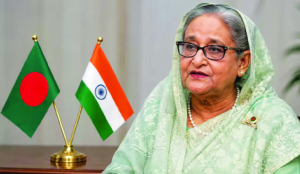
Beyond the immediate political confrontation, Hasina’s return could affect Bangladesh-India ties and cooperation on issues ranging from security and trade to the Rohingya crisis and climate change. The episode could prove a critical test of Bangladesh’s political stability and India’s delicate balancing act with its eastern neighbour
Former Prime Minister Sheikh Hasina, currently in exile in New Delhi, announced her intention to return to Dhaka in December 2026, despite facing a death sentence in absentia. This planned return has sparked diplomatic outrage from Prime Minister Tarique Rahman. It has also reignited national political tensions and complicated the bilateral relationship between Bangladesh and India.
Hasina, who has sought political asylum in India since 2025 following the abrupt overthrow of her government, has made a public declaration regarding her intention to return to Bangladesh by the end of this year. This announcement comes even though she has been sentenced to death by an International Crimes Tribunal due to her alleged involvement in serious human rights violations during her time in office. In her statement, she expressed determination, saying, “I may be jailed, but I will return to Bangladesh by December.” Her return is expected to stir significant political tension and public interest as she prepares to face the consequences of her legal battles in her home country.
“I’m not worried about my own future. I’m worried about the future of Bangladesh. My return isn’t about power. It’s about putting Bangladesh back on the right track.” “People of Bangladesh have suffered a lot, and that’s why I decided to return,” she said.
She may face challenges such as climate change and security threats. Her ability to manage regional stability will influence regional peace and security.
In 2025, Sheikh Hasina, the long-serving Prime Minister of Bangladesh, sought asylum in India due to political turmoil and accusations of authoritarian governance in Bangladesh.
As news of Sheikh Hasina’s proposed return to Bangladesh emerges, understanding its regional and national implications is crucial for grasping the future of South Asian politics.
The potential impacts of her return on Bangladesh and South Asian relations are vital for regional stability and India’s strategic interests.
Sheikh Hasina has been a key figure in Bangladeshi politics, leading the Awami League party, which her father founded. Her time in office has been characterised by significant economic growth. Ousted former Prime Minister Sheikh Hasina announced from exile in New Delhi that she plans to return to Dhaka in December 2026, despite facing a death sentence in absentia. Her planned return has triggered diplomatic outrage from Bangladesh’s government under Prime Minister Tarique Rahman, reignited national political tensions, and complicated bilateral ties with India. It has also raised concerns about human rights abuses and the suppression of political dissent. After her departure in 2025, a power vacuum emerged, leading to increased instability and allowing the opposition and various factions to gain strength.
The potential return of Hasina may invigorate the Awami League, restoring party cohesion and rallying the support of loyal constituents who have remained steadfast during her absence. Her leadership could help unify party members in confronting opposing political forces and reinstate the party’s prominence within the political landscape.
Hasina’s return may offer a chance for political reconciliation, helping to unify opposing factions and promote stability in Bangladesh. Hasina’s administration is anticipated to focus on restoring institutional trust and resolving governance challenges. This may encompass reforms aimed at enhancing human rights conditions, ensuring the integrity of electoral processes, and promoting economic transparency. Nevertheless, the efficacy of these initiatives will depend on her capacity to navigate the prevailing political divisions.
The opposition parties, particularly the Bangladesh Nationalist Party (BNP), may regard Hasina’s return as a significant threat to the democratic process. This perception could incite increased protests and resistance, thereby complicating her capacity to lead effectively without resorting to repressive measures.
Hasina’s return to power has the potential to enhance bilateral relations with India, particularly considering her historically pro-India stance. Increased cooperation on matters such as trade, immigration, and regional security may reinforce diplomatic ties and provide mutual benefits for both nations.
Hasina’s political actions could strengthen alliances in the region against growing influences from China and other countries. A stable Bangladesh under Hasina could help balance Chinese investments in the area, especially in neighbouring countries.
Bangladesh faces significant impacts from climate change. Hasina can spearhead initiatives to enhance collaboration with neighbouring countries on climate resilience strategies.
The policies implemented by Prime Minister Hasina concerning the Rohingya refugee crisis are of significant importance. A collaborative framework involving India and Myanmar may facilitate constructive solutions and influence how regional governments address migration and humanitarian challenges.
Sheikh Hasina’s proposed return is a pivotal moment that could influence regional cooperation on climate change, migration, and security, shaping South Asia’s future.
Prime Minister Sheikh Hasina announced from exile in New Delhi that she plans to return to Dhaka in December 2026, despite facing a death sentence in absentia. Her planned return has triggered diplomatic outrage from Bangladesh’s government under Prime Minister Tarique Rahman
The writer is a popular columnist; Views presented are personal.