
Govt directs GitHub to remove Bitchat amid security concerns
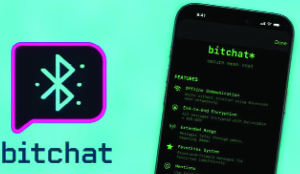
The Indian Cybercrime Coordination Centre (I4C), under the Ministry of Home Affairs (MHA), has directed Microsoft-owned GitHub to remove repositories hosting Bitchat, a Bluetooth-based messaging application developed by former Twitter CEO Jack Dorsey. The notice, issued on 23 July 2026, required GitHub to restrict access to the source code, Android version and related software releases within three hours.
Bitchat is an open-source tool that lets people communicate offline when regular networks are not available. The government used the Information Technology Act, 2000, and related rules to issue its directive to GitHub.
The I4C stated that Bitchat’s technical architecture enables decentralised peer-to-peer messaging over Bluetooth mesh networks without relying on mobile networks, the internet or centralised servers. This design, the notice said, significantly impedes lawful interception, attribution and investigation by law enforcement agencies.
The reason being, the app poses a “substantial risk of misuse by anti-national elements, terrorist organisations and organised criminal groups” seeking to evade lawful surveillance. Bitchat is precisely what its critics fear. It is a peer-to-peer tool that works without internet, cellular networks, phone numbers or central servers. Messages hop between nearby devices over Bluetooth Low Energy mesh networks: no registration, no logs, no single point of interception. Jack Dorsey designed it as a simple offline side-channel for classrooms, flights, or town squares.
Sources say there is a genuine security concern here. Law enforcement has legitimate needs to investigate real threats. An app that leaves no digital trail complicates attribution and is hard to trace.
This application allows anonymous communication without user registration, phone number verification or centralised message logging. Messages are transmitted directly between nearby devices, which the government argued could facilitate the circumvention of lawful restrictions imposed during situations involving public disorder, riots, terrorism, organised crime or internet shutdowns.
Intelligence reports suggested that these platforms might be used to organise illegal gatherings, spread false information, encourage radicalisation, and support criminal activities that threaten India’s sovereignty, integrity, defence, security, and public order. The directive came after officials noticed that some participants in the Cockroach Janta Party (CJP) protest at Delhi’s Jantar Mantar used Bluetooth-based messaging apps when internet access was temporarily restricted near the protest site.
The CJP has been organising demonstrations seeking the resignation of the Union Education Minister over issues related to competitive examinations. Dorsey shared a copy of the notice on X and stated that the Government of India does not like technologies like Bitchat and wants it taken down. The Internet Freedom Foundation has described the order as unconstitutional, arguing that it targets the application’s architecture rather than specific unlawful content and bypasses standard judicial procedures for content blocking.