
Gau Mutra: Science should not be ridiculed
Throughout history, many medicines originated from traditional knowledge. Aspirin evolved from willow bark, artemisinin from traditional Chinese medicine, and numerous modern drugs have their roots in indigenous medical systems
Priyanka Gandhi’s recent reference to an IIT Director as a “gau mutra expert” has ignited a debate that extends beyond politics. The real question is not whether one personally believes in traditional remedies or not. The question is whether scientific inquiry should be encouraged or ridiculed. Science advances by testing hypotheses, not by mocking them.
Throughout history, many medicines originated from traditional knowledge. Aspirin evolved from willow bark, artemisinin from traditional Chinese medicine, and numerous modern drugs have their roots in indigenous medical systems. The correct scientific approach is to investigate traditional claims objectively, accepting those supported by evidence and rejecting those that fail rigorous testing. For the sake of dispelling ignorance, I must state that more than 70 per cent of chemicals used in modern medicine are phytochemicals, which means originating from plants, and a whole lot of those plants aren’t originally from the Western Hemisphere.
Contrary to claims that there is “no science” behind gomutra, several peer-reviewed studies have investigated cow urine and cow urine distillate. Published research has reported antibacterial activity against certain bacteria, antifungal activity, antioxidant properties, immune-modulating effects, and potential bio-enhancer properties that may improve the effectiveness of some antibiotics in laboratory settings. Most importantly, these findings are primarily laboratory (in vitro) or animal studies, and in India, it has been practised on humans as part of traditional medicine. Therefore, they should be viewed as promising research and further establish the same with precision for medical treatments.
The two patents in the United States of America, which were highlighted by Parliamentarian Sudhanshu Trivedi in the Lok Sabha, very strongly relate to cow urine distillate, involving pharmaceutical compositions using cow urine distillate as a bio-enhancer and use of bioactive fractions of cow urine distillate to enhance antimicrobial and anticancer agents. Research involving cow urine or cow urine distillate has been carried out by scientists affiliated with institutions in several countries, including India, Nepal, United States, and United Kingdom, includes collaborative research and publications. The research has largely focused on antimicrobial compounds, antioxidant activity, bio-enhancer effects, veterinary applications, and antiviral screening.
Recent laboratory work has investigated whether compounds isolated from cow urine distillate demonstrate antiviral activity against viruses such as Chikungunya under laboratory conditions. This illustrates an important scientific principle that Traditional medicinal claims deserve investigation in order to identify positive laboratory findings, and nothing stops the sceptics to research further and test the safety for human use, which may require rigorous clinical evidence.
The issue becomes bigger than cow urine when parachute or hereditary politicians ridicule scientific investigation because the subject originates from traditional knowledge - knowledge of which they lack, they risk discouraging legitimate research. The scientific method requires openness, scepticism, replication, and evidence. The appropriate response is therefore not blind acceptance or blanket dismissal, but rigorous evaluation.
Priyanka Gandhi’s description was intended as political criticism, but it raises a deeper question: Should scientific inquiry be dismissed because its subject appears unconventional or rooted in traditional knowledge? The remark has drawn criticism from hundreds of academicians, who argued that reducing a distinguished scientist to a single label undermines academic discourse. History reminds us that many scientific ideas initially faced ridicule before they were properly evaluated.
I am reminded of Galileo, who did not become famous because he was always right. He became famous because he insisted that evidence-not ridicule or authority-should decide scientific questions. When Galileo argued that the Earth revolved around the Sun, many dismissed or opposed his work because it challenged accepted beliefs. Over time, observations and evidence established the heliocentric model.
If the politically driven criticism was directed at specific scientific claims, those claims should be challenged with data. If the criticism was directed simply at the fact that a scientist has researched or discussed cow urine, then it risks discouraging inquiry into traditional knowledge. Ridicule has never been part of the scientific method.
The appropriate response to controversial research is not to dismiss researchers with labels, nor to accept every traditional claim uncritically. It is to let evidence decide. Whether future research validates, refines, or disproves claims about gomutra should be determined in laboratories and clinical trials and not in political speeches.
What the global Scientific Community agrees is that cow urine contains biologically active compounds that merit scientific investigation. Secondly, laboratory and animal studies have reported antimicrobial, antioxidant, and immunomodulatory effects. While scientists in India such as Dr Suman Preet Singh Khanuja led research on cow urine distillate as a bio-enhancer that could improve the absorption and effectiveness of antibiotics and anticancer drugs and is also the co-inventor of US patents on cow urine distillate. Dr Mahendra Pandurang Darokar, who is a medicinal plant and natural products researcher, worked on antimicrobial and pharmaceutical applications of cow urine distillate as part of the CSIR team. This balanced perspective allows one to argue that research into gomutra is a legitimate scientific endeavour, also recognising that extraordinary medical claims require extraordinary clinical evidence.
In 2026, researchers at IIT Roorkee reported that an Ayurvedic cow urine distillate (Gau Mutra Ark) significantly reduced the chikungunya virus in laboratory experiments. According to the institute, viral load was reduced by over 90 per cent, with an optimised formulation achieving up to 99.85 per cent reduction under laboratory conditions. Research on cow urine has involved multiple Indian scientific agencies, including the Department of Science & Technology (DST), Department of Biotechnology (DBT), CSIR, ICMR, ICAR, and the Ministry of AYUSH under collaborative research programmes. This indicates that the subject has been considered worthy of scientific investigation rather than being dismissed outright.
The 200 academicians who issued an open letter criticising the comment made by Priyanka Gandhi argued that reducing a scientist to a dismissive label undermines academic integrity and discourages scientific inquiry. The question is whether scientists should be mocked for investigating traditional knowledge. History shows that many modern medicines originated from traditional practices. Research on cow urine has identified antimicrobial, antioxidant, bio-enhancer, and antiviral properties in laboratory studies, while agricultural applications have also been explored. The scientific approach is to test claims rigorously-not to ridicule researchers for studying them. That is how science progresses.”
As a political worker, I tried to analyse the Gaumutra Visheshagya jibe at Prof. Kamakoti and came to a conclusion that it was a slur of choice to mock Hindus and associated practices of their faith. In addition, it was also a jibe at the institution which functions under his leadership. I am citing my tweet:
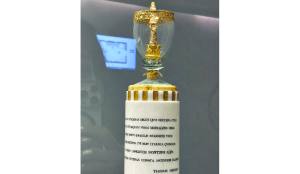
Priyanka Gandhi probably doesn’t know about Aryabhatt, but surely, she would’ve visited her Nanihal and the famous Galileo Museum. I’m sure she would have seen how Galileo was imprisoned for saying the Earth goes around the Sun. It may be shocking for some that “cow worshippers” and “gau mutra visheshgya” had already discovered this centuries before Galileo!! And no one was imprisoned for life for “blasphemy”.
This is Galileo’s finger preserved at a museum named after him.
The contribution of ancient Hindu civilisation in the field of science is unparalleled. The pedigree of rishis and their parampara is such that none of the imported or dogmatic Gandhis-Vadras can either compete with or undermine it. I have my suspicions about their ability to comprehend.
I pray to my Lord that wisdom and knowledge, along with compassion, prevail amongst biased and ignorant people.
The contribution of ancient Hindu civilisation in the field of science is unparalleled. The pedigree of rishis and their parampara is such that none of the imported or dogmatic Gandhis - Vadras can either compete or undermine. I have my suspicions about their ability to comprehend
The writer is a former Minister of State for External Affairs of India; Views presented are personal.