
From classroom to real-world expertise
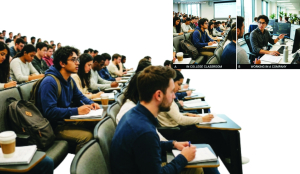
Postgraduate education is changing. The traditional view of postgraduate study as simply the next academic step after an undergraduate degree is giving way to a more dynamic model, one that places greater emphasis on application, critical thinking, adaptability and the ability to connect knowledge with the complexities of the real world.
This shift is being driven by changes in both the workplace and the people entering higher education. Postgraduate classrooms today bring together students with different academic backgrounds, professional experiences and ambitions. Among them are professionals returning to education after years in industry, bringing with them knowledge developed through managing teams, solving problems, building businesses and navigating change.
They do not enter the classroom as blank slates.
Their experiences can become an important part of the learning process.
The role of postgraduate education, therefore, is not simply to add another layer of theoretical knowledge. It is to create opportunities for students to test experience against theory, question established assumptions and develop a deeper understanding of why particular approaches work, or do not.
This is where critical reflective practice becomes increasingly important.
A professional may have developed an effective way of managing a team or solving an operational challenge. Academic study can provide the frameworks and evidence to examine that experience more critically. What assumptions underpin the approach? What does the research suggest? Could it work differently in another context? Asking these questions turns experience into a source of deeper learning.
This also changes the nature of the classroom. The lecturer remains an important source of academic knowledge and guidance but is not necessarily the only source of expertise. Students bring their own perspectives and professional experiences into discussions, creating opportunities for academic and practical knowledge to inform one another.
This evolution is also prompting universities to rethink how postgraduate education is designed. For professionals balancing established careers with further study, flexibility and focus are increasingly important considerations. This is one reason more intensive postgraduate formats, including one-year programmes, have gained greater attention in management education.
But the significance of such programmes is not simply their shorter duration. A shorter programme should not mean a smaller intellectual ambition. It should mean that the curriculum, teaching and learning are designed with greater focus around what students need to achieve.
Ultimately, the question for universities is not how much content can be delivered in a particular period, but how effectively students can develop the ability to think critically, apply knowledge and continue learning beyond the classroom. At the University of Aberdeen Mumbai, this philosophy informs our approach to postgraduate education. We aim to create an academically rigorous environment in which students can connect theory with practice and engage with the challenges facing organisations and society. This is particularly relevant as artificial intelligence, technological change, new business models and shifting expectations of leadership continue to reshape professional life. The ability to learn something new is important; the ability to recognise when existing knowledge needs to be questioned may be even more valuable.
The new face of postgraduate education is therefore not defined simply by who enters the classroom or how long a programme lasts. It is defined by a deeper relationship between experience, academic knowledge and application.
Postgraduate education at its best does not simply certify what a student already knows. It creates the intellectual space to examine that knowledge, challenge it, strengthen it and apply it in new contexts.
The journey from experience to expertise is ultimately a journey from knowing to questioning, and from questioning to learning how to think differently.
The writer is a Vice-Principal (Education), University of Aberdeen; Views presented are personal.