
What to expect as French school protests return and test Macron government
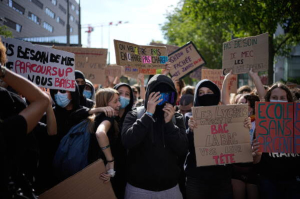
After a weekend lull, French high school students are expected to return to the streets this week as their protest movement over inequalities and deteriorating school conditions puts renewed pressure on President Emmanuel Macron's government.
A key test will be whether violence on the fringes of demonstrations escalates, further blurring the line between protest and rioting, and whether the government responds with an even tougher police presence.
Interior Minister said police made more than 5,000 arrests last week, 85% of them involving minors. Hundreds of people have been injured.
The movement will also face a test of its reach on Tuesday, when the influential CGT labour union is calling on workers to join demonstrations.
How the protests began
The protests erupted in the Paris region in mid-September after teachers and students mobilised over staffing shortages at a high school in Creteil, southeast of the capital.
Class strikes, school blockades and demonstrations soon spread to other Paris suburbs and then across France, including smaller towns.
The education minister has said hundreds of schools have closed because of damage or attacks targeting staff. More than 170 students and 65 staff members have been injured, according to the minister.
What students want
Students initially focused on inequalities in the education system, arguing that schools in disadvantaged neighbourhoods lack the same quality of teaching, facilities and opportunities available elsewhere.
The concerns have also extended to school infrastructure and working conditions.
Students have complained of classrooms becoming unbearably hot during summer heat waves and cold in winter. French media have shown images and videos of rats, leaking roofs, collapsed ceilings, broken furniture and other problems at schools.
"The public needs to know that conditions for studying are no longer what they were for us," said Sophie Bordy, a 50-year-old literature teacher in Paris. "It has deteriorated significantly."
The protests come as education remains one of the biggest items in the government's proposed 2027 budget. The government has earmarked 65.5 billion euros ($74 billion) for schools, compared with 63.4 billion euros for defence.
Students have also criticised long school days. Classes at French high schools can begin at 8 am and continue into the early evening, with compulsory school hours among the highest in Europe, according to European Union figures.
Backing from the far left
The protests have received strong support from France Unbowed, the country's far-left political movement.
Clémence Guetté, a France Unbowed lawmaker, was among the politicians who quickly engaged with the students in Creteil, posting photographs of herself meeting protesters with a bullhorn.
Other France Unbowed lawmakers and elected officials have also met students and backed their demands.
Party leader Jean-Luc Mélenchon has urged his supporters to protect students from police by positioning themselves between protesters and officers. He has accused police of using excessive force, including tear gas and batons, and has criticised the use of riot-control projectiles, which are suspected of causing some facial injuries among young protesters.
Critics accuse France Unbowed of exploiting the student movement for political gain. Mélenchon says his party supports the protests but is not organising them and insists the movement should remain non-violent.
The protests also come as Mélenchon, 75, seeks the presidency for a fourth time. Young voters, who participated at lower rates than some other age groups in the 2022 presidential election, could prove important to his effort to reach the decisive second round in May.
"What we want is for this country's young people to emerge from this episode with their heads held high, having won something and learned something, and to remember it when they cast their ballots," Mélenchon said Thursday.