
Ex-Japan minister accuses India over bullet train delays, Delhi hits back
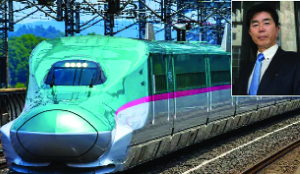
A senior Japanese politician has triggered a diplomatic row by publicly blaming Indian authorities for the slow pace of the Mumbai-Ahmedabad high-speed rail corridor, India’s ambitious first bullet train project.
Hideki Makihara, former Justice Minister and a key figure in Japan’s ruling Liberal Democratic Party, described the delays as stemming from “sheer recklessness” on the Indian side, claiming broken commitments and inconsistent decision-making have hampered progress.
In strongly worded remarks, Makihara alleged that Indian negotiators frequently reversed positions, prioritised domestic considerations, and failed to deliver on assurances related to the Shinkansen-based project. He singled out the handling by the concerned minister as particularly problematic, asserting that responsibility for the setbacks lay entirely with India.
The comments have drawn sharp attention as the project — funded substantially by Japan and touted as a symbol of bilateral friendship — has missed multiple deadlines since its foundation stone was laid in 2017.
India’s Ministry of External Affairs responded swiftly, rejecting the criticism as one-sided.
Spokesperson Randhir Jaiswal emphasised that the project continues to enjoy strong Japanese Government support, as reaffirmed in recent high-level summits.
Officials pointed to tangible advancements on the ground, including extensive viaduct work, bridge completions, and progress on the undersea tunnel section near Mumbai.
Indian authorities have consistently attributed the timeline slippages to practical challenges such as land acquisition hurdles in Maharashtra, pandemic-related disruptions, environmental clearances, and the technical complexities of integrating advanced systems. The National High Speed Rail Corporation Ltd (NHSRCL) has achieved significant physical progress, with plans for initial operations on a Gujarat segment by August 2027.
Originally envisioned for completion in the early 2020s, the 508-km corridor has seen its cost rise due to inflation, revised engineering needs, and extended timelines. Japan is providing next-generation Shinkansen technology, while India is simultaneously developing indigenous high-speed train prototypes to boost self-reliance.
Both nations have expressed commitment to overcoming remaining issues through ongoing technical dialogue.
The project is viewed not only as a transport upgrade but as a cornerstone of broader Indo-Japanese cooperation in infrastructure, technology transfer, and regional connectivity.
While Makihara’s outspoken views have sparked debate, diplomatic sources indicate that core bilateral ties remain robust. The Government has assured that safety standards, quality benchmarks, and timely delivery will not be compromised as the country moves closer to realising its high-speed rail ambitions.