
Europe explores energy security alternatives after Iran war’s turmoil
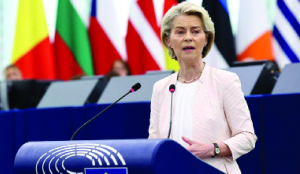
The Iran war’s shock to global fuel prices has reinforced Europe’s stance that it must forge alternative trade and energy routes to the Strait of Hormuz.
European Commission President Ursula von der Leyen has expressed renewed interest in what is known as the India-Middle-East-Europe Economic Corridor. She told G7 leaders at this week’s summit that “alternative export routes have been created that are more resilient and offer choices” while “other routes will be built — for example, a typical one is IMEC.”
IMEC is seen as potentially offering the EU greater economic resilience, supply-chain diversification and energy security to bolster the bloc’s strategic autonomy at a time when Russia shows few signs of curbing its belligerence and the US chips away at strategic bonds.
While the EU itself has supported IMEC through a memorandum of understanding, only a handful of its 27 member states are formal signatories. But behind the scenes, political commitment to IMEC is strong, according to a high-ranking EU diplomat who spoke on condition of anonymity because he wasn’t authorised to disclose the contents of confidential discussions. “The focus now is on translating that vision into practical implementation across its three pillars: transport and trade connectivity, energy connectivity and digital connectivity,” said the diplomat, who has participated in high-level meetings to discuss the initiative. It could involve new pipelines and transmission cables, among other infrastructure.
The EU’s press office declined to provide a prospective timeline for the project. IMEC would pass through Israel and enjoy its support. Israeli Prime Minister Benjamin Netanyahu last year said he had spoken with his Indian counterpart Narendra Modi about IMEC, calling it “a very revolutionary and transformative development that we want to bring into place.”
Lianne Pollak-David, co-founder of the Israel-based Coalition for Regional Security, told a recent online briefing that US leadership would be key to moving IMEC forward by helping in the normalisation of relations between Israel and Saudi Arabia, an essential player in the project. “Without normalisation between Israel and Saudi Arabia, IMEC cannot be truly realised,” she said.