
E20 Blender's Pride, User's Peril?
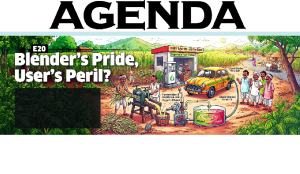
As India accelerates its transition to E20 fuel, the ethanol blending programme has become the subject of intense debate. Its proponents argue that the initiative is backed by rigorous testing and global experience, is critical to strengthening India’s energy security, and boosting farmers’ incomes. Critics, however, allege that the policy is being pushed despite concerns over reduced fuel efficiency, reports of engine-related issues and questions over potential conflicts of interest
Ethanol blending is not an idea born of political convenience. It is a journey India began in 2001, and one I have championed ever since as a scientifically proven, internationally accepted programme. It was never an experiment conducted on Indian roads - it is a policy grounded in evidence, in engineering, and above all, in the national interest.
The problem we set out to solve
When I look honestly at the challenges before this country, five stand out. First, our dependence on crude oil imports, which meets nearly 87 percent of our requirement and costs the nation close to Rs 22 lakh crore every year. Second, the vulnerability that comes from over-relying on imported energy for a country of our size and ambition. Third, the national security risk of sourcing so much of that energy from the Islamic world, a region whose politics we do not control and cannot always predict.
Fourth, air pollution, set against our own promise to reach net-zero carbon emissions by 2070. And fifth, the slow collapse of agriculture's viability, which has pushed our farmers and their children out of their villages and into overcrowded cities in search of a livelihood. Ethanol blending was never only about fuel in a tank. It was always about addressing all five of these challenges at once.
India is not walking alone
Some ask why India should pursue this so aggressively. I ask, in turn, why we should not, when the world has already shown the way. The United States blends ethanol at a 10 percent standard and is moving toward 15 percent. Brazil, whose automobile industry mirrors much of our own, blends at 27 percent. France, Germany, Sweden, Canada, the Philippines, Thailand and Japan all maintain a 10 percent standard blend. We are not testing something untried on Indian roads. We are catching up to a global consensus that has existed for years.
This is not untested technology
Our automobile industry tests as rigorously, and against the same international standards, as any in the world. Every technology, before it reaches an Indian consumer, passes through five pillars - design, validation, certification, homologation and production - and conformity tests continue even after a vehicle is in production. No new automotive technology reaches the market in under four years from the day it is first conceived. The very companies that manufacture E27-compliant vehicles for Brazil, and have done so successfully for years, are the same companies that manufacture vehicles here in India. This is not new or unproven science. It is established, and it is internationally accepted.
What the testing actually showed
We began testing E20 as far back as 2016, on BS-4 and older vehicles. In 2021, ARAI, IOCL and IIP Dehradun jointly tested older vehicles - BS-6 and the BS-4 and BS-3 vehicles that came before it - across one lakh kilometres each. Their findings were unambiguous: no issue in drive-ability, no issue in start-ability, the same vehicle pickup, and even better acceleration. Yes, there is a drop in fuel efficiency of 6 to 8 percent, but this must never be confused with ethanol's roughly 30 percent lower calorific value, which is an entirely different measure. In some older vehicles, certain rubber parts and gaskets may need replacing after a few years, but this requires no special intervention on the owner's part - it happens routinely during regular servicing, exactly as any other component is replaced when due. ICAT, Manesar has certified that there is no adverse impact on a vehicle's fuel system components, and even vehicles that are not E20-compliant carry a sufficient margin of safety.
Industry itself has said so
On 30th August 2025, and again on 4th July 2026, the entire automobile industry, ARAI, and our oil companies came together for joint press conferences. Every single auto company said, in one voice, that there is no impact on vehicle life, no impact on warranty, no impact on insurance, and no impact on engine performance. For the past three years, close to 20 crore two-wheelers and 3 crore four-wheelers have been running on more than 15 percent blended ethanol without incident.
Maruti Suzuki, which commands 40 percent of our market, has told us that of the 2.84 crore vehicles that came into their workshops this past year, 1.5 crore were manufactured before 2023 and were not even E20-compliant. Not one of them, anywhere in this country, reported a single ethanol-related issue.
Addressing the allegations
I will not sidestep the question that has been raised about my family and CIAN Agro. Our oil companies procure roughly 1,200 crore litres of ethanol every year. Within that vast national ecosystem, CIAN Agro's share is negligible. We began producing ethanol at a time when it was considered one of the riskiest businesses one could enter. There was no offtake guarantee then, and we sought no favour and took no benefit from the government. That offtake guarantee came only in September 2021 - years after this journey had already begun for us, at our own risk. I have devoted myself, without apology, to saving this country's precious foreign exchange, reducing its pollution, and bringing prosperity to our farmers, our fields and our villages. That is the only interest I have ever served, and it is the only one I ever will.
What India has already gained
The numbers speak for themselves. We have saved close to Rs 1.9 lakh crore in fuel imports and diverted Rs 1.6 lakh crore directly into the hands of farmers. Greenhouse gas emissions from blended fuel are down 65 percent, saving 930 lakh metric tonnes of CO2 - equivalent to planting 115 crore trees. We have found productive, dignified use for our surplus rice and maize instead of letting it rot in storage. Maize alone accounts for 48 percent of our ethanol production, and its market price has risen from Rs 1,200 (against an MSP of Rs 1,800) to Rs 2,800 today, putting an additional Rs 42,000 crore every year directly into the pockets of maize farmers. We project this programme will add a further 6 percent to agricultural growth in the years ahead.
Why I will not stop
I will not defend this policy half-heartedly, because it was never built on convenience. It was built on twenty-five years of science, on testing across a hundred thousand kilometres, on the unanimous word of an entire industry, and on the lived experience of 23 crore vehicles already on Indian roads. It has saved this nation's money, cut its pollution, and put crores of rupees back into the hands of our farmers. I have faced allegations before, in a public life spanning decade, and I will face them again - that is simply the nature of public service in a democracy. But I will not let noise obscure what evidence has already settled. Ethanol blending was never a favour to any family. It is a debt I believe we owe to our farmers, to our environment, and to India's energy future - and it is a debt I intend to keep paying.
The numbers speak for themselves. We have saved close to Rs 1.9 lakh crore in fuel imports and diverted Rs 1.6 lakh crore directly into the hands of farmers
The writer is the Minister of Road Transport and Highways, Government of India; Views presented are personal.