
Did you know?
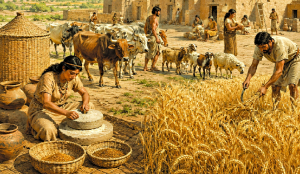
Long before the great cities of Harappa and Mohenjo-daro emerged, Mehrgarh, situated in the Kachi Plain of present-day Balochistan, Pakistan, was already witnessing one of the most important transformations in human history. Dating back to the seventh millennium BCE, Mehrgarh provides some of the earliest evidence of settled agricultural life in South Asia. Archaeological remains reveal the cultivation of wheat and barley and the domestication and management of animals, including cattle, sheep and goats.
These discoveries show a gradual transition from communities dependent largely on hunting and gathering to people who produced their own food. The inhabitants of Mehrgarh constructed mud-brick houses, stored agricultural produce and developed an increasingly settled village economy. Over time, the community also witnessed developments in pottery, craft production and exchange.
Mehrgarh's long archaeological sequence shows how small farming communities gradually became more settled, specialised and socially complex. These developments formed part of the much longer cultural processes that eventually culminated in the sophisticated urban centres of the Indus or Harappan Civilization.