
Delving into India’s faith faultlines
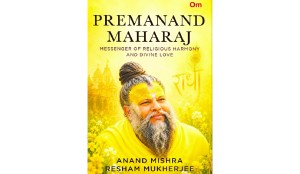
Premanand Maharaj draws followers from all faiths and beliefs. He trends on the internet. Star powers come to see him in Vrindavan. Yet he’s content with Vrindavan and stays there. He’s not opening his ashram across the country and abroad. He doesn’t polarise people. He just speaks of Bhakti, reciting Radha. That’s an absolute and unconditional submission to the divine, argues Premanand Maharaj in his “Ekantik Vartalaps”. Journalists Anand Mishra and Resham Mukherjee, in their book Premanand Maharaj: Messenger of Religious Harmony and Divine Love, have arguably brought out the first authoritative biography of the saint from Vrindavan. The book traces the life journey of the saint. In the course, India’s age-old spiritual heritage shines, as tales of renunciation find new subjects. Along with Premanand Maharaj, through the turns and twists in his life, the book also offers readers a fine glimpse into the philosophical evolution of a truth seeker.
In an age when instant coffee syndrome cuts through all walks of life, including spiritual teachers who offer immediate relief from the pains of life to their followers, the book reveals Premanand Maharaj holding out against the commercialisation of faith. “Your body pain will not go away with Baba’s ashirvad.”
To superstitious followers, the Vrindavan saint remains stern, stressing that “even if 100 cats cross my path, I will still stay on my course.” The book, published by Om Shakti, states the widely known fact that Premanand Maharaj’s kidneys had failed long ago and he undergoes dialysis. The saint hasn’t yet accepted any offer from his followers, saying that he lives by the will of Radha. Born Amirudh Kumar Pandey in 1972 in Akhari village in Kanpur, the book states that the saint confronted the moot philosophical question at the age of 13 – what is the meaning of life? A wealthy neighbour had passed away. The young boy saw the grandeur of life reduced to ashes. To find an answer to his question, the young Pandey left home to launch himself on a spiritual path. Staying briefly with gurus, he finally made the ghats of Kashi his abode.
With singular devotion to Lord Shiva, he meditated. To beat hunger, he ate handfuls of sand. After watching Chaitanya Leela and Ras Leela, the Shiva devotee yearned to go to Vrindavan. Soon he fulfilled his wish, and over the years he has emerged as a key attraction of Vrindavan.
Premanand Maharaj comes out, per the book, as an exemplar of religious harmony as he speaks no ills of other religions. He also comes out as a voice of reason, for he rejects superstition. The saint also raises a spiritual weight against the commercialisation of faith, where the new-age Baba writes immediate remedies for the woes of the followers. Both Mishra and Mukherjee have heavily researched to find sources for the book, as they admit that ready-made materials weren’t available. They went through accounts of followers on the internet. They also listened to several videos. In the end, the authors presented a lucid commentary on the life of Premanand Maharaj.
The writer is a columnist who writes on social and religious issues; Views presented are personal.