
Delhi courts Nepal’s new political forces
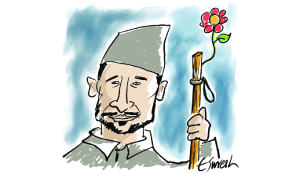
By extending a warm reception to Lamichhane, New Delhi underscored its determination to maintain momentum in bilateral ties amid political transitions in Kathmandu and reset its relationship with the Himalayan nation
Two back-to-back visits from Nepal’s top leaders last week demonstrated Delhi’s proactive diplomacy. For Rashtriya Swatantra Party (RSP) Chairman Rabi Lamichhane, the visit was godsend, even if it was party-to-party, as he met top leaders. This is significant due to the uncertainty over Prime Minister Balen Shah’s travels abroad during the first year of his tenure, which will be dedicated to ‘domestic issues’ of good governance and accountability. There were reports that he might go to the UNGA in New York and visit India either before or after it. But everything remains in the realm of speculation. Bhupdev Shah, the party general secretary and right-hand man, was known to have said in an interview to a Kathmandu portal that Balen was focused on achieving 100 goals in 100 days and would stay in the country for the first year.
This, and the fact that Foreign Secretary Vikram Misri’s travel to Kathmandu in mid-May — with an invitation from Prime Minister Narendra Modi for Prime Minister Balen Shah to visit India — did not take place, confirmed that no visit from Shah should be expected this year. This will stir speculation that the Chinese might take advantage of the diplomatic vacuum, but the conversation in Kathmandu is mainly about which country Shah will visit first: India or China.
As part of India’s Neighbourhood First policy, Delhi acted with great alacrity when Foreign Minister S Jaishankar was the first to arrive in Colombo within days of Anura Kumara Dissanayake becoming President, carrying an invitation to visit India. Delhi was therefore quick to avert widening the diplomatic gap with Nepal by getting BJP President Nitin Nabin to invite Lamichhane, which was immediately accepted, giving him a leg up over Balen, who has been hogging the spotlight, not always for the right reasons.
Lamichhane arrived in Delhi accompanied by his wife Nikita Poudel, Joint General Secretary Bipin Acharya, and Member of Parliament Deepak Bohara, along with a signed edit-page piece in Hindustan Times titled “How Can an Aspirational Nepal and a Rising India Reconnect?” He was received by BJP General Secretary and head of the Foreign Policy Cell and Diaspora, Vijay Chauthaiwale, who earned now-dubious fame when Arzu Rana, wife of then Prime Minister Sher Bahadur Deuba, tied him a rakhi four years ago.
Lamichhane had a hectic programme, symbolised by the red-carpet welcome and, according to a trusted source in the RSP, the warmth and humility shown by Modi in his meeting with him. He acknowledged reading Lamichhane’s article and expressed willingness to help in whatever way he could in resetting ties. He requested that his good wishes be conveyed to Prime Minister Balen Shah, to whom he had already sent an invitation to visit India.
According to Kathmandu Post, the border issue was not discussed, though it had created a political earthquake in Parliament when Balen Shah stated that Nepal too had occupied Indian territory. Overall, the Lamichhane visit was very productive, with a string of meetings with Home Minister Amit Shah, Foreign Minister Jaishankar, NSA Ajit Doval, and, pointedly, Foreign Secretary Vikram Misri, whose visit had to be called off. Including Misri was designed to underline the point that Balen Shah’s newly designed diplomatic protocol required recalibration with India, which enjoys special and multifaceted relations with Nepal. Rabi’s popularity among Nepalese in India could be gauged by the tumultuous welcome he received at the Pyarelal Auditorium, which was jam-packed. No one should forget that Lamichhane was one of the most famous television show anchors of a programme titled Seedha Kura Janata Sang (Straight Talk with the People). He gained national fame in 2013 by setting a world record in the Guinness Book for the longest television talk-show broadcast, running continuously for over 62 hours on News24.
From Delhi, Lamichhane proceeded to Lucknow and then to Ayodhya. The question Nepalese may be asking is whether he was showing deference to the Hindu Rashtra and monarchy at a time when the Royalist Rashtriya Prajatantra Party had been decimated by the RSP landslide and the party further divided. Incidentally, during the talks in Delhi, the RSS was conspicuously omitted.
Lamichhane returned to Kathmandu and received a hero’s welcome from the media. They bombarded him with questions, which he was at pains to answer, given that the visit was merely to strengthen party-to-party relations and no specific issue was taken up for discussion, including the sensitive Kalapani dispute.
For that and other government-to-government matters, Foreign Minister Shishir Khanal arrived in Delhi on June 5, for a quick follow-up to Lamichhane’s familiarisation with the Indian leadership. He was received by Additional Secretary (North) in the Foreign Ministry, Mannu Mahawar. Khanal had met Jaishankar last month during the India Foundation-helmed Indian Ocean Dialogue.
He has prioritised the bilateral issues Nepal has in mind, notably the central themes of development diplomacy and connectivity, which were at the heart of Lamichhane’s article. This was Khanal’s first official visit to India, during which he had frank and warm discussions with Jaishankar on the gamut of bilateral issues. These included linking borders through the 150-km Raxaul-Kathmandu railway line, for which the DPR has been completed; the thorny issue of direct flights from the China-constructed Pokhara and Bhairahawa/Lumbini international airports to destinations in India, which have not been operationalised due to Indian security concerns; a comprehensive list of Nepal’s hydropower projects constituting the integrated energy market; and recent cross-border issues. The Lamichhane article recommended resetting relations to August 3, 2014, when Modi first visited Nepal as Prime Minister.
One other issue that has been pending for nearly five years is recruitment under the Agniveer scheme, which previous governments in Nepal had rejected. While Dhanraj Regmi, RSP MP and son of a soldier, has been actively canvassing for its resumption, Indian Army Nepali Gorkha veterans had also met Lamichhane seeking its revival. It is not known whether Khanal raised the issue last week.
After his successful confidence-building visit to Delhi, Lamichhane will be re-elected chairman of his party at the end of June in his Chitwan stronghold, boosting his ratings as a national leader. The other key actor in Nepal’s development diplomacy taking off is balancing China — never easy.
Lamichhane will be re-elected chairman of his party at the end of June in his Chitwan stronghold, boosting his ratings as a national leader
The writer, a retired Major General, served as Commander, IPKF (South), Sri Lanka, and was a founder member of the Defence Planning Staff, now the Integrated Defence Staff; Views presented are personal.