
DDA wraps Yamuna consultations, draft ready for September 11 dialogue
The Delhi Development Authority (DDA) has prepared the zero draft of the proposed ‘Delhi Yamuna Compact’, a holistic framework for the ecological restoration and environmental monitoring of the floodplain.
The Zero Draft of the Delhi Yamuna Compact will consolidate the recommendations from the consultation series and be circulated among all stakeholders for further comments and refinement before being placed before the September 11 dialogue. The Compact is intended to be an implementation-oriented framework rather than a policy statement, designed to guide future planning, coordinated action, and policy decisions for the floodplains.
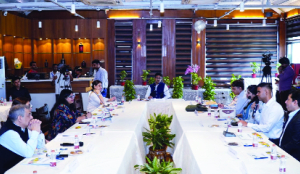
The DDA has concluded three Stakeholder Consultation Workshops under the Yamuna Dialogues initiative, completed on July 25. The event brings together policymakers, Government agencies, environmental experts, financial institutions, scientists, urban planners, landscape architects, technical institutions, and civil society organisations to develop a shared framework for restoring and sustaining the Yamuna floodplains. The recommendations that come out of the workshops are consolidated into the Zero Draft of the Delhi Yamuna Compact for deliberation at a full Yamuna Dialogues event on September 11 at Baansera in New Delhi.
The initiative follows field visits by Lieutenant Governor Taranjit Singh Sandhu to the Yamuna floodplains and subsequent review meetings with senior DDA officials, during which he issued directions for tackling river pollution through a multi-dimensional approach. The consultations were held under his guidance.
The three workshops together examined six interrelated themes: Floodplain-Responsive Planning, Ghat Development, Nature-Based Solutions, Water Quality and Drainage, Sustainable Financing Models, and Governance Mechanisms.
A key finding that emerged consistently across all three workshops was that no single institution or intervention can achieve lasting transformation of the Yamuna. Participants emphasised that ecological restoration, environmental monitoring, sustainable financing, effective governance, and community stewardship must function as complementary pillars rather than separate programmes, and that coordinated, long-term action across organisations, experts, communities, and citizens is the only viable path.
The Yamuna floodplains, which extend through Delhi as a broad strip on both sides of the river, represent one of the most contested and ecologically degraded urban landscapes in India. Decades of encroachment, solid waste dumping, sewage discharge, and infrastructure construction on the floodplain have severely compromised the river’s ecological functions, its ability to absorb monsoon flows without causing flooding, and its capacity to support biodiversity.