
Datia by-election triggers multi-cornered caste scramble
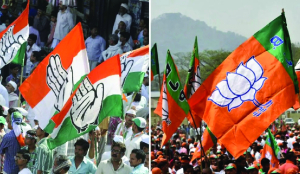
The announcement of the Datia Assembly by-election has detonated a political scramble in one of Madhya Pradesh’s most arithmetically complex constituencies, where no single caste commands a majority. Margins have historically been wafer-thin, and the outcome will be determined not by the strength of any one community but by the direction in which half a dozen fractured vote banks ultimately gravitate.
The BJP has moved with characteristic decisiveness, projecting former Home Minister Narottam Mishra as its singular and undisputed claimant - a heavyweight candidature designed to reclaim a seat the party lost by just 7,742 votes in 2023. The Azad Samaj Party has fielded Damodar Yadav as its sole contender, positioning itself to splinter the OBC and Dalit vote. It is within the Congress, however, that the most convulsive internal battle is raging.
Disqualified MLA Rajendra Bharti - whose removal from the Assembly triggered the by-election - is deploying every ounce of political capital to secure the ticket for his son Anuj, determined to preserve the family’s custodianship of the constituency. Ranged against him is Avdhesh Nayak, a former Textbook Corporation vice-chairman who abandoned the BJP for Congress ahead of the 2023 elections.
Nayak’s claim carries a particular moral sting: the party had originally declared him as its candidate in 2023 before unceremoniously substituting Bharti following pressure from the latter’s faction. Nayak now argues that his acquiescence then has earned him an irrevocable entitlement now. Former Datia MLA Ghanshyam Singh has added a third contour to the Congress’s internal turbulence, further complicating the party’s selection calculus.
The constituency’s demographic architecture makes it among the most delicately balanced in Madhya Pradesh. Other Backward Classes constitute the dominant electoral force at approximately 95,000 voters - roughly 53 per cent of the total electorate - but this bloc is itself splintered across multiple sub-groups: Yadavs and Kushwaha-Kachhis (17,000), Lodhis (15,000), Baghel-Pals (10,000) and assorted other OBC communities (20,000). No single sub-caste within this constellation commands sufficient numbers to independently swing the result.
The two largest homogeneous caste groups are Brahmins and Ahirwars, each numbering approximately 33,000 - a striking numerical parity that encapsulates the constituency’s inherent volatility. The BJP has traditionally enjoyed robust support among Brahmin voters, while Congress has maintained its foothold among Scheduled Caste communities, particularly the Ahirwar segment.
The general category electorate - encompassing Brahmins, Banias, Rajputs, Kayasths and Sindhis - totals approximately 60,000, and any decisive consolidation of this vote behind one party could transform the contest from a cliffhanger into a rout. The Scheduled Caste electorate, estimated at 58,000, is anchored by the Ahirwar
community but also includes Khatiks, Valmikis, Koris and Jatavs - sub-groups that hold booth-level influence capable of altering micro-margins across the constituency.
Muslim voters, numbering roughly 8,000, represent a slender but potentially decisive wedge in a contest where the last margin of victory was under 8,000. Political analysts are categorical: Datia cannot be won on the back of any single community.
The Brahmin vote, the Ahirwar vote, the Yadav-Kushwaha consolidation, the Lodhi bloc, the Muslim preference G whichever direction these five currents flow, the electoral tide will follow. The 2023 result - Congress’s narrow 7,742-vote triumph - is a standing testament to this fragile equilibrium, where a marginal shift in any one demographic is sufficient to invert the outcome entirely.