
Coal gasification: Catalysing India’s chemical industry growth and achieving Aatmanirbharta
India has a growing chemical industry that contributes to around 7% of the country’s GDP. The industry’s growth is heavily fuelled by the increasing domestic demand. With the industry producing more than 80,000 chemical products, it significantly contributes to agriculture, pharmaceuticals, textiles, packaging, and construction. Despite being one of the highest global consumers, India’s chemicals trade deficit at more than USD 30 billion underscores the high dependence on imported feedstock and specialty chemicals, particularly from China. The West Asia geopolitical crisis has further aggravated the situation, calling for India to rethink its strategy.
Coal has traditionally been used for power generation, with coal contributing almost 70% of India’s electricity generation despite aggressive renewable expansion. Studies by NITI Aayog, Chintan Research Foundation and others indicate that coal will continue to provide base load power at least till the 2050s, beyond which coal’s use may decline. Use of coal is essential to ensure India’s energy security and derive value from a commodity which is in abundance in India, estimating at nearly 400 billion tonnes, among the largest globally. Coal could be gasified to produce gas for power generation, hydrogen, and chemicals like methanol, olefins, dimethyl ether (DME), and ammonia, among others, to reduce India’s import vulnerability as well as secure the raw materials used to make these products.
What is coal gasification?
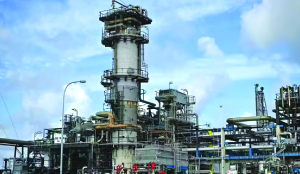
Coal gasification technology involves the process of converting coal to syngas, which is a mixture of carbon monoxide, hydrogen, carbon dioxide and other minor constituents like methane and water vapour. This is done by partial oxidation of coal at high temperature and pressure.
Driving supply-chain resilience: Reducing import dependence
The success of coal to chemicals in China shows that coal can be used for both gasification and liquefaction to produce chemicals. China started focusing on modern gasification technology in the 2000s, using its locally available coal, to produce methanol, urea, DME, among others. Methanol to Olefins (MTO) technology was at the centre of this transition. Olefins, particularly ethylene, propylene, and butadiene, are the building blocks for the petrochemical industry. Not only was China’s import dependence reduced, but coal’s use also increased its domestic demand.
Methanol plays a critical role in the production of Active Pharmaceutical Ingredients (APIs), compounds essential for producing medicines. With India importing 70% of its APIs, methanol production using local coal could help India strengthen its supply chain resilience for APIs to support generic medicine production, the largest in the world.
The DME obtained through coal gasification can be blended with LPG, thus reducing India’s import dependence.
Hydrogen produced from syngas, integrated with carbon capture, can be combined with nitrogen to produce ammonia and urea — a proven pathway being used in China — to reduce our imports.
Syngas can also be used in gas-based plants to produce electricity, thereby enhancing grid stability by addressing the variability of renewable energy and managing peak load.
What it brings for India’s regional development?
Coal gasification projects could be implemented in the coal-belt states. With the construction and operation of integrated coal gasification complexes being labour-intensive, it will generate substantial direct jobs along with a much larger pool of indirect jobs across logistics, MSMEs, services, and ancillary industries. This will help boost the local economy and address the issue of job losses due to the shift away from coal used for thermal generation. In sum, coal gasification can facilitate a just transition for the mining communities affected by mine closures.
Pathway for India
Understanding the potential, the Indian Government launched the National Coal Gasification Mission in 2020 with the target of achieving 100 MT of coal gasification by 2030. Despite the potential, coal gasification in India has seen limited progress, constrained by technological and economic challenges. The time is ripe now for the central Government to renew its focus by providing infrastructure status to the sector, which can enable long-term coal linkages through transparent auctions, streamline approvals, and attract affordable capital. Furthermore, custom duty waivers and viability gap funding for early adopters will help in ensuring project viability. The state Governments can facilitate the speeding up of land acquisition, water allocation and recycling, environmental clearances, compliance approvals, and specialised electricity tariffs for the integrated coal gasification and chemicals clusters, to enable economies of scale and value-chain optimisation.
The transition to coal gasification should be considered a strategic necessity for India and not an economic burden, as this would help reduce India’s vulnerability, strengthening supply chain resilience and achieving Aatmanirbharta.
The coal-to-chemicals industry sector can be established in a phased manner, not by a binary of replacing oil and gas, but in a complementary fashion to produce chemicals. Over time, the phased shift can make coal gasification the major source for generating chemical products.
Shagun Mamgain is a Research Consultant and Dr Debajit Palit is the Centre Head at Centre for Climate Change & Energy Transition in Chintan Research Foundation. Views expressed are personal; Views presented are personal.