
Nepal devastation puts China's giant dam under scrutiny : Why India is concerned
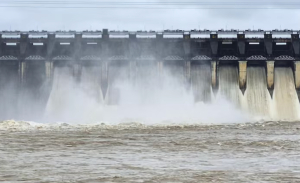
More than 150 people have died in Nepal this week, and hundreds are still missing after flash floods swept through the Bhote Koshi valley. The disaster has brought an old concern back into focus: China is building what is expected to be the world's largest hydropower project just around 30 km from the Arunachal Pradesh border, in one of the most earthquake prone parts of the Himalayas.
The Medog, or Motuo, Hydropower Station has been discussed for decades. Construction finally began in Nyingchi in July 2025, after Beijing formally approved the project eight months earlier. The project is located at the Great Bend of the Yarlung Tsangpo, where the river makes a sharp turn before entering India as the Siang and eventually becoming the Brahmaputra in Assam.
The plan involves five dams spread across a 250 km gorge. The project will use a drop of around 2,000 metres in elevation along a relatively short stretch of the river to generate electricity. Once completed, around 2033, it is expected to have a capacity of 60 gigawatts and generate about 300 billion units of electricity a year. That would be nearly three times the installed capacity of the Three Gorges Dam. The estimated cost is between $137 billion and $170 billion.
The biggest concern for geologists is not simply the size of the project, but its location. Medog lies close to the fault zone where the Indian and Eurasian tectonic plates meet, making the region highly prone to earthquakes.
A magnitude 7.1 earthquake struck near Shigatse in Tibet in 2025, killing more than 120 people and reportedly damaging several dams in the region. Chinese engineering journals have also highlighted the challenges of building tunnels through permafrost and loose sediment for the Medog project. A Chinese state hydropower research institute has studied whether a project of this scale could itself have an impact on seismic activity.
There is another concern. Even if the dam is built to withstand a major earthquake, a powerful tremor could trigger landslides, rockfalls and mudflows in the surrounding mountains. Those events could affect the river and areas downstream even if the dam itself remains intact.
India has seen the consequences of sudden changes in water flow before. In 2000, a dam breach upstream in Tibet caused flooding in parts of the Northeast. In 2017, the Siang river in Arunachal Pradesh suddenly turned black. The change was later linked to mining activity upstream in Tibet, raising concerns in India about the lack of advance information on developments across the border.
Arunachal Pradesh Chief Minister Pema Khandu has described the Medog project as a potential "water bomb". His concern is that a major upstream project could either restrict the flow of the Siang or result in a sudden release of a large volume of water.
India has formally raised its concerns with Beijing. The Centre is also pursuing the 11,000 MW Siang Upper Multipurpose Project in Arunachal Pradesh. One of its proposed functions is to help regulate water flow and provide a buffer against sudden releases from upstream.
But India's project has also faced opposition. Adi tribal communities in Upper Siang district have been protesting against it, citing concerns over displacement and what they describe as a lack of transparency in the survey process.
So, while the Medog project is primarily being built as a massive hydropower project, its location makes it a much bigger issue for India. The concerns extend beyond electricity to earthquakes, water flows, disaster preparedness and the security of communities living downstream.