
Challenged by Iran like never before, US blockades Hormuz and India steers carefully
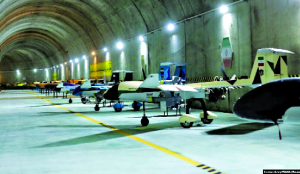
Iran has surprised its opponents. Its resilience has shocked its harshest critics. Iran has demonstrated its reach by striking the US military base at Diego Garcia and carrying out repeated attacks on regional airbases with impunity. Israel’s Iron Dome cover has been rendered ineffective as swarms of Iranian drones and missiles have lit up the night skies of several Israeli cities.
The 21-hour-long marathon peace talks held in Islamabad, Pakistan at the behest of the US, failed, largely because key demands from both sides were not met. US Vice President JD Vance confirmed that negotiations ended without a deal because Iran did not accept US terms. Iranian officials sought a 10-point plan, which included the withdrawal of US forces from the region, the lifting of all sanctions, and recognition of their right to nuclear enrichment. These were not agreed to by the US which demanded a permanent end to uranium enrichment, dismantling of nuclear facilities, and the reopening of the Strait of Hormuz, which Iran refused. Its reported stance was: “Iran is not in a hurry and until the US agrees to a reasonable deal, there will be no change in the situation of the Strait of Hormuz.”
While Iran said that the passage of ships through the Strait of Hormuz will continue to be hampered until an agreement is reached, during the talks, US Department of Defense reportedly said two US Navy guided-missile destroyers passed through the Strait of Hormuz as part of a “freedom-of-navigation mission,” marking this as the first passage of US ships to transited the Strait since the war began on February 28, 2026.
On April 10-11, 2026, there were reports that a high-value United States Navy high-altitude, long-endurance surveillance drone, named MQ-4C Triton, capable of operating above 50,000 feet as the “eyes over the ocean” for the US Navy, was missing over the Strait of Hormuz.
Despite repeated claims by Trump that Iran's air force and navy had been completely destroyed, Iran is reported to possess a vast, domestically produced arsenal including a massive inventory of ballistic and cruise missiles, attack drones and naval anti-ship capabilities.
Key systems include Shahab-3 and Sejjil medium-range ballistic missiles (MRBMs) with 2,000 km range), Fateh-110 short-range ballistic missiles (SRBMs), Shahed suicide drones, Soumar cruise missiles, Ghadir-class midget submarines, Fateh-class medium submarines and an estimated 2,000 to 6,000 sea mines, ranging from simple contact mines to advanced influence and smart rocket mines. Primarily designed for shallow waters like the Strait of Hormuz, these mines include indigenous models such as the Maham series (3, 7), Sadaf-02, and imported types, aimed at disrupting shipping. Sadaf-02, M-08) float below the surface and detonate upon physical contact with a ship's hull. Bottom influence mines placed on the seafloor are harder to detect and are triggered by a vessel's acoustic, magnetic, or pressure signatures.
Advanced mines like the Chinese-made EM-52 that rest on the seafloor and on detecting a vessel, launches a rocket at it. Limpet mines are those attached directly to a ship's hull by divers or fast boats to damage or sink them. And there are also floating explosives designed to move with the current.
Trump said that the US will also begin destroying the mines, which he claimed Iran has laid around the Strait. He also said: “I have also instructed our Navy to seek and interdict every vessel in International Waters that has paid a toll to Iran……No one who pays an illegal toll will have safe passage on the high seas……Any Iranian who fires at us, or at peaceful vessels, will be blown to hell!”
Iran has actively countered threats from Trump regarding the superiority of US weapons and military power on the ground through several actions:
Despite Trump's threats to “obliterate” Iranian power plants and reopen the Strait of Hormuz, Iran has maintained a near-total closure of the strategic waterway, using it as a effective economic weapon against the US and its allies. While Trump claimed precisely that Iranian navy's 158 ships were “sitting at the bottom of the sea”, Iran's consulate in Mumbai mocked these claims, posting videos of their fast attack boats still active in the Persian Gulf.
After US-led strikes on Iranian nuclear facilities, which Trump claimed were “completely and totally obliterated,” Iranian officials acknowledged that they were damage but continued to operate, defying assertions that Iran's nuclear ambitions were completely eliminated.
Iran dismissed Trump's 15-point ceasefire plan and 48-hour deadlines as “baseless” and “strategic failures,” choosing to respond with a 10-paragraph counter-proposal for a permanent end to the war.
Iranian forces have engaged in, or threatened, unconventional actions, such as using swarms of small speedboats to harass US naval blockades and initiating “human chains” to protect infrastructure and also often responding to high-profile American threats by disrupting maritime traffic and challenging the narrative of overwhelming US victory. As of April 15, 2026, US Navy's deployment is of over 10,000 personnel and warships to enforce a blockade of Iranian ports in the Strait of Hormuz.
India has adopted a pragmatic policy by maintaining itself as a neutral party that uses its own naval strength to protect its economic interests -shipping and oil. The Indian Navy is actively operating in the region, escorting Indian-flagged tankers through the Gulf of Oman and the Strait. In late March, the Indian Navy initiated Operation Urja Suraksha (protection of energy) with warships like INS Shivalik and INS Nanda Devi deployed to ensure the safe passage of LPG and crude oil tankers.
India is negotiating high-stakes diplomacy, maintaining good relations with the US, Iran, and Gulf Arab nations to secure its energy needs and has continued to get discounted LPG shipments from Iran to avert domestic shortages, while simultaneously ensuring these actions do not invite US sanctions.
Iran has reportedly allowed Indian ships through the blockade as part of a “safe corridor” for friendly nations, often involving direct negotiations with Iranian authorities.
As the largest ship user of the Strait, India has challenges. While its crude imports from Iran were halted in 2019, it is managing this new conflict by receiving its first Iranian cargo in seven years while also aiming to ensure that energy shipments- LNG/LPG - continue to reach Mumbai and New Mangalore.
A risk that India faces is of navigating a US blockade that views some Iranian-linked vessels as subject to seizure, potentially leading to increased insurance costs and a direct need for naval protection of its shipping interests.
Col Anil Bhat, VSM (Retd), is a strategic affairs analyst and former spokesperson, Defence Ministry and Indian Army; Views presented are personal.