
Centre should intervene when patented meds become exorbitant: Kerala HC
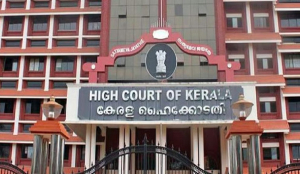
Kochi, Sep 28 (PTI) The Kerala High Court on Monday held that the central government should invoke the provisions of the Patent Act which allow it to intervene when a patented medicine is being sold at an exorbitant price, by manufacturing and selling it to needy patients.
Justice Harisankar V Menon made the observation while disposing of a 2022 plea by a breast cancer patient, seeking affordable medication for her treatment, who died while the petition was pending in the court.
In its 65-page judgment, the court held that under section 100 (Power of central government to use inventions for purposes of government) of the Patents Act, the government was entitled to use a patent or invention for manufacturing the medicine covered by the patent and sell the same to a person, including a needy patient, on a non-commercial basis.
It further held that section 100 is "required to be invoked in circumstances where the government is required to intervene, such as an instance where a medicine manufactured on the basis of a patent is being sold at an exorbitant price".
At the same time, the court also said that before proceeding in accordance with section 100, the government is required to collate the required data and arrive at a decision as to whether a particular medicine is affordable or not.
The petition was filed by a retired Bank employee who was diagnosed with HR+/HER2-metastatic breast cancer and was being treated with targeted therapy -- CDK 4/6 inhibitors -- through the medicine 'Ribociclib'.
She had moved the court seeking reduction in the price of the medicine or making it available at an affordable price as it cost about Rs 58,140 for 21 days.
After her death, in view of the noble cause espoused by her, the court continued with the matter by taking suo motu cognizance on the issue of exorbitant pricing of life saving patented medicines.
During the proceedings, the companies producing the medicine and the central government contended that section 100 can be invoked only for government purpose and not in the instant case.
Rejecting the contention, the court said that in its view, the term 'for the purposes of government' requires to be interpreted by also taking into account the right to vend or sell the goods made using the patent and invention on a non-commercial basis to a purchaser.
"When that be so, the provisions under section 100 would include the entitlement of the government to use the patent or invention for manufacturing the medicine covered by the patent and sell the same on a non-commercial basis to a person who can be none other than the needy patient," it said.
It also held that the government is required to provide all necessary facilities to citizens to ensure access to healthcare, including access to life-saving treatment, as in the case at hand.
The court, in its juddgement, also referred to the 139th Report on cancer treatment by the Department-Related Parliamentary Standing Committee on Health and Family Welfare, which emphasises upon the need for government and private sector intervention to make cancer care affordable.
Besides that, the court also referred to a movie -- Sukrutham -- starrring Mammootty which has depicted the plight of cancer patients and those attending to them, and said that it was "highly distressing" that there is no change in the situation despite three decades going by since the movie, which won accolades at the national and state levels was released.
"Yet, despite such heavy social cavalry, society and the situation have been stuck at a standstill in such cases. The government, the people, and stakeholders should, as a joint venture, ensure that no man is refused or refuses treatment exclusively due to financial constraints.
"It is imperative that, we, as a community and as a system that caters to billions, strike the balance between affordable access to medical treatment and maintaining adequate incentives," the High Court said.