
Centre inks MoU with 4 States, UT to boost rural water supply under Jal Jeevan Mission 2.0
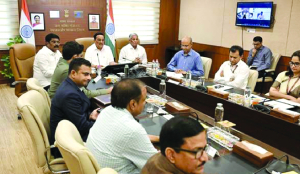
The Central Government on Tuesday signed agreements with the states of Arunachal Pradesh, Jharkhand, Tamil Nadu, Nagaland and the Union Territory of Puducherry to strengthen rural drinking water supply systems under Jal Jeevan Mission 2.0.
The Memoranda of Understanding were signed during separate virtual meetings attended by Union Jal Shakti Minister CR Patil, Minister of State V Somanna and chief ministers of the respective states and Union Territory.
The agreements sought to institutionalise a model of rural water governance led by gram panchayats and were service-based and community-centred. The model aims to focus on the sustainability, quality, operation and maintenance, and community ownership of rural water supply infrastructure, according to a statement.
Addressing the virtual meetings, Patil said gram panchayats, district and state water and sanitation missions, and local communities must work together to ensure reliable drinking water services.
Highlighting the challenges posed by mountainous terrain and heavy rainfall in Arunachal Pradesh, Patil said a revised Operation and Maintenance Policy will be notified for the state soon.
He called for regular meetings of district water and sanitation missions, faster accreditation of laboratories and observance of “Jal Arpan Diwas” for formal handover of water assets to gram panchayats.
In the case of Jharkhand, Patil laid emphasis on proper operation and maintenance, source sustainability and water conservation. He urged the state government to expedite the ongoing works so that all remaining rural households receive safe drinking water.
Commending Tamil Nadu’s progress under the Jal Jeevan Mission, Patil called for greater focus on rainwater harvesting, source sustainability, water conservation and greywater management.
For Puducherry, which achieved “Har Ghar Jal” certification in 2021, he said the priority should now be to ensure regular, reliable and sustainable water services, public awareness, community ownership, creation of Sujal Gaon IDs and notification of a revised Operation and Maintenance Policy.
Addressing the Nagaland chief minister, Patil expressed confidence that the state will provide tap water connections to all remaining households this year.
Arunachal Pradesh Chief Minister Pema Khandu said the mission has significantly transformed rural drinking water supply in the state despite difficult terrain, scattered habitations and remote locations.
He said the MoU under JJM 2.0 will further strengthen water security and improve sustainability and reliability of rural drinking water supply systems.
Jharkhand Chief Minister Hemant Soren said the state remains committed to providing safe and reliable drinking water to every rural household and noted that the MoU will help expand functional household tap water connections, especially in remote areas.
He pointed to challenges such as difficult terrain and the need for clearances to lay pipelines through forest areas and land under agencies such as the National Highways Authority of India and Damodar Valley Corporation, and sought continued support from the Centre.
Tamil Nadu Chief Minister C Joseph Vijay welcomed the extension of the Jal Jeevan Mission till December 2028 and said the state faces unique challenges as it does not have any major perennial source of water.
He requested expediting of the sanctioned Cauvery river-based water supply schemes for water-stressed districts such as Dharmapuri and Krishnagiri, and said continued Central support will strengthen the state’s rural water supply.
Puducherry Chief Minister N Rangasamy said the mission has transformed drinking water service delivery by placing dignity, health and quality of life at the centre of rural development.
Nagaland Chief Minister Neiphiu Rio described the Jal Jeevan Mission as one of the most transformative rural development initiatives in recent years and said it has significantly improved the quality of life in rural areas by bringing safe drinking water directly to households.
Secretary of the Department of Drinking Water and Sanitation, Ashok K K Meena, said the agreements prioritise sustainable service delivery and grassroots-level management rather than mere creation of infrastructure.