
Cauvery dispute timeline: Everything you need to know before Aug 13 SC hearing
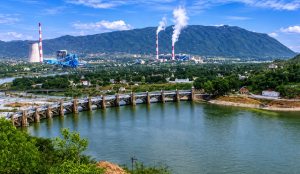
How much Cauvery water should Karnataka release to Tamil Nadu when the river basin itself is running short? That question is once again before the Supreme Court, as the two states clash over water releases during a deficient-rainfall year.
Tamil Nadu depends heavily on Cauvery water for irrigation in its delta region and argues that Karnataka must follow the water sharing framework laid down by the tribunal and modified by the Supreme Court in 2018. Karnataka, on the other hand, has been arguing that its own reservoirs, drinking-water requirements, irrigation needs and reduced inflows must be taken into account before water is released downstream.
The 2018 Supreme Court judgment provided that when the basin's available water is lower than the normal yield, the allocated shares are to be reduced proportionately.
For the current water year, Tamil Nadu has argued that Karnataka's releases have fallen short of what it should receive under that formula. During the July 28 CWRC proceedings, Tamil Nadu claimed that the flow at Biligundlu was only 3.543 TMC against a prescribed 35.391 TMC up to July 26 and put the pro-rata shortfall at about 9.46 TMC. These are Tamil Nadu's claims before the Cauvery authorities and the court.
The immediate trigger was the CWRC's July 28 direction for 3,500 cusecs daily at Biligundlu for 15 days. Karnataka argued that due to dry river conditions and transmission losses, ensuring 3,500 cusecs at the border could require releasing substantially more water from its reservoirs.
The dispute is therefore not simply about whether Karnataka should release water or not. It is about how much water should be released during a deficient-rainfall year and how the distress-sharing formula should be applied.
This dispute has its roots in the colonial-era contest over the river. It can be traced to 1807, when the then Madras Government objected to Mysore's plans to use Cauvery waters. The disagreements eventually produced the 1892 and 1924 agreements between the Madras Presidency and the princely state of Mysore, laying down rules for irrigation and construction of waterworks.
Post Independence, the expansion of irrigation in both states intensified the conflict. Repeated negotiations failed which eventually led to the constitution of the Cauvery Water Disputes Tribunal (CWDT) in 1990. The tribunal's interim and final orders followed by several rounds of litigation eventually led to the Supreme Court's landmark 2018 judgment and the creation of a permanent water-management mechanism.
Here’s a look at the detailed timeline of events leading up to present day conflict
-
1807- The Madras Government objected to Mysore's proposed use and development of Cauvery waters, marking an early formal dispute between the two administrations.
-
1892- The Madras Presidency and Mysore signed an agreement restricting certain irrigation works in Mysore and requiring consent for specified projects that could affect downstream interests.
-
1924- A new agreement between Madras and Mysore set out a broader framework for irrigation and water use. It became the principal historical reference point in the modern Cauvery dispute.
-
1970- The Cauvery Fact-Finding Committee was constituted to assess water availability, irrigation and related issues in the basin amid growing differences between the states.
-
1990- After prolonged negotiations failed, the Centre constituted the Cauvery Water Disputes Tribunal to adjudicate the dispute between Karnataka, Tamil Nadu, Kerala and Puducherry.
-
1991- The tribunal issued an interim order requiring Karnataka to ensure a specified annual flow of Cauvery water to Tamil Nadu. The order triggered strong protests and violence in Karnataka.
-
2007- The CWDT delivered its final award, allocating 419 TMC to Tamil Nadu, 270 TMC to Karnataka, 30 TMC to Kerala and 7 TMC to Puducherry in a normal water year. The states challenged various aspects of the award.
-
2013- The Centre published the tribunal's final award in the Gazette of India, giving it legal force under the Inter-State River Water Disputes Act.
-
2016- A severe rainfall deficit led to another major confrontation. The Supreme Court ordered Karnataka to release water to Tamil Nadu, triggering large-scale protests and violence in Karnataka. The court subsequently issued further release directions as the dispute continued.
-
Feb 16, 2018 - The Supreme Court modified the tribunal's allocation. Karnataka's share was increased to 284.75 TMC, while Tamil Nadu's share was reduced to 404.25 TMC. Kerala got 30 TMC and Puducherry 7 TMC. The judgment also provided for proportionate sharing during distress years.
-
June 2018- Following the Supreme Court's directions, the Centre established the Cauvery Water Management Authority (CWMA) and the Cauvery Water Regulation Committee (CWRC) as the implementation and regulatory mechanism for the Cauvery-sharing arrangement.
-
2023- Another weak monsoon revived the dispute, with Tamil Nadu repeatedly seeking releases and Karnataka citing its own water requirements and poor inflows. The CWRC/CWMA again became the principal forums for deciding release quantities.
-
July 28, 2026- The CWRC directed Karnataka to ensure a flow of 3,500 cusecs at Biligundlu for 15 days from July 29. Karnataka objected, citing deficient inflows and reservoir levels.
-
July 30, 2026- The CWMA upheld the CWRC recommendation and directed Karnataka to ensure the 3,500-cusec daily flow at Biligundlu for 15 days.
-
Aug 3, 2026- Tamil Nadu moved the Supreme Court seeking enforcement of the Cauvery authorities' directions and relief over the alleged shortfall in releases.
-
Aug 2026- The DMK also approached the Supreme Court seeking directions for implementation of the Cauvery water-release order.
On August 13, the Supreme Court will hear whether Karnataka has complied with the CWMA's direction to release 3,500 cusecs daily at Biligundlu, weighing Tamil Nadu's claim of a shortfall under the distress-sharing formula against Karnataka's competing case on reservoir storage and drinking-water needs, and will consider whether any further directions are needed to make up the claimed deficit and to strengthen the CWMA/CWRC's role in monitoring and enforcing releases going forward.
(With inputs from agency)