
Carving out our cultural memory
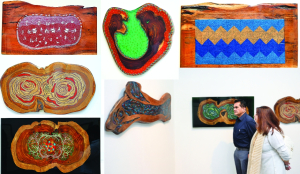
Artist Raj Kishore Gupta trades flat canvas for raw timber, preserving ancient tribal narratives at Bikaner House
When ancient cultural heritage spaces begin to vanish, society risks the forced silence of its traditional masters. Chandigarh-based artist Raj Kishore Gupta’s solo exhibition, Indigenous Accents, acts as a fierce defence against this loss, offering ancestral traditions a heavy, tangible stage.
Curated by Uma Nair at New Delhi’s Bikaner House, the exhibition actually owes its existence to the long, quiet months of the pandemic lockdowns. Grounded by the isolation, Gupta spent that time looking closely at how indigenous art survives and speaks. Pulling threads from African, Australian Aboriginal, and Indian practices, he noticed an undeniable overlap. He realised that despite looking completely different on the surface, the intricate styles of Gond, Pahadi, Phulkari, and Warli traditions all anchor themselves to the exact same thing: a shared, heavy memory of the land.
You will not find any tightly stretched canvases in this room. Gupta bypasses them entirely, choosing to work on heavy slabs of live-edge timber, raw tree trunks, and weathered wooden beams. He does not force these materials to act as blank slates. Rather than forcing a flat surface, he lets the timber run the show. Gupta works directly with the organic grain, allowing every stubborn knot, deep crack, and ragged patch of bark to shape his final layout. Because he leaves these natural flaws alone, the paint anchors deeply into the wood, physically tying the artwork to the actual lifespan and history of the tree itself.
Paired with Avani Rai’s moody, atmospheric portraits of the artist, the exhibition steers completely clear of easy reproduction. Gupta builds a vital archive out of timber, ensuring these intricate, ancient narratives remain loud, visible, and deeply felt.
The exhibition scraps standard frames to mount Gond, Warli, and Phulkari art on heavy, live-edge wood, fusing their work with the actual history of the tree