
Bhagwat’s US Visit and the Changing Global Perception of the RSS
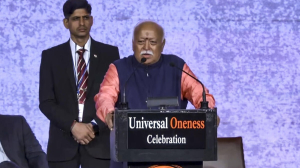
Mohan Bhagwat, chief of the Rashtriya Swayamsevak Sangh (RSS), visited the United States in August 2026 as part of the organisation’s centenary-year global outreach programme, with the wider tour also covering Canada and the United Kingdom. The primary objective of the overseas outreach was to strengthen relations with the Indian and Hindu diaspora, present the RSS’s perspective on India and Hindu society, and address what the organisation considers misconceptions about its ideology and activities.
During his visit to the United States, Bhagwat engaged extensively with Indian-origin and Hindu-American communities through public and community programmes that focused on Hindu values, cultural identity, social harmony and the principle of Vasudhaiva Kutumbakam, or the idea that the world is one family. A major public event in New York, organised around the theme of universal oneness, drew thousands of members of the diaspora and provided Bhagwat with a significant platform to communicate the RSS’s message. His visit also included cultural and humanitarian engagements, including a visit to an ISKCON temple in New York and participation in a food-distribution initiative, linking spiritual values with service and social responsibility. The visit had an impact beyond the immediate Indian-American community.
Supporters regarded it as an opportunity to present the RSS as a cultural and social organisation and to expand its international outreach, while Bhagwat’s emphasis on unity, diversity and respect for different faiths sought to project a more conciliatory image of Hindu society and the RSS. At the same time, the visit generated considerable controversy, with human-rights organisations, interfaith groups and critics of Hindu nationalism protesting his appearance in New York. The U.S. Commission on International Religious Freedom (USCIRF) also called for targeted sanctions against RSS members and suggested revoking Bhagwat’s visa, although such recommendations are non-binding. The controversy brought greater international attention to debates surrounding Hindutva, minority rights, religious freedom and the relationship between the RSS and India’s ruling BJP, while also highlighting ideological and political divisions within the Indian-American diaspora.
The immediate outcome of the visit was therefore mixed. On the one hand, Bhagwat succeeded in reaching a large diaspora audience and communicating a message centred on unity, cultural confidence and social harmony. His statements that Hindu identity should not imply the exclusion of Muslims and that India’s strength lies in its diversity helped the RSS project a more inclusive public message. On the other hand, the protests and criticism surrounding his visit intensified scrutiny of the RSS in the United States and ensured that the tour became part of a broader political and media debate rather than remaining solely a cultural outreach exercise. Overall, Bhagwat’s U.S. visit enhanced the RSS’s visibility and engagement among sections of the Indian and Hindu diaspora, while simultaneously exposing the organisation to greater international examination, criticism and debate.