
Assam to seek 1 km buffer for Kaziranga, down from 10 km: What's driving the plan
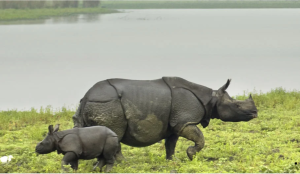
Assam plans to shrink the eco-sensitive zone (ESZ) of the Kaziranga National Park and Tiger Reserve from the current stipulated 10 km to 1 km, a decision that has drawn massive condemnation from conservationists and wildlife groups.
Chief Minister Himanta Biswa Sarma announced the plan on August 8 during a visit to Bokakhat, Assam. He said the state would send a proposal to the centre within two months seeking a tenfold reduction of the eco-sensitive zone.
Kaziranga has never had a final eco-sensitive zone notified, and in the absence of one, the Supreme Court's 2022 order fixes the default at 10 km, a position the Gauhati High Court reaffirmed as recently as March.That default is not a rule specific to Kaziranga; it applies anywhere in the country until a state completes the process of getting its own smaller, site-specific zone approved. Assam has not completed that process for Kaziranga, and Sarma said the new proposal is meant to close that gap.
Sarma asserted that the establishment of a 10-km limit has obstructed various development initiatives in and around Bokakhat, including the construction of a stadium and other civic amenities. Having a 1-km limit would make it possible for the development activities to be carried out in a manner that does not jeopardise the wildlife of the park, Sarma added.
Why is the proposal concerning conservationists?
The main concern is how a smaller eco-sensitive zone could affect the areas surrounding the park. Every monsoon causes flooding of Kaziranga’s core area, which pushes wild elephants, rhinos, tigers and deer out of the park to surrounding grasslands and jungles. A 1 km buffer zone would leave much of the surrounding area outside the eco-sensitive zone, conservationists say.
Assam has officially identified nine wildlife corridors linking the Karbi Anglong Hills to Kaziranga, corridors that extend well beyond a kilometre. A 2020 landscape study led by WWF Indian researchers has shown that forest cover in the corridor complexes around the park fell to 748.28 square kilometres in 2013 from 1,176.69 square kilometres in 2002, leading to fewer areas with safe habitat for wild animals, which have been forced into increasingly limited patches of secure ground.
This is not the first time Assam has stepped back from strengthening protection around Kaziranga. In June 2025, the state withdrew a 2020 proposal to add 2,570 hectares in Sonitpur district to the park, land that would have extended Kaziranga's boundary toward Nameri Tiger Reserve and closed a known gap in habitat connectivity. The government stated the presence of households on the land as the reason for withdrawal, but the practical effect was to leave the area open, with no protected status and no clear plan for what comes next.
Earlier this year, Prime Minister Narendra Modi inaugurated an elevated wildlife corridor along the highway bordering Kaziranga's core zone, a project that itself required diverting about 20 hectares of core zone land and 365 hectares of eco-sensitive zone land. The corridor was built specifically to let animals cross the highway safely instead of getting hit by traffic, yet even that wildlife-focused project still needed protected land to come off the table.
All these cases sit alongside a string of other claims on the same buffer, one of which recently landed Pranab Doley, convenor of the Greater Kaziranga Land and Human Rights Protection Committee, in detention.
Doley has been fighting a related battle over the same buffer land, leading protests against a proposed five-star hotel planned on agricultural land at Inglay Pathar, about 2 km from the Kaziranga park and long cultivated by Adivasi tea-tribe families. He was arrested in July 2026, released on bail, then detained the next day under the National Security Act (NSA). His case has become the sharpest evidence for what environmental activists have long argued: that Kaziranga's buffer is already being eroded project by project, well before any formal cut to 1 km was even notified.
What happens next
So far, the proposal hasn't been formally submitted to the Centre. If submitted, it will have to go through the Union Environment Ministry. A draft notification will then be issued, and the public and conservation groups will get an opportunity to raise objections.
That process could become the next major battle over how much land around Kaziranga should remain protected.