
'We want to be understood, not just showcased': 'Angh' director on Nagaland-set film's dream run
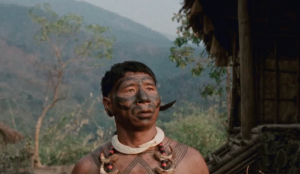
For Theja Rio, the journey of "Angh" from the hills of Nagaland to the Toronto International Film Festival and now the Oscars is more than a personal milestone -- it is an opportunity to make the world understand a culture and a filmmaking community that has long remained on the margins.
"We don't want to be just showcased, we want to be understood. Hopefully, when 'Angh' comes out, a lot more people learn more about us and see the world in our perspective as well," the 31-year-old director told PTI in an interview.
The 103-minute film, set in Nagaland in the 1960s and shot on 16mm, won the Platform prize at TIFF, opening the door for its qualification in the best international feature category at the Oscars. The Konyak-language film will be India's second entry for a possible nomination in the category after the official entry, Marathi film "Gondhal".
For Rio, a Kohima-born first-time filmmaker who developed "Angh" from his award-winning short of the same name, the recognition is also a chance to draw attention to filmmaking in Nagaland and the wider Northeast.
"A lot more filmmakers are going to come out from the northeast and from Nagaland and I hope the support then continues to that as well," he said.
Rio describes "Angh" as a film made by Naga people and told from the perspective of a Naga character rather than that of an outsider observing the community.
"It follows the perspective of a subject and not that of an explorer. Films are a beautiful window where you can sort of get an insight on how a culture is and who the people are," he said.
The film follows Anghba, an ageing hereditary chief of a Konyak village, and his young son as their world undergoes a rapid social and cultural transformation.
The father and son are among the last in their region to hold on to their ancestral faith as Christianity spreads. Their lives change further with the arrival of an American missionary, played by Scottish actor Douglas Henshall.
The Konyaks are one of Nagaland's 17 major tribes and are concentrated largely in the eastern Mon district, where hereditary chiefs are known as Anghs.
Rio first travelled to Mon in 2016 while researching another project and was fascinated by the coexistence of tradition and modernity in the region.
"It's such a beautiful world where it almost feels like the past and the present coexist together… You have two generations before you, where someone like the grandfather has tattoos on his face. And you come two generations down and you have the grandson who is a guitarist in a rock band," he said.
He chose the 1960s because Nagaland was undergoing a particularly rapid transition during the period.
"We've gone from being former headhunters and being very traditional to becoming, very quickly, culturally and lifestyle-wise, gentrified into the modern day that we live in today. So I wanted to set my film in a time where that transition was at its peak," Rio said.
The director was also conscious of the possibility that the film's treatment of the spread of Christianity could be interpreted as being anti-Christian.
Rio said he tried to maintain neutrality in his writing, preferring to explore conflicts rather than make films about subjects on which he has already formed a firm opinion.
"I like to write about things that I'm conflicted about. I'm not really interested in making films about things I'm sure about. That way, it's so easy to turn your product into a product of agenda, a product of propaganda," he said.
The film, he said, brings together two characters with equally strong convictions.
"You have Anghba, the chief protagonist of my film who has full conviction in his beliefs and ideologies, while the American missionary is fully convinced in his ideologies. These are two worlds coming and colliding, and that's where the conflict arises, and I'm interested in those," Rio said.
The director's own filmmaking journey began in an environment where cinema was difficult to access. Unlike many other parts of India, Nagaland had little filmmaking culture and, at the time, only two theatres in the entire state, with none in Kohima.
Rio grew up watching films on television before moving to pirated DVDs and illegal streaming services. His first theatrical experience came at the age of seven, when he watched Peter Jackson's "The Lord of the Rings: The Return of the King" in Delhi.
The experience stayed with him and eventually inspired him to pursue filmmaking.
His career began taking shape in 2015, when he was selected for a screenwriting programme in Sicily. In 2022, he moved to the UK and joined the National Film and Television School, where he pursued an MA in direction.
"Angh", he said, emerged from a filmmaking ecosystem that is still struggling to sustain itself.
"'Angh' comes from a film industry that barely exists and that is definitely not self-sufficient... Despite making films that are rooted in our culture, we have to look elsewhere for the audience and validation. That's where platforms like TIFF and all these film festivals play a role in getting us visibility," he said.
Taking the film to Toronto was itself a dream, Rio said, and the win came as a surprise.
"I had no idea that we were going to win... I had no expectations. My producers were more arrogant in that sense. They believed that we were going to win," he said.
"When we were announced the winner, it was something that was surreal because, like I said, bringing our film there was a big achievement for us."
Rio now hopes to take "Angh" to audiences in India as well.
"We have been given the opportunity, so we will try our best to secure a nomination. We are also looking to release the movie here," he said.
He sees the film's international recognition as part of a larger movement in the Northeast, pointing to filmmakers such as Pradip Kurbah, Rima Das and Lakshmi Priya Devi, who have found audiences at major international festivals.
Nagaland, Rio said, has a wealth of cultures and festivals, even as people continue to negotiate the changes brought by modernity.
"We're still dealing with the hangovers of the change that has happened, but it's the conflict of what to let go and what to hold on to," he said.
"Angh" is produced by Nancy Nisa Beso and Rio and features an indigenous Naga cast alongside Henshall, who won a BAFTA for his role in the series "Shetland".