
Ancient Indian style: A heritage waiting to power the economy
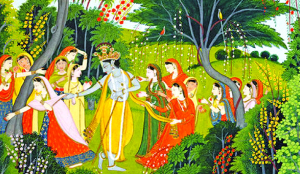
India’s ancient sculptures, paintings and literary traditions testify to a civilisation which had refined aesthetic sensibilities. Reimagining this rich legacy through innovation, design and entrepreneurship can transform India’s cultural heritage into a dynamic driver of economic growth, global competitiveness and creative leadership
The evolution of style in ancient India is truly a remarkable and fascinating journey. What is impressive is its aesthetic sensibilities, the refinement and the sophistication of what constitutes it: the coiffure, the apparel, excellent craftsmanship, embroidery, ornaments, headgear, footwear, et al. What we see of these still imparts a superlative feel and continues to inspire the top echelons involved in the industry of contemporary couture.
The clothing and adornments of yore were not merely utilitarian. In Harappan culture, one of the world’s oldest urban cultures, attire included meticulously crafted gold jewellery and garments made from fine cotton that were exquisitely embellished. The Rigveda, the oldest sacred text in India, provides insights into the importance of attire. Herodotus, a Greek historian, elucidates the quality of cotton produced in India.
As centuries passed, India became a reservoir of diverse influences, with dynasties and trade routes leaving indelible marks on the Indian ‘stylescape’. The world-famous Sanchi, Bharhut, Gandhara, Mathura and Amravati masterpieces provide great insight into the apparel, hairstyle, jewellery and adornments of the Mauryan, Shunga, Kushan and later periods. Cave paintings from Ajanta showcases a diverse array of garments with intricate patterns and colours. These paintings are a rich repository of intricate hairstyles, headgear and ornaments from the period.
The sculptures of Sanchi, Bharhut, Gandhara, Mathura and Amravati are approximately 2000 years old and are India’s exquisite world marvels. We all know that the Ajanta (a world heritage site) paintings are sublime. And Bharhut represents the peoples’ movement in sculptural art (2nd to 1st Century BCE). Bharhut is an elegant example of the first usage of stone sculpture on such a large scale. It mirrors the society of its times with intricate carvings of beautiful garments and ornaments. Similarly, the Sanchi ‘Toranas’ echo the sophistry of the Indian society two millennia back. Ajanta, a great human experience, is the only remaining evidence of the style of painting that developed in India and traveled across Central Asia, China, Japan and Korea. The Ajanta caves of the earlier phase date from 2nd Century BCE. The remnants of paintings at Ajanta truly inspire a sense of awe and admiration. The hairstyles, the ornamentations and clothes worn by figures are quite similar to those sculpted at Sanchi and Bharhut.
The Gandhara and the Mathura styles are also a mirror image of the society that existed then. The best-known testimonials of the Gandhara style was the colossal rock-hewn statues of Bamiyan, destroyed in 2001. They were perhaps one of the most impressive creations in the history of mankind. The Gandharan art had Hellenistic influence. The population of Gandhara was culturally Indian, not only because the region had become part of the Indian Mauryan empire, but also because the Vedic civilization had spread its influence in this region too.
Mathura had its golden days from the 1st Century AD till the 5th. The Mathura School of Art adopted its tradition from Bharhut and Sanchi, as also Gandharan. The earlier period of Amravati sculptures compare in style to Bharhut, while the later period compares to the Mathura school. The Amravati sculptures were the glory of ancient Indian Buddhism, one of the most magnificent. Lost and forgotten, it lay buried until rediscovered in the 1790s. The Amravati sculptures are treasures of composition and compactness.
The inspiration for Indian stylescape and its classical and timeless elegance in terms of ornamentation, dress and style comes from these classics of sculptures and paintings. They are the realistic portrayal of polish that existed in the ancient Indian society.
In these sculptures and paintings one gets the glimpse of classical fashion practices through Kesha (hairstyle), Shirabhushan (headgear and the accompanying jewellery) and Patta (garment). One can discern the brilliance of the textiles categorised into Uttariya (upper garment) and Antariya (lower garment) and the intricately designed waistbands, Paduka (footwear) and Alamkar (jewellery to ornament the body).
Examples of ancient art galleries are found in ancient Indian literature. Mathura was a great center that boasts of some of the best portrait sculptures unearthed in India. They are of early vintage and by far the most famous. Many of the sculpted statues were housed in ‘Devakula’.
Kalidas in “Raghuvansham” refers to a visit of Lord Ram to a Devakula, a Chitrashala (an art gallery of its times) to see the portrait of his father, Dasaratha, upon his return to Ayodhya from exile: “He [Ram] entered with tears in his eyes, the memorial palace of his father, of whom all that remained now was his portrait.”
During the time of Panini, the term Salabhanjika connoted games in which girls gathered flowers from the branches of trees like ‘Sala’ and ‘Ashoka’. The motif of the woman beside the tree continued through centuries, irrespective of the presence of the ‘Sala’ tree. “Damsel, holding on to the side of the window, with her body flexed beautifully like a bow and with her pearl necklace, looked like a carved decorative figure on the ‘torana’ gateway”, are lines taken from Buddhacharita.
In the realm of Indian jewellery, gold reigned supreme. It was more than a precious metal. Gold stood synonymous with Lakshmi, the goddess of wealth. As one gazes upon the intricate designs and exquisite details of the Sirkap (Gandharan) artefacts, one cannot help being reminded of the enduring power of human creativity and the timeless allure of adornments that transcend the boundaries of time. Sirkap was situated in the Punjab region. It was on the opposite bank of Taxila. It emerged as a vibrant center of trade, connecting east to the west, attracting merchants from China, Greece and Rome. This historical enclave left behind a legacy of Indo-Greek jewellery that is mesmerising. In the early 20th century, archaeologists excavated the captivating remnants of an impeccably well-planned city, making an astonishing discovery of this brilliant gold jewellery collection that is currently with the National Museum in Delhi. The legacy of Sirkap jewellery lies not only in its visual splendour, but also in the skill and dedication of the artisans who created these masterpieces. They stand as a testament to beauty, creativity and self-expression.
The sculptures in India abound in elaborate dressing of hair with flowers, pearls and jewels. Kalidasa in Raghuvansham has so beautifully compared the hair dress to the dark stream of Yamuna: “There from his palace, he saw the Yamuna with golden flamingos and admired it as if it were the plaited hair of the goddess of earth bedecked with golden strips.” In Bharhut, there are exquisite representations of pearl-net decorations for the hair. This charming style of hairdress is also recorded in the early paintings of Ajanta.
What is remarkable is the praxis of style that constitutes the interplay of paintings, literature and sculpture in ancient India. Dynamics that involve the three elements are incredible. What is left unexplained by one is abundantly furnished by the other two, as in the case of ‘saalbhanjikas’ and many other such architectural motifs. The same applies to symbolisms in paintings and literature, whether it be Ajanta or Kalidas. The Sangam literature south of the Vindhyas and the ‘Puyas’ of India’s north-east complete the pan-Indian narrative of yore.
The timeless elegance of Indian style is classical. It has not gone out of vogue. It continues to be appropriate, suitable and applicable even now. From the headgear to the torso, down to the legwear, the patterns and concepts have endured, as if ageless. With a touch of irony, it can unequivocally be said that the quintessentially iconic Indian themes have been artistically and commercially exploited by entrepreneurs all over the world. Somehow, it has escaped us to take advantage of our traditionally refined vintage assets - sculptures, paintings and literature, that seamlessly feed into each other creating perfect stories.
History is witness to the comparative world advantage India has enjoyed in the sector of the traditional economy. Our conventional weavers and craftspersons, who should ordinarily revel in prominence, wealth and status, struggle for existence nowadays. It has been more than 75 years after India’s independence. Their plight has not improved since. It is high time that Indian delved into its priceless resource to develop products that manifest its classic refinement with authentic accounts.
The creative economy sector in India is almost a clean slate with immense possibilities. The heritage crafts, doubtless, are the basis of any creative economy. Aligning them with innovation and product development will provide an edge to this artistry, enabling them to compete at national or world platforms.
Skilling, design intervention, mainstreaming capital investment, encouraging start-ups, incubation, etc., will assuredly provide a strong fillip to our sector of the creative traditional economy. This is the need of the hour.
The writer is former Culture Secretary, Govt of India and advisor Bharat Ki Soch; Views presented are personal.