
An energy crisis in disguise
A nation, like a person, can go long periods avoiding what it would prefer not to know about itself. The avoidance is rarely deliberate; it is built into the very categories through which the nation processes its own news. The economy occupies one set of conversations and one set of professionals; the climate occupies another; the inner condition of the citizen, if it is examined at all, belongs to a third domain often dismissed as private or soft. These separations make ordinary public life manageable. They also make certain kinds of seeing nearly impossible. Now and then, usually through a small public moment, easily missed, the cost of those separations becomes briefly visible.
Such a moment arrived in India this month. When our Prime Minister appealed to Indians to drive less, take public transport, work from home where possible, delay foreign travel, and refrain from buying gold, he made a request that was reasonable, practical, and entirely correct. It was also, in a more fundamental sense, an indictment.
Not of citizens who decline to comply, not of a government managing an acute energy shock with limited instruments, but of the kind of society that requires such an appeal in the first place. Few moments in public life see the head of government essentially conceding that state instruments cannot do this work alone. The appeal is, at one level, an admission of where the actual leverage lies.
The problem runs in two directions. One is ignorance: the ordinary citizen genuinely has no idea what his petrol consumption costs the country or the climate. The other is more uncomfortable: some of what needs to be known has been encountered and set aside, heard and quietly filed away, because genuinely absorbing it would require a reckoning with one's own habits that is harder than not absorbing it. The first failure is educational. The second is a failure of intent. A society that was genuinely seeing would not have required this appeal, because it would have already arrived, through its own honest examination, at the restraint the appeal is now requesting.
What is actually at stake when the pump is filled or the jewellery counter visited? The answer runs along two axes simultaneously, and the fact that those axes are so rarely held together reveals the full scope of what has gone unexamined.
The Two Axes of a Single Failure
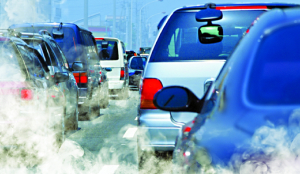
The economic axis is the easier one to trace. India spent $134.7 billion on crude oil alone in the financial year ending March 2026, with combined fossil-fuel imports forming the single largest component of a national import bill totalling $775 billion. The country imports roughly 87% of the crude it consumes; domestic production meets barely one-eighth of demand. Every vehicle on the road, every industrial furnace burning diesel, every flight taking off from an Indian airport, represents a transfer of foreign exchange out of the country and into the accounts of oil exporters.
The current account deficit moves in near lockstep with the global price of crude. With the Iran war having driven Brent past $109 per barrel, Crisil has now projected the CAD to widen to 2.2% of GDP in FY27, up from an estimated 0.8% in FY26 — nearly a tripling in a single year. India's merchandise trade deficit widened to $28.4 billion in April 2026 alone, with the overall import bill rising 10% year-on-year as crude costs surged. From a record peak of $728.5 billion in February 2026, India's foreign exchange reserves have declined by roughly $40 billion in the months since the Iran war began, driven substantially by the need to manage currency volatility rooted in elevated import costs. The rupee has lost approximately 7% of its value against the dollar in 2026 alone, trading around ₹96 and making it Asia's worst-performing major currency, with the central bank repeatedly intervening to arrest the fall. India is simultaneously the world's second-largest importer of gold, spending a record $72 billion on the metal in FY 2025-26, adding a further substantial drain on foreign exchange for what is primarily a consumption and status purchase. Together, crude oil and gold account for a structural vulnerability in the current account built not out of industrial necessity alone but out of two deeply entrenched habits of a society that has not asked what drives them.
The ordinary citizen, filling his car and picking up a gold chain for the festival season, has not been told that these two habits together constitute a structural national liability. He does not know what current account deficit means. He does not know that trade deficit, rupee weakness, inflation, and rising interest rates are, in large part, downstream consequences of collective consumption choices. He behaves as though the economy happens to him, not as something he produces with every transaction.
The second axis points in the other direction: toward the atmosphere, the glaciers, the species registers, and the sea. Before the Industrial Revolution began in the mid-eighteenth century, the concentration of carbon dioxide in the Earth's atmosphere had held stable at approximately 280 parts per million for nearly six thousand years of recorded human civilisation. It now stands at 430 parts per million, a 54% increase occurring at a pace roughly a hundred times faster than any previous natural transition. Fossil fuel combustion is responsible for approximately 90% of the carbon dioxide emissions driving this change. Average global temperatures have risen approximately 1.5 degrees Celsius above the pre-industrial baseline; sea levels are rising.
Earth's glaciers outside the polar ice sheets lost 408 gigatonnes of mass in the 2025 hydrological year alone, the second-highest annual loss on record, and the overwhelming majority of monitored Himalayan glaciers continue to show accelerating mass loss. These glaciers, often called the Third Pole, feed the rivers that supply freshwater to nearly two billion people across South and South-East Asia. Depending on the warming trajectory, a third to two-thirds of the remaining ice could vanish by the end of this century.
Species are being driven to extinction by fossil fuel combustion at rates that climate scientists classify as the sixth mass extinction in Earth's half-billion-year history, the first caused not by asteroid or volcanic event but by the accumulated choices of one species running on unexamined desire. India's own carbon dioxide emissions grew by 4.6% in 2024, the highest rate among major economies, and the country has contributed nearly a third of global energy-sector emissions growth over the past decade. The physical consequences register in India's own geography: erratic monsoons, coastal flooding, and heatwaves that now routinely exceed physiological survival thresholds across several states.
The ordinary citizen has not been told that the petrol he burns connects him to the glacier thinning above the Gangotri, or to the flood that destroyed a farmer's crop two states away, or to the species leaving the biosphere at a rate with no parallel in recorded history. The ecological newspaper and the economics newspaper are filed in separate sections, read by separate readers, and processed in separate mental compartments by the few who read both. The business page and the science page are not reporting two different stories. They are reporting the same story in two different languages, and neither has been read carefully enough.
The obvious answer to why fuel consumption is high is economic: a growing population with rising incomes wants more vehicles, more appliances, more air-conditioned space, more flight hours. This is accurate as far as it goes, which is not far enough.
Rising income explains the capacity to consume. It does not explain the compulsion. These are different things, and conflating them produces recommendations that address the first while leaving the second entirely untouched.
India has now overtaken China as the world's largest single driver of global oil demand growth, with crude oil imports reaching a record 4.84 million barrels per day in 2024 and on track to break that record again. The country's registered vehicle fleet, which stood at 326 million in 2020, is now approaching 400 million, with no sign of the curve flattening. The demand projection continues steeply upward through 2040, with almost no scenario in which voluntary restraint plays a meaningful role in flattening the curve, because voluntary restraint has no psychological grounding in the current citizen. The government finds itself making appeals precisely because that grounding is absent.
The connection between fuel consumption and the absence of a genuine inner life is not metaphorical. It is a mechanical chain. The human being who believes that satisfaction must be sought outward, because he has found no access to genuine sufficiency within, acts upon his emotions and desires without examining what drives them. Every desire acted upon requires energy. Energy, in a civilisation built on fossil fuels, means burning them. The citizen sitting in traffic in his third car is not simply making an economic choice. He pursues a fullness he has not found within, and does not see what he is doing. The fuel is not the cost of getting somewhere. It is the cost of the attempt.
The dispersed centre, the ego that has no fixed point of sufficiency, has scattered its search across a hundred objects simultaneously. A vehicle here, a gold purchase there, a foreign holiday, an apartment upgrade, a new phone before the old one has worn out, a flight taken not for any destination but for the proof of having gone. None of these objects resolves the insufficiency; each merely displaces it briefly. The centre is not completed by any of them, because it is not the absence of objects that has made it incomplete. It is incomplete by definition, constitutively, as the very structure of what it is to be an ego at all. The reaching does not end because the ego finds what it was reaching for. It ends only when the ego honestly sees what the reaching is and what it is not.
This is why the government's appeal, however well-intentioned, operates against a structural headwind. It addresses a behaviour driven not by an information deficit alone but by an inner condition that information cannot directly touch. A person who has not found any genuine inner quiet will not choose less when more is available. The choosing of less requires not willpower or discipline but a genuinely different relationship to oneself, one in which the ego is not running a permanent account deficit that must be filled with purchases, with gold, with the third car, with the foreign holiday taken for the photograph rather than the place.
The suggestion that self-knowledge, commonly understood as soft and abstract, has a bearing on the current account deficit or the carbon dioxide count reads, to many, as a category error. It is not. It is precision.
Self-Knowledge as Macroeconomics
A population of people who cannot sit quietly with themselves will consume more than a population that can. This is not a moral judgment. It is a mechanical description of how inner poverty converts into outer demand. The ego that cannot find sufficiency within, reaches persistently outward, and what it reaches for must be produced somewhere, transported somehow, and fuelled by something. In the aggregate of 1.4 billion people, the inner condition of each person adds up to a macroeconomic profile and a carbon footprint. These are not separate domains. They are the same domain described in different units.
Consider what it would mean for the national accounts if a significant fraction of India's population were genuinely not compelled by status consumption: not driven to upgrade possessions for the fleeting sense of arrival the upgrade briefly produces, not reaching for gold because the ego has borrowed gold as a stand-in for its own solidity, not flying abroad for the photograph that proves the ego was somewhere worth being. The oil import bill would be different. The current account would be different. The forex reserves would be less exposed. The rupee would face less pressure. The glacier would melt more slowly.
The objection that will be raised is that consumption reduction should not be burdened onto individuals while corporations and states produce and emit at scale. The objection has merit as political critique and none as psychological analysis. The corporation exists because the demand exists. The refinery runs because the vehicle runs. The vehicle runs because the ego runs, and the ego runs because it cannot locate a reason to stop. Address the ego honestly and the demand structure dissolves with it; address only the corporation through regulation, taxation, and policy, and demand reconstitutes supply elsewhere. This is the forty-year history of environmental policy, in which damage per unit of consumption has fallen in certain sectors while total consumption has continued to rise.
Technology offers the same partial remedy. Better engines, cleaner fuels, green hydrogen, recyclable packaging: all reduce the damage per unit of desire, but none reduces the desire. If the desire is structural, if it arises from the ego's constitutive incompleteness rather than from the absence of a sufficiently efficient vehicle, then no technical improvement reaches its source. India is projected to increase oil consumption through at least 2040, because the growth is driven not by inefficiency but by appetite, and appetite is inner rather than mechanical in its origin.
The citizen who cannot examine what actually drives his consumption cannot restrain it, because he does not know what he would be restraining. He experiences the craving as straightforwardly natural, as a given of being alive and aspiring, no more in need of examination than hunger. He does not see that what he calls aspiration is the ego's perpetual dissatisfaction wearing the costume of legitimate ambition. He does not see this because he has not been given the tools, because the educational systems he passed through did not provide them, because the culture he inhabits treats the examination of one's own inner condition as either irrelevant or as a weekend supplement topic with no bearing on serious economic life.
This is the second and more serious failure the appeal reveals: not merely the failure of information, but the failure of a society to honestly know what it has already encountered and quietly set aside. The person who has read about climate change and set the article aside without allowing it to alter his habits has not failed in knowledge. He has failed in intent. He has encountered the information and chosen not to be changed by it, because being changed by it would cost something. That cost, measured in one's own habits, is the only cost that actually matters. It is also the only one that a government appeal cannot assess or collect on anyone's behalf.
The appeal was directed at the right behaviour for the right reasons. But an appeal to a citizen who has not been educated to examine what actually drives his behaviour, and who has not chosen to examine it even where the tools were available, is an appeal that cannot fully land. Restraint experienced as sacrifice will not persist. Restraint that arises from genuine seeing, from the honest recognition that the craving has never once delivered what it promised, does not require enforcement. It is simply the consequence of having looked honestly.
What the appeal could not say, because public discourse has not yet developed the vocabulary, is that the petrol problem and the gold problem and the current account problem and the carbon dioxide problem are not four separate failures but one: a vast population of egos running a structural deficit, reaching outward for what can only be found, if it can be found at all, in the other direction.
An economy that rests on this kind of demand carries a fragility that no forex reserve can fully buffer, no interest rate can adequately hedge, and no government appeal, however sincere and urgent, can structurally address. The appeal was necessary. In a nation genuinely awake to itself, in which citizens understand their own inner condition and its consequences, it would not have been. That gap is the real measure of the distance India has to travel, not in kilometres of pipeline or gigawatts of renewable capacity, but in the quality of what the citizen knows about himself, what he has been given the opportunity to understand, what he has been willing to honestly examine, and what no policy instrument, however well designed, can provide in his place.
Acharya Prashant is a philosopher and author whose work centres on self-inquiry and its application to contemporary life; Views presented are personal.
Leave a Comment
Comments (7)
Thank you for this. I see the lack of intent in myself. I know that this restlessness cannot be addressed by anything in the outside world, yet I fool myself every single time. Like Acharya Ji said “the fuel is not the cost of getting somewhere, it is the cost of the attempt”.
I have been listening to Acharya Prashant for around 10 years, and I have been deeply connected with the Gita sessions for the last 3 years. The biggest change I have experienced is clarity. Many confusions, fears, and unnecessary mental burdens have gradually reduced. I’m not claiming that life suddenly became perfect, but I have certainly started looking at life, relationships, work, and myself with much more understanding and awareness. For me, the biggest benefit has not been motivation — it has been clarity.
Nice message
Acharya ji, explains this issue is not outside, it is within us
एक ऐसा समाज जो वास्तव में जागरूक होता, उसे इस अपील की आवश्यकता नहीं होती, क्योंकि वह अपने ईमानदार आत्म-विश्लेषण के माध्यम से उस संयम तक पहुँच चुका होता, जिसकी अब यह अपील मांग कर रही है। 👍🙏