
AI is reweaving the future of fashion
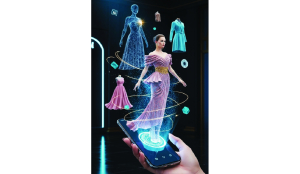
Throughout the ages, fashion has mirrored the spirit of its times. The Industrial Revolution mechanized textile production, and e-commerce revolutionized how consumers shop. Today, a new transformation is underway, one far more profound than digitising storefronts. Artificial Intelligence (AI) is redefining fashion itself, changing how clothes are designed, how trends are forecast, how inventories are managed, and even how consumers perceive style. Creativity is no longer dependent on human intuition alone. It is increasingly complemented by algorithms that analyse millions of data points in real time.
India, one of the fastest-growing retail markets, is undergoing this shift firsthand. Reliance Retail’s AZORTE, a technology first fashion format, uses AI powered body scanning and smart trial rooms to recommend fit and style in real time, offering a glimpse of the future. Globally, Stitch Fix has built an entire business model on this idea, combining client style surveys with machine learning models and human stylists to curate personalised shipments for millions of shoppers. Together, such examples show that technology is becoming as integral to fashion as fabric and craftsmanship. These innovations promise convenience and personalisation, yet raise an important question: can fashion remain a medium of human expression when algorithms increasingly influence what we wear?
The answer lies not in opposing AI, but in understanding its role as an enabler rather than a replacement for human creativity.
One of AI’s most transformative contributions is its ability to predict trends before they turn mainstream. Conventionally, forecasting relied on designers’ interpretations, market research, and seasonal observation. Today, AI systems scan social media conversations, online searches, purchase histories, influencer content, and customer reviews to spot emerging trends rapidly and accurately. Instead
of reacting to demand after it materialises, brands can anticipate it months in advance. Zara built its famed fast fashion model on exactly this logic: point of sale and RFID data feed directly into its design and production teams, letting new styles reach stores within weeks rather than seasons. AI is now extending that same rapid feedback loop to retailers who are trying to build similar infrastructure.
This precision reduces the risk of overproduction and unsold inventory, a problem that has long plagued the industry. AI powered demand forecasting is therefore more than a business edge, it is a genuine move towards sustainability. Producing what consumers are likely to buy is far more responsible than manufacturing vast quantities on uncertain assumptions.
Beyond forecasting, AI is turning the shopping experience into something deeply personal. Every customer leaves behind a digital footprint: browsing patterns, purchases, preferred colours, body measurements, and time spent viewing products. Myntra’s My Stylist feature illustrates this well, using computer vision and neural network models trained on its catalogue to recommend complete outfits from a customer’s browsing history, past purchases, and even photos of their own wardrobe. Physical stores are beginning to mirror this data driven approach. Smart fitting rooms use sensors to recommend fits based on height and skin tone, and can project different colour options without customers leaving the trial area. Digital mirrors and interactive displays now blur the line between online and offline retail.
AI is also reshaping one of fashion’s least visible but most critical functions: supply chain management. The industry runs on a complex web of designers, manufacturers, suppliers, logistics providers, and retailers, where a delay at any stage can mean empty shelves or excess inventory. AI improves this coordination by forecasting regional demand, optimising inventory allocation, cutting transportation inefficiencies, and enabling faster replenishment. This matters especially for India, whose supply chains span diverse geographies and uneven infrastructure. Better inventory planning reduces stock outs and warehousing costs while cutting the transportation and overproduction that undermine sustainability.
Perhaps AI’s most fascinating application lies in the creative process itself. Generative AI can now produce multiple design concepts within minutes, built around chosen themes, colours, fabrics, or consumer preferences. Coach used exactly this approach when it trained a custom Adobe Firefly model on its own design archive, letting teams generate digital handbag concepts and test silhouettes before a single physical sample was cut. The digital fashion house The Fabricant goes further still, using generative image models to design entire garments and collections that exist only as data, letting designers iterate through hundreds of variations before committing to a final look. In both cases, designers use AI generated options as a starting point, refining them through human judgment rather than accepting them wholesale.
Critics argue this diminishes originality. History suggests otherwise. Computer aided design did not replace architects, and digital editing did not replace filmmakers. AI is unlikely to replace fashion designers either. Instead, it can automate repetitive tasks, freeing designers to focus on storytelling, craftsmanship, and the emotional connection that machines cannot authentically replicate.
The rise of AI also opens real opportunities for India’s textile and apparel industry. As global brands diversify sourcing and seek resilient supply chains, India can consolidate its role as a manufacturing hub by integrating AI into production planning, quality inspection, forecasting, and logistics. AI also democratizes tools once available only to multinational corporations. Small designers can now use AI powered design and marketing platforms to identify underserved segments, optimize pricing, and reach consumers through intelligent recommendation systems, all without massive capital investment. Implemented inclusively, AI could become a genuine catalyst for innovation across India’s diverse fashion ecosystem.
However, AI should not come at the cost of human employment or traditional craftsmanship. India’s fashion identity extends well beyond organized retail, rooted in artisans, weavers, and embroiderers whose family enterprises preserve centuries old traditions. AI can improve efficiency, but it cannot replicate the cultural narrative embedded in handloom weaving, block printing, chikankari embroidery, or Banarasi silk. Technology must complement these traditions, not marginalize them. This calls for reskilling programs, backed by policymakers, industry, and educational institutions, so designers and retail employees learn to work alongside intelligent systems rather than compete against them. The objective should not be replacing people with machines, but empowering people through them.
Personalization also raises legitimate concerns. It depends on collecting purchase histories, browsing behaviour, location data, and body measurements to build detailed consumer profiles, which makes questions of data security, consent, and governance unavoidable. Consumers deserve to know how their data is collected, stored, and used. Trust may become one of the most valuable competitive advantages in the era of AI, and companies that pair technological sophistication with ethical data governance will build stronger long-term loyalty than those relying solely on aggressive personalization.
Equally significant is algorithmic bias. AI systems learn from historical data, which often reflects existing market preferences and social biases, and can therefore skew recommendations towards certain body types, skin tones, or aesthetics while overlooking others. Fashion has embraced diversity and inclusivity over the past decade, and AI must reinforce these values, not undermine them. Responsible AI requires transparency, fairness, accountability, and human oversight, so that algorithms assist decisions rather than dictate them.
The rise of technology led retail formats marks a genuine shift in India’s retail market. The future store will not merely display products, it will understand customers, anticipate their preferences, and blend digital and physical experience through continuous, data driven insight. Shopping will grow more immersive, convenient, and personalized, yet fashion’s essence must remain rooted in individuality, creativity, and cultural identity.
As India advances toward becoming a global leader in digital innovation, its fashion industry has a real opportunity to show that technology and tradition can coexist. AI can help businesses cut costs and save time without sacrificing craftsmanship, personalize experience without restricting individuality, and improve sustainability without compromising profitability. Most importantly, it can support designers without replacing the imagination that defines fashion itself. Fashion has always been about telling stories, of identity, aspiration, heritage, and change. AI may help write those stories faster. But it is humanity that must decide how they end.
The author is Assistant Professor, School of Business Management, Narsee Monjee Institute of Management Studies, Mumbai; Views presented are personal.