
Abhinav Bindra calls for stronger high-performance system ahead of LA Olympics
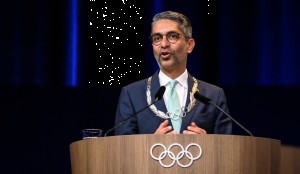
Olympic champion shooter Abhinav Bindra has congratulated Indian athletes for their Asian Games performance but urged the country to move with greater urgency in strengthening its high-performance ecosystem with the 2028 Los Angeles Olympics less than two years away.
India finished fourth on the medal table in Nagoya with 85 medals, including 21 gold, 27 silver and 37 bronze.
The tally was lower than India's record 106-medal haul, including 28 golds, at the 2022 Hangzhou Asian Games.
“Congratulations to every Indian athlete and to Team India on the Asian Games. A Games campaign is never just the few days we see on television. It is years of early mornings, injuries, doubts, missed occasions and countless hours of work,” Bindra wrote on X.
He also acknowledged the contribution of athletes' families, coaches, support staff, federations, the Sports Authority of India and the government.
“There have been some terrific breakthrough performances at these Games. Young athletes have announced themselves, others have stepped up to a new level and there have been moments that give us a lot to be excited about,” he said.
At the same time, Bindra said the disappointments from the Games should be used to identify shortcomings rather than simply being treated as isolated sporting setbacks.
“There have also been disappointments. That is sport and every Games will have them. What matters now is how honestly we learn from them,” he said.
The Beijing 2008 Olympic gold medallist stressed that high-performance sport requires long-term planning rather than interventions only when an athlete is close to a major medal.
“High performance cannot only be about reacting when an athlete is close to a medal. We have to keep building systems that understand the athlete over several years,” Bindra said.
He called for greater use of science and data in identifying and addressing gaps in athletes' preparation.
That, he said, should include better coaching and competition planning, management of training loads and recovery, injury prevention and developing athletes who can remain physically and mentally resilient under pressure.
“Most importantly, the right expertise has to reach the athlete at the right stage of their career, not when it is already too late,” Bindra said.
India's Asian Games performance came against a strong showing by the continent's leading sporting nations. China topped the medal table for a 12th consecutive edition with 341 medals, including 169 gold, 89 silver and 83 bronze.
Host Japan finished second with 269 medals, including 83 gold, while South Korea was third with 150 medals, comprising 39 gold, 43 silver and 68 bronze.
Bindra said India's attention must now quickly turn towards Los Angeles.
“LA is less than two years away. In Olympic sport that is not a long time. The athletes who will stand on the podium there are already deep into their preparation today,” he said.
He called for a balance between celebrating India's achievements and honestly examining areas that need improvement.
“So this is the moment to celebrate what went well, be honest about what did not and get back to work with urgency and purpose,” Bindra said.
He also congratulated the athletes and everyone involved in India's Asian Games campaign, urging the sporting ecosystem to use the experience as a foundation for the next Olympic cycle.
“Be proud of what has been achieved. Learn from these Games and keep moving forward,” he said.