Sikkim CM presents Rs 19,215 crore Budget for 2026-27
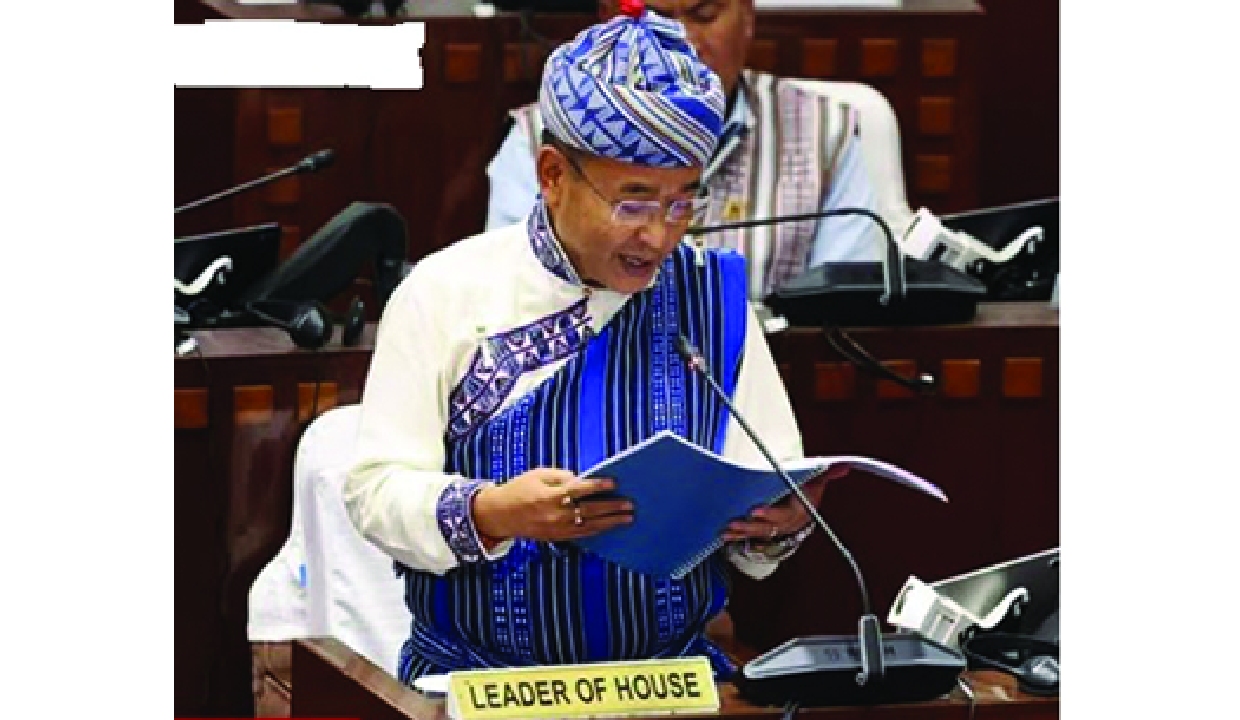
Sikkim Chief Minister Prem Singh Tamang on Monday tabled in the Assembly a Budget of Rs 19,215 crore for the financial year 2026-27, with the focus on developing infrastructure and social welfare measures.
Tamang, who holds charge of the finance department, said his government has significantly expanded public investment through enhanced State revenues, prudent fiscal management and mobilisation of additional resources from the Centre and externally aided projects.
Presenting the budget on the first day of the four-day session of the Assembly, he proposed a gross expenditure of Rs 19,215 crore for the financial year 2026-27, with a net expenditure of Rs 18,455 crore after accounting for recoveries.
“The Budget would be financed through Sikkim’s own revenues, transfers from the Government of India and prudent borrowings, with allocations prioritising good governance, infrastructure development and social welfare,” Tamang said.
The revenue expenditure has been estimated at Rs 11,733 crore, while Rs 5,896 crore has been marked for capital expenditure excluding loans and advances, the CM said.
He said that the State Government has earmarked Rs 2,460 crore for its share under the Centrally Sponsored Schemes to accelerate development across sectors, it is informed. Exuding confidence about the financial health of the Himalayan state, Tamang said Sikkim has emerged as one of the most progressive states in the country, recording an average real Gross State Domestic Product (GSDP) growth of over 12.6 per cent during the past eight years.
He said that the state has the highest per capita GSDP in the country and has witnessed significant improvements in human development, poverty reduction and household income.
Reaffirming the Government’s vision of Viksit Sikkim @2047, he said the state aims to sustain an average annual GSDP growth of over 13 per cent through sound governance, strategic investments and citizen-centric development. The CM further said that Sikkim’s GSDP at current prices is projected at Rs 62,973 crore in 2026-27.
Among major announcements regarding the priorities of the State Government in the current fiscal, he said that the State Government proposed to provide statewide Human Papillomavirus (HPV) screening to around 1.5 lakh women aged 30 to 65 years as part of its efforts to eliminate cervical cancer.
The CM also announced the operationalisation of Sikkim’s first Renal Transplant Programme at STNM Hospital, enabling patients to undergo kidney transplantation within the State.
He said the Sikkim Government Medical College at Sochakgang will commence with an annual intake of 100 MBBS students from the academic year 2026-27 and added that an Assisted Reproductive Technology Centre will be established at STNM Hospital to address the state’s declining fertility rate.
The discussion and passage of grants of various departments will take place from Tuesday, Speaker MN Sherpa said.
Earlier, addressing the House, Governor Om Prakash Mathur outlined the state government’s vision for inclusive and sustainable development.
Describing the 2026–27 Budget as a roadmap for a “Sunaulo, Samriddha ani Samarth (golden, developed and able) Sikkim,” he said the state government remains committed to balanced economic growth, environmental conservation, employment generation, women’s empowerment and improved public service delivery.
The governor also congratulated the people of Sikkim on the completion of 50 years of statehood and highlighted the significance of the visits of the President, Prime Minister and Vice President during the Golden Jubilee celebrations.
Referring to the budget for 2926-27, Mathur said it would create new opportunities for Sikkim through enhanced investments in tourism, organic agriculture, horticulture, infrastructure and connectivity, while supporting the national vision of Viksit Bharat @2047.
He identified five strategic priorities: strengthening productive sectors, improving infrastructure and connectivity, investing in human capital, promoting environmentally sustainable growth and ensuring planned urbanisation in Sikkim.
The governor also noted a decline in the state’s suicide rate over the past three years, attributing it to sustained mental health and suicide prevention interventions.
He reaffirmed the state government’s commitment to strengthening education, healthcare, tourism, entrepreneurship, skill development, environmental conservation and women’s empowerment, while emphasising that development would continue in harmony with nature and Sikkim’s cultural heritage.