Shikha’s Kariigarii opens Saree Shastra at India International Centre
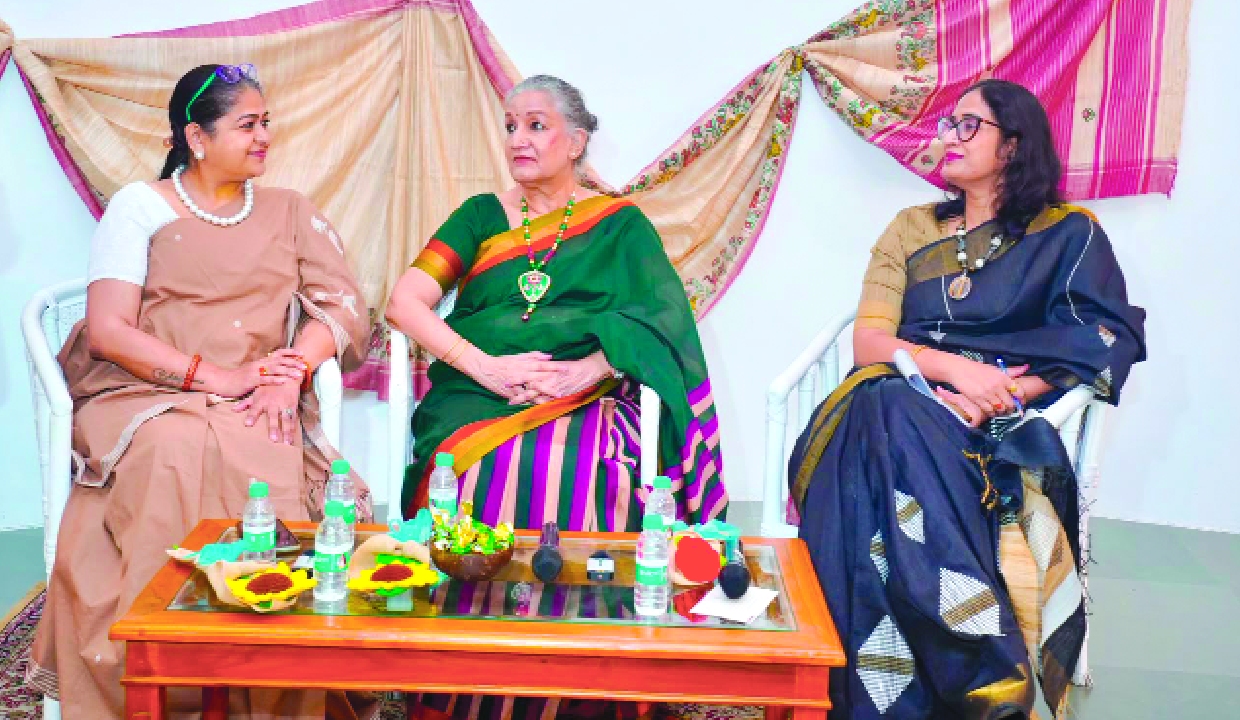
Shikha’s Kariigarii, a woman-led social enterprise and textile practice working with over 100 artists and artisans across India, has opened an exhibition titled Saree Shastra at the India International Centre (IIC) in New Delhi.
The exhibition is built around a central provocation: a single length of cloth suspended at the centre of a ring of spears, a mace, and knives, asking visitors whether the saree, which outlasts rather than conquers, is itself a form of power.
The exhibition is curated across several interconnected sections, each building on the opening installation’s argument. The first confronts visitors with the weapons before they encounter the cloth. The second places a Sanskrit verse at its centre, describing how where women are honoured, the divine flourishes, surrounding it with representations of the many roles women inhabit simultaneously: lawyer, artist, politician, singer, sportsperson, homemaker, and caregiver, moving between these without fully setting any one down.
The third section turns the saree into a canvas. Pichwai, Pattachitra, Gond, Warli, Aipan, and Sohrai art from different regions of India sit alongside contemporary work. Hand-painted sarees hang next to handwoven and embroidered ones, including GI-verified weaves from across the country. The section is designed to feel like an art gallery where every work on the wall can also be folded up and worn home.
The fourth section puts the makers in full view. Two Pichwai artists from Rajasthan are present at the exhibition, hand-painting fabric while explaining the nuances of the form to visitors. A contemporary artist works with carved blocks, painting postcards that visitors take home. The presence of working artists is intentional: the exhibition’s argument is that heritage survives only where it is practised, shared, and watched as it is made.
The fifth section turns to history. The exhibition traces how handloom weaving was hollowed out by colonial mills and the flood of British-manufactured textiles, and how, during the Swadeshi Movement of 1905, words and symbols began appearing within woven borders and pallus, turning handloom weaving into an instrument of resistance and national consciousness.
A programme of panel discussions accompanies the exhibition on the theme of saree as a living civilisational legacy, covering art, heritage, identity, and women’s narratives. Speakers include Dr Karan Singh, IAS officers Mugdha Sinha and Bandana Preyashi, former Textile Secretary Rita Menon, Dr Sanjay Kumar Manjul of the Archaeological Survey of India, and Dr Promil Pande, Dean of the School of Design at GD Goenka University.