Shah’s security push for 2047
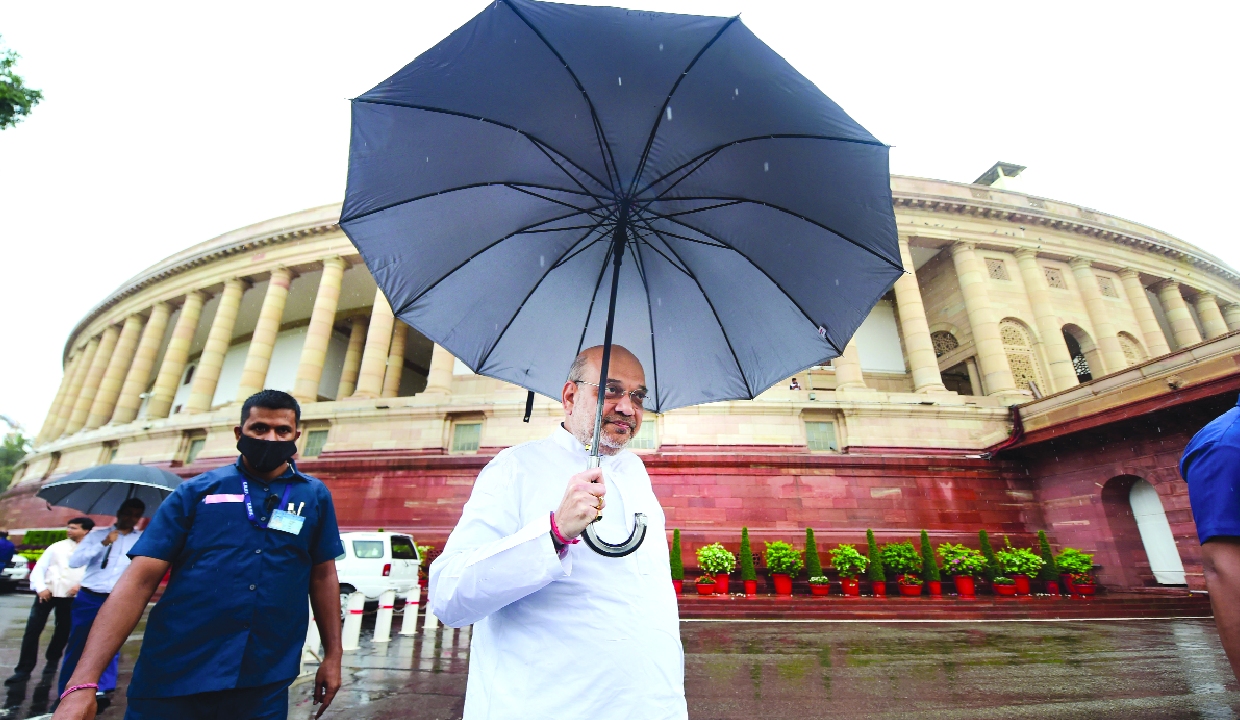
A new border security plan and upgraded intelligence systems are central to the push
Stressing on strengthening internal security, Union Minister for Home Affairs, Amit Shah, on Tuesday said, “For India to become a developed nation by 2047, strong internal security is essential. Prime Minister Modi has set the target of India becoming a developed country by 2047, and the first requirement for that is strong internal security; if we are to emerge first in all fields, then internal security must be further strengthened.” He was delivering the valedictory address at the closing session of the Intelligence Bureau’s National Security Strategy Conference (NSSC).
The home minister criticised the past approach, saying, “Had the earlier Governments envisaged the problems concerning narcotics, Naxalism and the North East before they became serious, the country would not have had to suffer with them for so many decades.” He added that these three threats to internal security have now been addressed. “We have put an end to the problems caused by the three areas which were a threat to internal security. All the credit for this must be given to the police forces of each state, the central agencies and the CAPFs,” he said.
Shah urged the NSSC forum to study trends for the next 15 to 20 years, anticipate future problems and develop strategies to prevent them. He said that three new criminal laws will be fully implemented in the coming year, which should help the Supreme Court resolve cases within three years and raise the conviction rate by 25 per cent.
Regarding border security, Shah said that after visiting all the States along the land border over the past eight months, a new border security plan has been shared with them. “This country is not like Dharamshala (Hospice), and it is only the citizens of the country who have the right to live here; infiltrators pose a threat to the nation’s security, its economy, and to demographic change,” he said.
Shah pointed to the overnight ban and dismantling of the Popular Front of India (PFI) as an example of coordination between the Union Government and the States and urged the use of the ‘PRAHAR’ framework in daily operations to eliminate terrorism and break up terrorist networks.
The home minister also spoke about the <Control Vision Document 2026-2029></i> to protect the younger generation, focusing on the three D’s -- Detect, Disrupt, and Destroy -- to achieve a drug-free India. “It is only India that can carry out the most effective struggle against narcotics, and this struggle will be carried out jointly by the Government of India and by each department of each State Government and will therefore be won,” Shah said.
He highlighted new technology, saying that an integrated database combining CCTNS, ICJS, NatGrid, and NAFIS is now in place. He encouraged young officers to use data integration, analysis, and artificial intelligence to gather useful intelligence and prevent future issues. The Multi-Agency Centre (MAC) has also been upgraded to deliver better results.
Between 2019 and 2026, about 274 fugitives were brought back from abroad. Shahd stressed that all states should ensure that remaining fugitives overseas are brought to justice in accordance with their countries’ security interests, and that security policy must address global instability, energy and resource shortages, supply chain disruptions, rising radicalisation, and cyber misinformation.
He summed up by saying, “We must identify the challenges at an early stage and eliminate them before they turn into major problems. By establishing such an ecosystem, we will be able to create an India that is secure, free from infiltrators, and free from narcotics.”