Security intensified for Amarnath Yatra
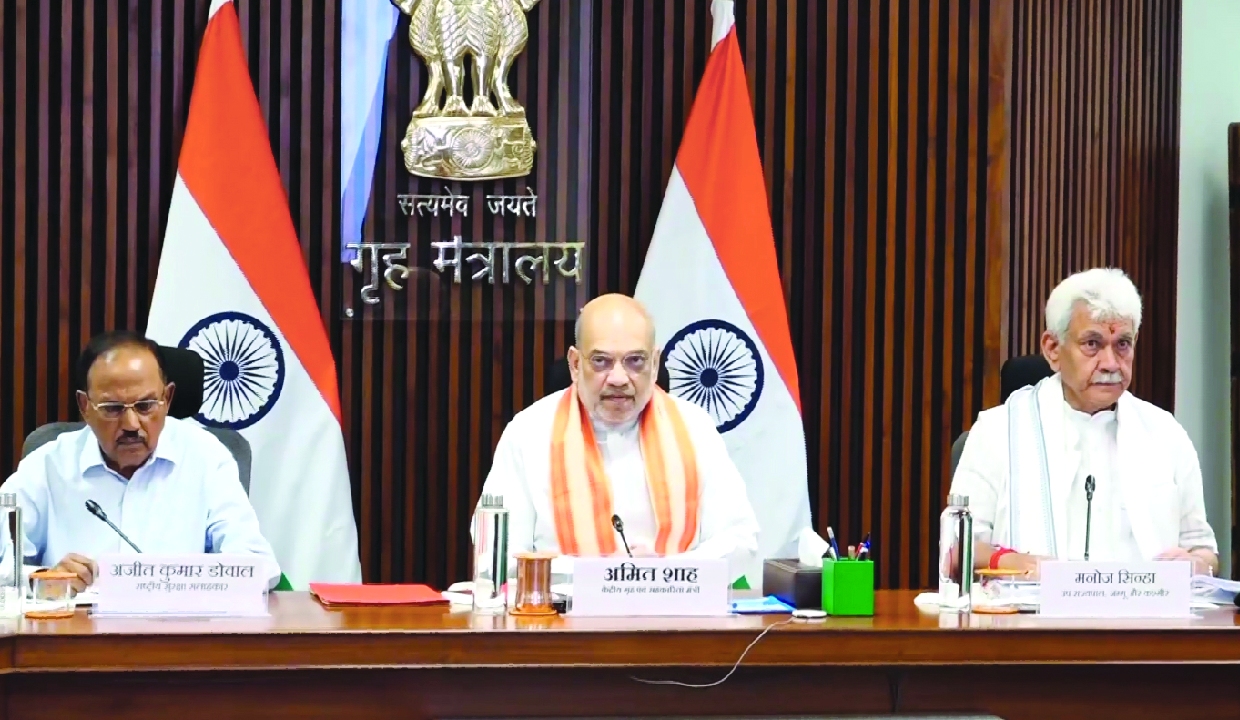
Union Home Minister Amit Shah chaired a high-level meeting on Friday to review preparedness for the Amarnath Yatra and directed CAPFs, the Jammu and Kashmir Police and all security agencies along the route and at tourist places to establish a multi-layered security grid. Stringent security measures will be in place at major tourist destinations beyond the core yatra routes to ensure a peaceful pilgrimage and robust security.
Pilgrims have two main routes to the shrine. The traditional 48-km Nunwan-Pahalgam route in Anantnag district is scenic and gradual. It passes through Chandanwari, Pissu Top, Sheshnag Lake, Mahagunas Pass (Ganesh Top), and Panchtarni before reaching the cave. This route usually takes 3–5 days one way with night halts at organised camps. The alternative 14-km Baltal route in Ganderbal district is shorter but steeper. Fit pilgrims can complete it in a single day. Both routes offer stunning Himalayan views and feature well-equipped base camps. charzanholidays.com
To ensure safety, traditional security measures will be strengthened through the extensive use of drones, CCTV monitoring, surveillance systems, and other modern technologies. Senior officers from CAPFs and J&K Police will continuously monitor camp sites.
Following Union Home Minister Amit Shah’s review meeting in June 2026, a robust security system has been established.
Officials said that over 670 companies of the Central Armed Police Forces, or about 67,000 personnel, will be deployed. Apart from CAPFs, personnel from J&K Police and the Army, including women's units, will be deployed. Several checkpoints will be set up along both the Pahalgam and Baltal routes. Drones will be used for aerial surveillance; CCTV cameras will be placed at camps and key locations; and advanced screening will include X-ray baggage systems, metal detectors, explosive detectors, RCIED jammers, and sniffer dogs.
The area will be a “No Flying Zone” from July 1, 2026, until the yatra ends. Senior officers will monitor camps at all times, and locals and animals involved in the yatra must register with a QR code.
Screening at entry points will include thorough checks to prevent contraband or threats.
These protocols ensure a secure and welcoming environment for pilgrims. The next area is Health and Medical Safety. 4. Health and Medical Safety Protocols. Because of the high altitude, Medical Aid Centres are set up about every 2 km along the routes. These centres have oxygen cylinders, life-saving medicines, and trained staff.
There will be 4x4 ambulances, shuttle services, and emergency response teams available at key points, including Pissu Top, Zoji Bal, Panchtarni, and Domail.
Comprehensive arrangements cover every aspect of the pilgrimage, including pilgrim registration through the Shri Amarnathji Shrine Board, accommodation in camps, healthcare services for high-altitude challenges such as Acute Mountain Sickness, and disaster management plans for weather-related risks, including snow, rain, and landslides. Real-time weather forecasts will guide the movement of pilgrim batches.
National Security Advisor Ajit Doval, Jammu and Kashmir Lt Governor Manoj Sinha, Army Chief Gen Upendra Dwivedi, Home Secretary Govind Mohan, Intelligence Bureau Chief Tapan Kumar Deka, CRPF Director General GP Singh, and other senior officials attended the meeting. Central and Union Territory agencies are coordinating closely for a massive yet seamless security deployment.
The Amarnath Yatra holds profound religious significance while supporting tourism and local livelihoods. Devotees trek to the holy cave shrine of Lord Shiva at 3,880 metres in the Himalayas of Jammu and Kashmir to seek darshan of the naturally formed ice Shiv Lingam. The yatra, which draws hundreds of thousands of pilgrims, is scheduled to begin on July 3 and last 57 days.
According to legend, Lord Shiva chose this remote cave to reveal the secrets of creation and immortality (Amar Katha) to Goddess Parvati. A folk tale credits its discovery to a 15th-century shepherd, Buta Malik. The ice lingam forms when water droplets from the cave roof freeze in the sub-zero temperatures. It waxes and wanes with lunar phases and is regarded as a living symbol of Lord Shiva.