SCO Summit: A win for India in Bishkek
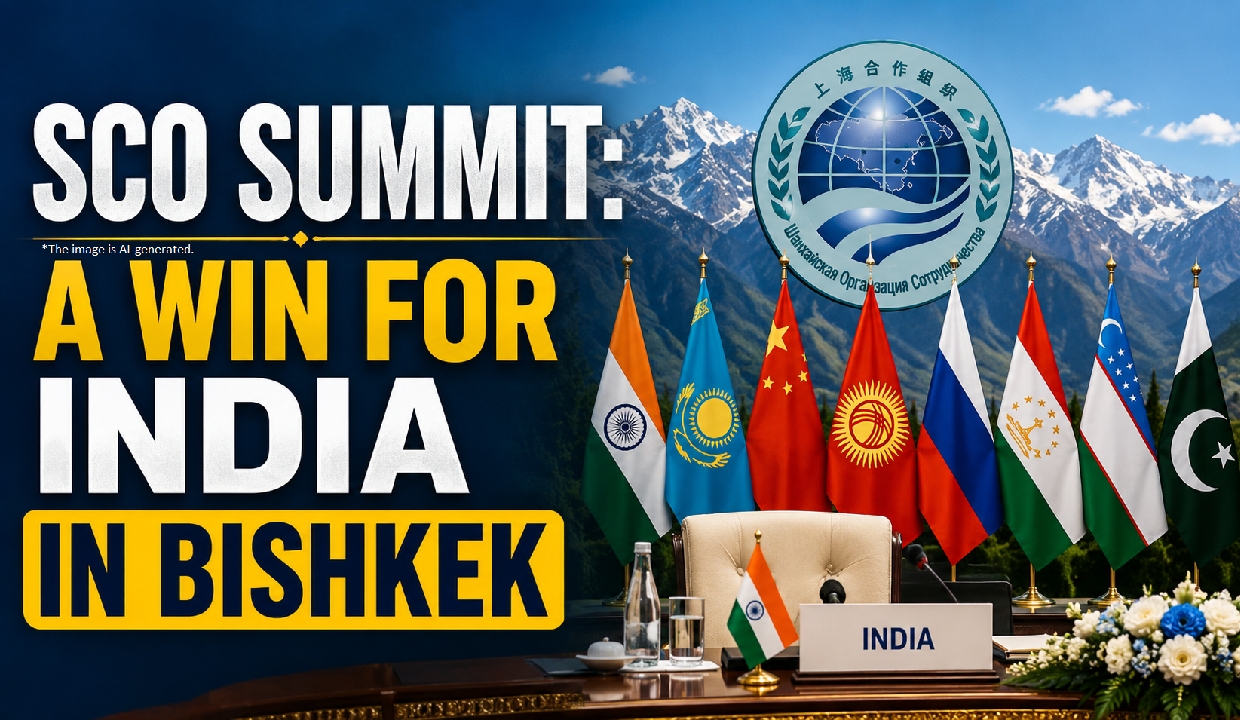
Bishkek has offered a moment of diplomatic convergence - and a reminder that declarations are easier to sign than geopolitical differences are to resolve
The 26th Shanghai Cooperation Organisation summit closed in Bishkek on September 1, with Prime Minister Narendra Modi and the other heads of state signing the Bishkek Declaration, marking the bloc's 25th anniversary. Hosted by Kyrgyz President Sadyr Japarov, the two-day summit brought together ten member states, fifteen partner countries and two observer nations. Prime Minister Modi's agenda rested on three pillars — security, connectivity and opportunity. On security, he pressed for dismantling the entire terror ecosystem: its financing, recruitment, radicalisation and the safe havens that sustain it, insisting there could be no double standards and that terrorism must never be treated as anyone's strategic asset. On connectivity, he backed regional trade and market integration, but only where it respects sovereignty and territorial integrity — a familiar Indian caveat aimed at projects such as China's Belt and Road corridor running through Pakistan-occupied Kashmir. What gave the moment its weight was where it happened: Pakistan Prime Minister Shehbaz Sharif sat at the same table, invoking his own country's sacrifices against terrorism. Yet the Declaration still carried the substance India has sought for years — a strong, collective condemnation of terrorism in every form, rejection of double standards, and a call to combat the cross-border movement of terrorists.
That every member, Pakistan included, signed on to that language is the real story, even without naming any specific attack. Beyond the rhetoric, the summit delivered India concrete institutional gains: approval of a new Universal Centre for Countering Security Threats, an updated protocol on cross-border crime cooperation that aids the fight against narco-terrorism, adoption of English as an official SCO language, and hosting rights for the SCO Civilization Dialogue Forum this autumn — thirteen outcomes in all, by the Ministry of External Affairs’ own count. The summit’s ambit reached well beyond South Asia. The Declaration condemned the US-Israeli strikes on Iran as violations of international law and favoured a more multipolar order over unilateral sanctions — an SCO positioning itself against Western-led institutions. That sits awkwardly alongside India’s own recalibration: a February trade deal cutting US tariffs from 50 per cent to 18 per cent came bundled with a commitment to wind down Russian oil purchases, even as Modi sat with Putin in Bishkek, reviewing the full spread of India-Russia ties, energy included. With Xi Jinping there was no scheduled bilateral, just a warm handshake — modest, but consistent with the thaw since Tianjin. The real test begins now. Later this month, Modi, Xi and Putin reconvene in New Delhi for the BRICS summit, a sterner test of whether Bishkek’s cordiality survives contact with unresolved friction on the border and in trade. Declaratory unity against terrorism has been signed before, Pakistan included, without reliably converting into extradition, financial action or intelligence-sharing India can point to. Bishkek gave India better language. What New Delhi does with it will decide whether this was a turning point or one more ritual repeated on schedule.