SC recognises homemakers as nation builders
In 1917, Mahatma Gandhi had said: “Women are the companions of man, gifted with equal mental capacities; she has the right to participate in the minutest details in the activities of man, and she has an equal right of freedom and liberty with him.” Since independence, there has hardly been any judgment that has dealt with or examined the contribution of women in family life, nation-building, and the economy. Though primarily because of votes, from time to time, various political parties have been announcing schemes that appear to be beneficial for women.
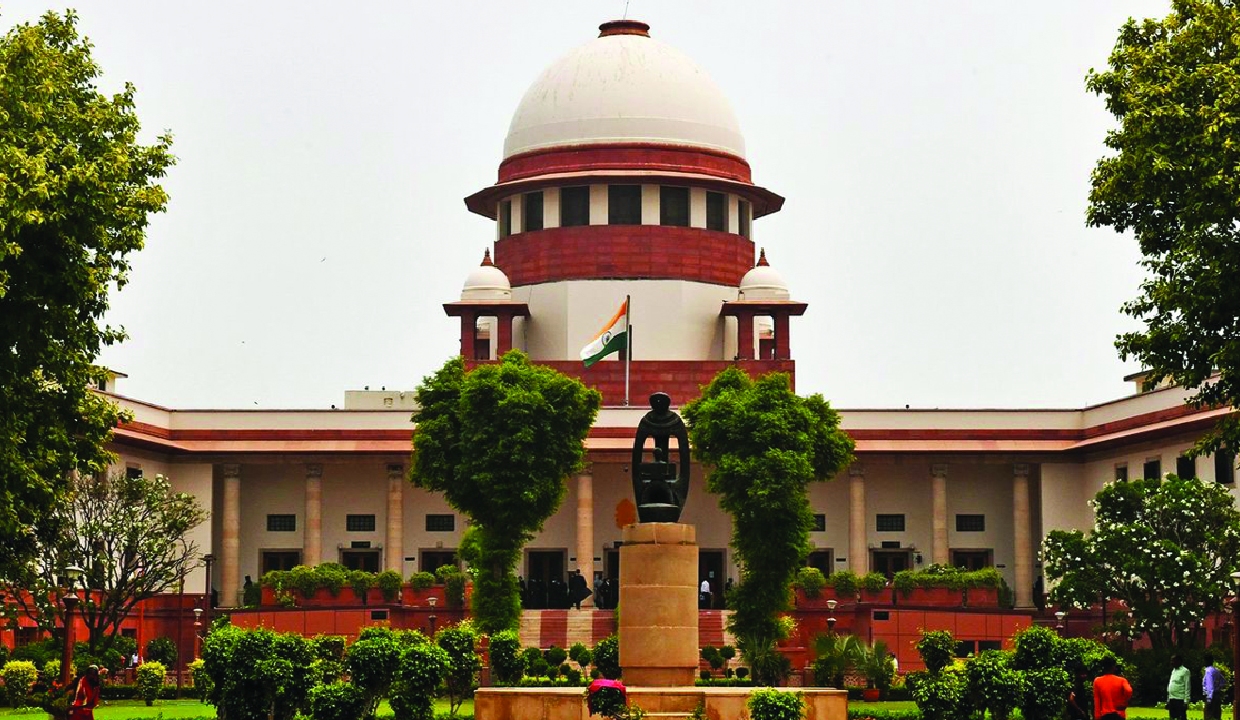
In a recent judgment dated 11.06.2026, in the matter of Shishu Pal Vs Surjeet & Ors, a Bench of the Supreme Court of India comprising Justice Sanjay Karol and Justice N Kotiswar Singh, in a landmark judgment, dealt with several burning issues pertaining to the dispensation of justice in Motor Accident Cases and delays therein. While adjudicating the issues, the Supreme Court also recognised the contribution of women in “Home Making” and “Nation Building” and the contribution estimated at 15-17 per cent to the GDP by unpaid caregiving work/household/unrecognised work.
Peculiar facts of the case were that in November, 2001, a lady/ house wife died in a road accident. In December, 2003, the Motor Accident Claim Tribunal granted a meagre compensation of Rs 2,42,000 only. Being aggrieved, the family members of the deceased filed an appeal in 2004, which was allowed by the High Court in December 2024 (after a delay of 21 years), enhancing the compensation to Rs 8,43,000 along with interest at 7.5 per cent from the date of filing of the petition. It was further ordered that in case the amount is not paid within 3 months, then the rate of interest would be further enhanced to 9 per cent per annum and further, in case the amount is not paid within the said period, then the rate of interest would be enhanced to 12 per cent per annum.
Not satisfied, the family members of the deceased challenged the same before the Supreme Court in 2025. The fact that the appeal before the High Court was filed in 2004 and was decided at the fag end of 2024, the Supreme Court called for the record of the appeal to find out the cause of delay. The High Court record shows that in the year 2011, a fire broke out, in which the original record of several files got burnt, and the High Court removed about 2200 cases from the list of pending cases as their files could not be reconstructed. It took almost 14 years for the reconstruction of Shishu Pal Vs. Surjeet & Ors. file. The Supreme Court took serious note of the situation that in the cases arising out of either an injury or death, the circumstances are different and beneficiary-oriented litigation in such cases should not be pending at the level of the High Court for a period of 4 years. Keeping these circumstances in mind, a bench comprising Justice Sanjay Karol had adjudicated over 100 appeals in beneficiary-oriented cases from 11.02.2025 to 20.04.2026. In almost 50 per cent of the matters, the pendencies were over 4 years.
The Bench expressed its unhappiness over the picture of pendency and held that “in reality, the households functioning depends substantially on the homemaker. The earning members are, in fact, solely dependent on the homemaker, but alas, the reality does not receive the acknowledgement it deserves.” The Bench took note of the recommendation issued in the tenth session of the Committee of Elimination of Discrimination against Women, wherein the quantification of the unremunerated domestic activities of women, which contribute to development in each country, reveals the de facto economic role of women. The contribution of women in homemaking and Nation Building has been judicially pronounced by the Supreme Court.
In Lata Wadhwa Case (2001) 8 SCC 197, the Supreme Court had calculated compensation using the Rs 3,000 per month metric. However, in Shishu Pal Case the Supreme court held that not justifiable and observed that “to measure the contributions of a homemaker and mother as in this case in strictly Monitory Terms is a task of considerable difficulty for each and every aspect of the day, month and year of such homemaker family member is informed, shaped by her sometimes acknowledge, but most often unacknowledged or taken for granted.” While discussing other case laws and in view of the peculiar facts of the Shishu Pal Case, the Supreme Court computed “loss of domestic care/ monthly income at Rs 30,000 and keeping other factor such as, future prospects, multiplier deduction etc awarded the compensation of Rs 62,77,900.
While concluding, in order to take care of delays at the Tribunal and High Court level, the Supreme Court directed that Claim Petitions shall be accompanied by necessary proofs, such as:
(i) Official proof, date of birth,
(ii) Disability certificate as also the opinion of the doctor regarding functional disability, (iii) ITR/ Salary Slips issued by the employer under stamp and the seal/ certificate of salary issued by the employer under the stamp and seal, (iv) If compensation is claimed under the head of medical expenses, bills duly attested by the competent authority of the clinic/hospital/nursing homes be attached, (v) If attendant charges are claimed and such a person is already in employment, a notarised affidavit, disclosing salary paid to them, per month.
This judgment will go a long way in curtailing delays in Motor Accident Claims.
The writer is a senior advocate; Views presented are personal.
Leave a Comment
Comments (1)
How eloquent that Gandhi quote. Kasturba Gandhi was a very fortunate woman as his wife, wasn't she??