Saudi-led coalition intensifies air campaign as Yemen government forces launch Houthi offensive
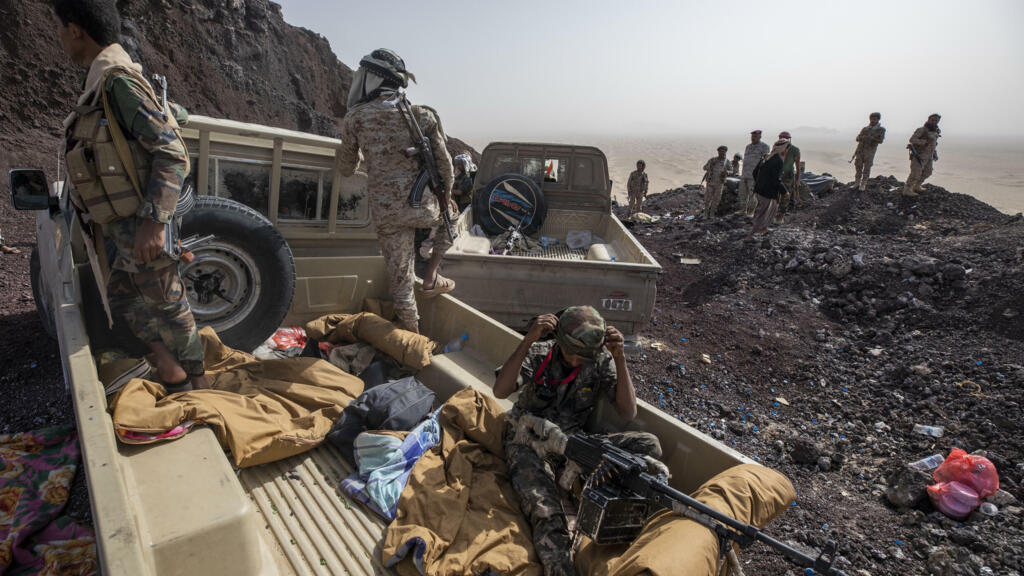
Forces of Yemen's internationally recognised government launched a major offensive against Iran-backed Houthi rebels on Monday along the country's Red Sea coast, backed by an intensified Saudi-led air campaign that the coalition said involved 100 fighter jets.
Coalition spokesman Maj Gen Turki al-Malki said the forces had secured "air protection" over the strategic Bab el-Mandeb Strait and destroyed hundreds of Houthi targets as part of the campaign.
The claims and details of the strikes could not be independently verified.
The offensive came a day after the Houthis seized the key town of Turbah in southwestern Yemen, dealing a setback to Saudi-backed government forces as the rebels advanced towards Taiz, a strategic provincial capital.
Turbah lies on the main road linking Taiz with Aden, the port city that serves as an interim seat of Yemen's internationally recognised government. The town has long been an important position for government forces defending Taiz against the Houthis.
The rebels have also seized several villages and areas on the outskirts of Taiz, Yemen's third-largest city, raising concerns that they could further tighten their hold around the provincial capital.
The latest escalation follows a major Houthi push along Yemen's western Red Sea coast in early September. The rebels captured the strategic port city of Mokha and several Red Sea islands, allowing them to control the Yemeni side of the Bab el-Mandeb Strait, a crucial maritime chokepoint through which about 12 per cent of global trade passes.
Saudi-backed government forces announced on Sunday that they were mobilising troops across areas under their control.
Rashad al-Alimi, head of Yemen's ruling Presidential Leadership Council, said the operation, dubbed "Yemen Dawn", was aimed at "recovering the remaining territories" held by the Houthis.
He called for international support for his government and said the operation sought to restore state institutions, "liberate" Sanaa, the rebel-held capital, and end what he called the Houthi "terrorist militia coup".
Hours after al-Alimi's announcement, al-Malki pledged "full operational support" for the Yemeni government forces until the Houthis were "eliminated".
On Monday, coalition-backed factions said they had begun offensives against Houthi positions in areas along the Red Sea coast.
Col Majed al-Nazili, spokesman for Saudi-backed forces, said government-aligned fighters had attacked Houthi positions in Dhubab, on the coast near the Bab el-Mandeb Strait.
The Giants Brigades, a government-allied force, also announced a "decisive military operation" against the Houthis in the area.
Al-Nazili said government forces were conducting a "strategic offensive" towards Sanaa. Houthi media reported multiple Saudi coalition airstrikes on areas under their control, including Sanaa.
The latest escalation began in mid-July when the Houthis accused Saudi Arabia of bombing Sanaa airport to prevent an unauthorised Iranian flight from landing. The rebels responded with missile and drone attacks targeting Saudi Arabia and government forces in Yemen.
The Houthis also announced a blockade on Saudi-linked shipping in the Red Sea and attacked several vessels linked to the kingdom.
The conflict intensified in September as the rebels pushed down the Red Sea coast in what was described as their biggest territorial advance in years.
The capture of Turbah could further complicate efforts by government forces to defend and reinforce Taiz.
The Institute for the Study of War, a Washington-based think tank, said the loss of Turbah was likely to severely constrain government-aligned forces' ability to reinforce and resupply positions across Taiz province.
The think tank also said control of roads around Turbah could prevent government forces from retreating from positions north of the town.
Yemen's civil war began in 2014 when the Houthis seized Sanaa and forced the internationally recognised government to flee into exile in Saudi Arabia. The conflict has since created one of the world's worst humanitarian crises and killed more than 150,000 people.
According to the World Health Organisation, the latest escalation has killed at least 959 people and wounded more than 4,200. More than 145,000 people have been displaced within Yemen, while over 3,000 others have fled across the sea to Djibouti, according to the UN migration agency.
Yemen's health ministry, which is aligned with the internationally recognised government, warned last week that the fighting was disrupting healthcare across Taiz province.
In a statement on Friday, the ministry said health facilities in coastal, western and southern parts of the province had either closed or were barely functioning.