Satya Niketan: More than a building collapse
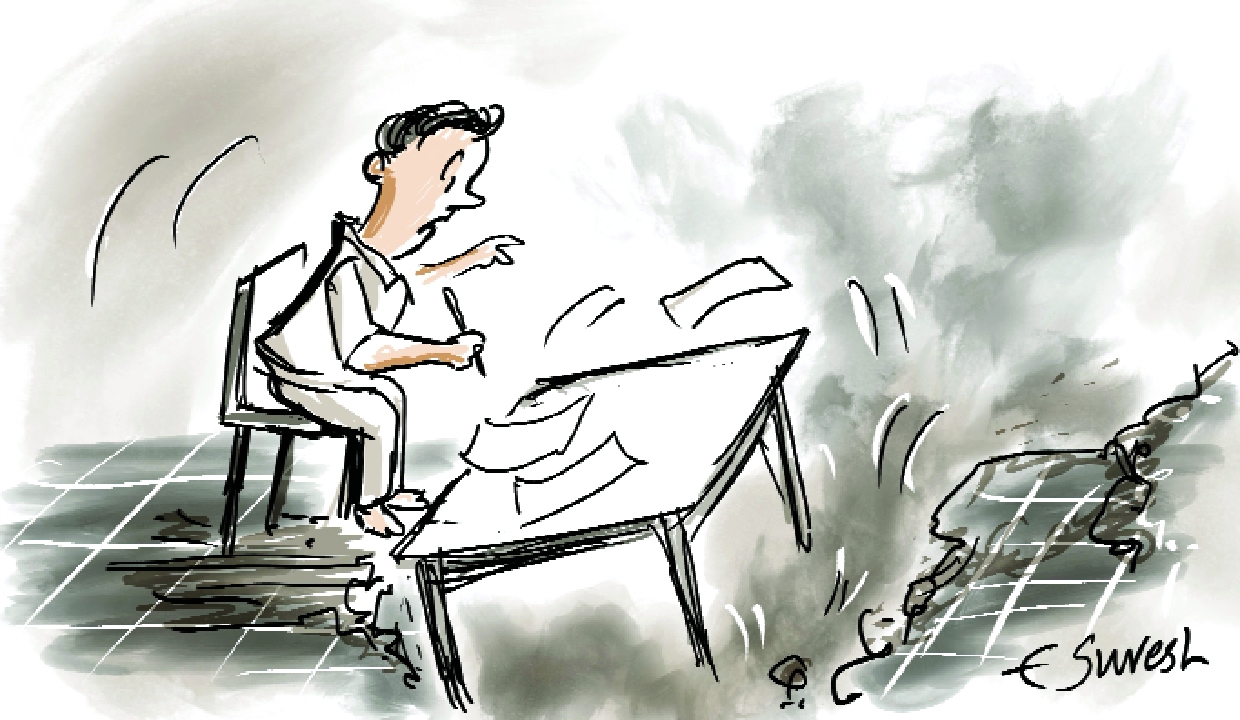
The deaths of seven young students in a Delhi PG collapse cannot be reduced to illegal construction and negligent owners. The tragedy exposes a deeper national failure: inadequate educational infrastructure, unsafe student housing and a system that too often places profit above the safety and dignity of young Indians
The story so far: The tragic collapse of an illegal, multi-storeyed PG accommodation in New Delhi, which has claimed the lives of seven young people, has understandably triggered widespread public outrage.
The arrests of the owners of the killer structure are necessary and welcome, but insufficient as a remedial response, especially if such tragedies are not to recur. “Greedy for rental income, owners built extra floors,” reads one headline. Perhaps the larger point we are missing is this: it is not the greed of the PG owners alone that caused the tragedy; it is the product of a greedy system operating under the colluding eyes of those whose duty it was to prevent tragedies of this kind. Bigger point: If the discussion centres on illegal construction, negligence, arrests and compensation alone, we will miss the forest for the trees. The collapse of the building is only the visible manifestation of a much deeper crisis: the criminal neglect of education, not just in NCR but countrywide, and the failure to provide safe, adequate and affordable accommodation for students. And this, not because we lacked the required resources, but because we value money above life.
Thanks to the scandalous failure of our education enterprise nationally, Delhi has become an educational refuge for young people from across India. About 50 per cent of the 700,000 students enrolled in DU colleges are from other states. Each one of them, numbering some 350,000, needs accommodation. The infrastructure available to accommodate them is woefully inadequate. Such a state of affairs serves as a goldmine for PG accommodation sharks. This is a national shame. This problem is not unique to Delhi.
A national tragedy
Here’s the question that stares us in the face from this tragedy: Why do so many young Indians have to flock to Delhi, leaving their home states in search of better educational opportunities? Surely, such educational migrations are not natural. Many of these students cannot afford to live and study in Delhi. Parents strain their economic resources to the utmost, just because educating their children is their topmost priority. It devastates them to have their children return home dead. And this brings us to an uncomfortable question: Why is education so grossly neglected? It cannot be because India’s ruling class does not understand its value. When it comes to their own children, our ruling elite are keen to provide the best quality education in the most expensive and prestigious universities in the West. Our education system is what it is, not because we lack the political will to educate our children and youths, but because there is a will to patronise the vested interests thriving through this scandalous state of affairs.
The spirit of education
To understand the above, the story of St Stephen’s College is worth recalling. Founded in 1881 by five Cambridge missionaries, the college was established at a time when educational opportunities in Delhi were extremely limited, particularly for the poor. The founders had very modest resources. Yet they believed that there was no better way to love a people than to provide educational opportunities to them. To them, education was an outworking of love. If we love, we will respect the worth of the people we love. This activates vigilance in caring for them. To care is not only to preserve the current worth, but also to enhance it, as every parent knows. Education is the best means of enhancing the worth of individuals and nations. The founders of St Stephen’s College were animated by a spirit of selfless love - the belief that those who are less privileged deserve not less, but greater care, attention and opportunity. That idea seems to have been lost somewhere along the way.
The St Stephen’s story further reveals the extraordinary demand for quality education. The college has only around 400 undergraduate seats, while tens of thousands of students applied. The tragedy was that many of those rejected were among the brightest young people in the country — not because they lacked merit, but simply because there was no room for them. Permission was sought to expand the intake in Economics and to introduce Political Science (Hon) Adequate library and infrastructure facilities were available. Only a limited number of additional teaching posts had to be sanctioned. Yet, despite repeated efforts, the necessary permissions never came.
The prospect of some hundred more young men and women benefiting from quality higher education did not appeal to the ‘competent’ authorities concerned. It is far easier to run an illicit PG facility that could kill many an inmate, provided the relevant authorities see scope for ‘additional mobilisation of personal resources’ in it. Such an experience is not limited to St. Stephen’s. The larger truth it exposes is that India has failed to expand educational opportunity — not because the resources were lacking, but because our patriotism falls short of loving the people. We profess, but do not practise, love. At its deepest level, education must not be deemed an industry, a degree-producing mechanism or a speculative investment. It is a domain of public service — a sacred enterprise in human development. To care for the learner is first to recognise their worth and then to do everything possible to enhance it.
Where this concern is absent, education risks becoming an industry rather than an investment in human development. This is why the Delhi incident should force us to ask not merely who violated building regulations, but what kind of society allows young people to live in dangerous conditions simply because they have nowhere else to go or cannot afford safer roofs over their heads. The answer cannot be found only in courts, commissions or administrative inquiries. Those institutions provide temporary justice and relief, but the deeper transformation must come from society itself.
Another dimension to the crisis
The purpose of education should be to equip young people with knowledge and skills that enable them to solve the problems of their society, as Plato envisaged in The Republic.
Education, therefore, should nurture citizens who hold themselves responsible for others — not merely seek personal advancement. The distinction can be expressed simply: missionary or mercenary. A missionary serves because he or she loves the people and cares for them. A mercenary has his or her eyes fixed on what can be gained from the people, unmindful of their safety and welfare. As Shakespeare says, in serving them, he serves only himself.
If education produces increasingly mercenary citizens - people trained only to milk and massage the system to their advantage, no matter at what cost to others — society loses its developmental momentum and moral vitality. The seven young lives lost in Delhi should therefore not become a media will-o’-the-wisp that glows and vanishes from public attention. Their sacrifice should compel us to confront the larger failures: inadequate educational infrastructure, unsafe accommodation, corruption, administrative indifference, and the cynical choice to keep the common man in a fool’s paradise, anaesthetised to his real condition by the hypnotic power of propaganda-driven media. The real question is this:
What kind of society forces young people to risk their lives merely to pursue their dreams? Until we answer that question — and act upon the answers that emerge — we may have, God forbid, a procession of Satya Niketan heartbreaks.
If education produces increasingly mercenary citizens - people trained only to milk and massage the system to their advantage, no matter at what cost to others — society loses its developmental momentum and moral vitality. The seven young lives lost in Delhi should therefore not become a media will-o’-the-wisp that glows and vanishes from public attention
Valson Thampu, Author and Former Principal, St. Stephen's College, Delhi. Debasish Bhattacharyya, Author and Former Deputy General Manager, India International Centre, New Delhi; Views presented are personal.