Reimagining liberal arts in the era of AI
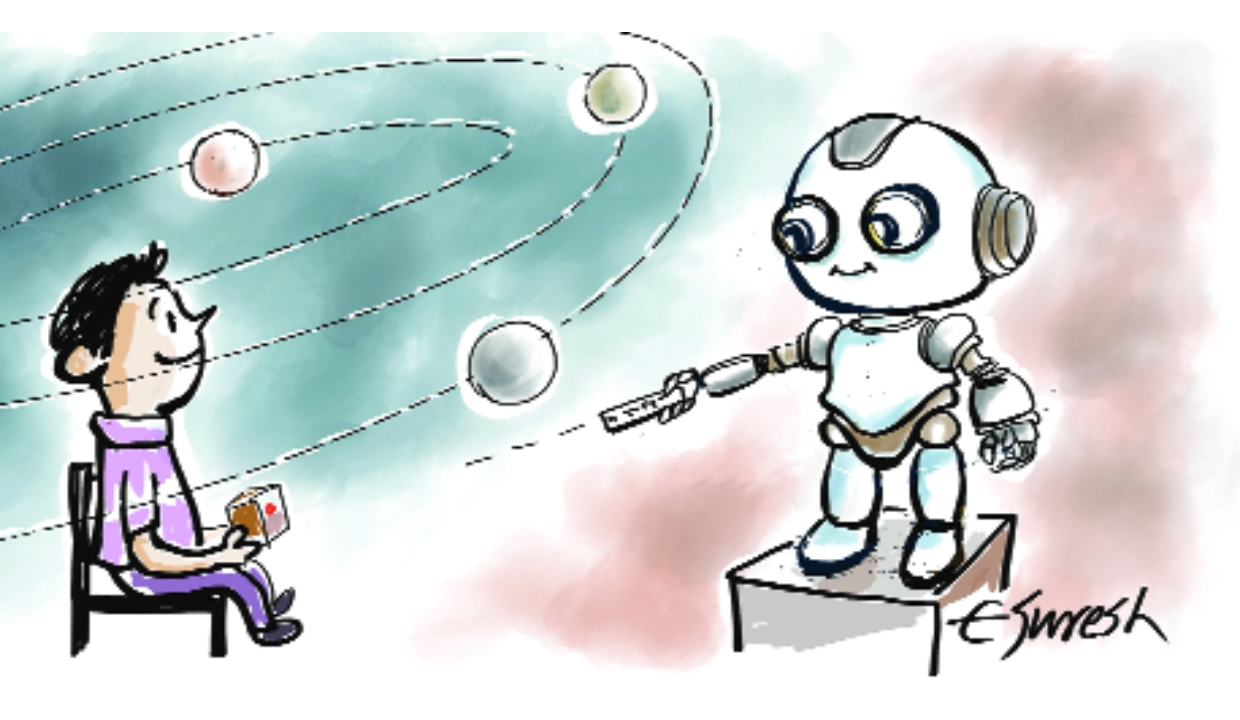
As artificial intelligence rapidly reshapes the way knowledge is created, accessed, and applied, classrooms are evolving into 360-degree learning environments (students’ total growth), where digital technologies, collaborative platforms, and intelligent systems increasingly influence how students learn and engage with the world. Amid this, a fundamental question emerges: should higher education focus solely on producing technically skilled professionals, or should it also cultivate reflective, ethical, and analytical minds? In India, the National Education Policy (NEP) 2020 seeks to address this challenge by promoting multidisciplinary learning, curricular flexibility, and student-centred pedagogy, reaffirming that the purpose of higher education extends beyond employability to nurturing individuals who can think independently, communicate persuasively, and contribute meaningfully to society.
As learning behaviours evolve rapidly, education systems face the challenge of preparing students not merely to acquire information, but to interpret, question, and use it responsibly. In an age of smart technologies, AI should enhance human capabilities rather than replace them, making critical literacy, analytical reasoning, and the ability to ask meaningful questions increasingly valuable. Consequently, success will depend not merely on technical expertise but on the ability to scrutinise evidence critically, innovate creatively, collaborate effectively, and exercise problem-solving abilities guided by wisdom, empathy, and human values.
While integrating liberal learning with professional education, institutions can nurture adaptable, creative, and socially responsible graduates equipped to navigate complexity, exercise informed choice, and address the multifaceted challenges of society. In liberal arts education, historians, philosophers, political scientists, and sociologists encourage learners to question assumptions, examine evidence, and understand the complexities of human societies. Interdisciplinary learning fosters curiosity, critical thinking, and informed judgement - qualities difficult to replicate through technology. In an AI-driven era marked by misinformation and deepfakes, liberal education equips individuals to avoid the dangers of uncritical conformity (Hannah Arendt) in public life.
Indeed, true education brings out the innate talent of students. As the UGC underlines, knowledge, skills, attitudes and values are graduates’ attributes that foster intellectual growth, creativity, and lifelong learning beyond memorisation. By encouraging inquiry, evidence-based reasoning, and interdisciplinary learning, institutions can empower students to navigate information critically and create civic trust. By integrating the humanities, social sciences, natural sciences and technology, institutions enable students to navigate complex realities, evaluate competing claims, and exercise ethical judgement.
Its purpose is not merely to acquire knowledge but to read critically, write cogently, think broadly and act wisely.
The challenges of the twenty-first century demand more than technical proficiency; they require holistic learning that cultivates digital democracy based on curiosity and critical inquiry. Historians teach the importance of evidence and context. Philosophers sharpen reasoning and expose logical fallacies; political scientists illuminate the workings of institutions and power; literature cultivates empathy and perspective-taking, while anthropologists reveal how culture shapes human behaviour.
Together, these disciplines foster the ability to question assumptions, evaluate competing claims, and engage thoughtfully with complex realities. In an era of information abundance and algorithmic decision-making, wisdom remains humanity’s greatest strength, empowering individuals to exercise ethical judgement, maintain intellectual independence, critically evaluate information, participate responsibly in democratic processes, and engage meaningfully in community action.
Liberal education equips students with the capacities needed to navigate a rapidly changing world by fostering creativity, ethical reasoning, interdisciplinary understanding, and adaptability. By integrating the humanities, social sciences, and professional disciplines, universities can cultivate sceptical and reflective minds capable of questioning assumptions, evaluating evidence, and addressing complex technological, environmental, and societal challenges by drawing insights across disciplines rather than from specialisation alone. As knowledge becomes increasingly accessible, education must empower students to think globally.
In this era of rapidly evolving technology, students now study social sciences alongside artificial intelligence, combine data science with psychology, and understand environmental challenges from scientific, historical, and social perspectives. The liberal arts seek to cultivate technical competence as well as human ability, ethical judgement, creativity, and adaptability - qualities that remain uniquely human in an increasingly automated world.
A philosopher familiar with data science engages more effectively with contemporary challenges. A policymaker who understands artificial intelligence is better equipped to govern an increasingly digital society. The ideal graduate is neither only a specialist nor a traditional generalist but an interdisciplinary thinker who can connect knowledge across fields, adapt to complexity, and approach problems with both technical competence and human understanding.
The future of education cannot be defined by technological proficiency alone. In an age when information is abundant and AI can generate answers instantly, the real challenge is cultivating minds capable of questioning assumptions (Socrates), testing ideas through debate (J.S. Mill), and making wise choices.
A liberal arts education equips students with these enduring capacities by fostering intellectual curiosity, ethical reflection, creativity, and civic responsibility. As India aspires to become a global knowledge leader, its universities must nurture not only skilled professionals but also thoughtful citizens. The sceptical mind is no longer an academic ideal; it is the foundation of innovation, democratic vitality, and sustainable well-being.